
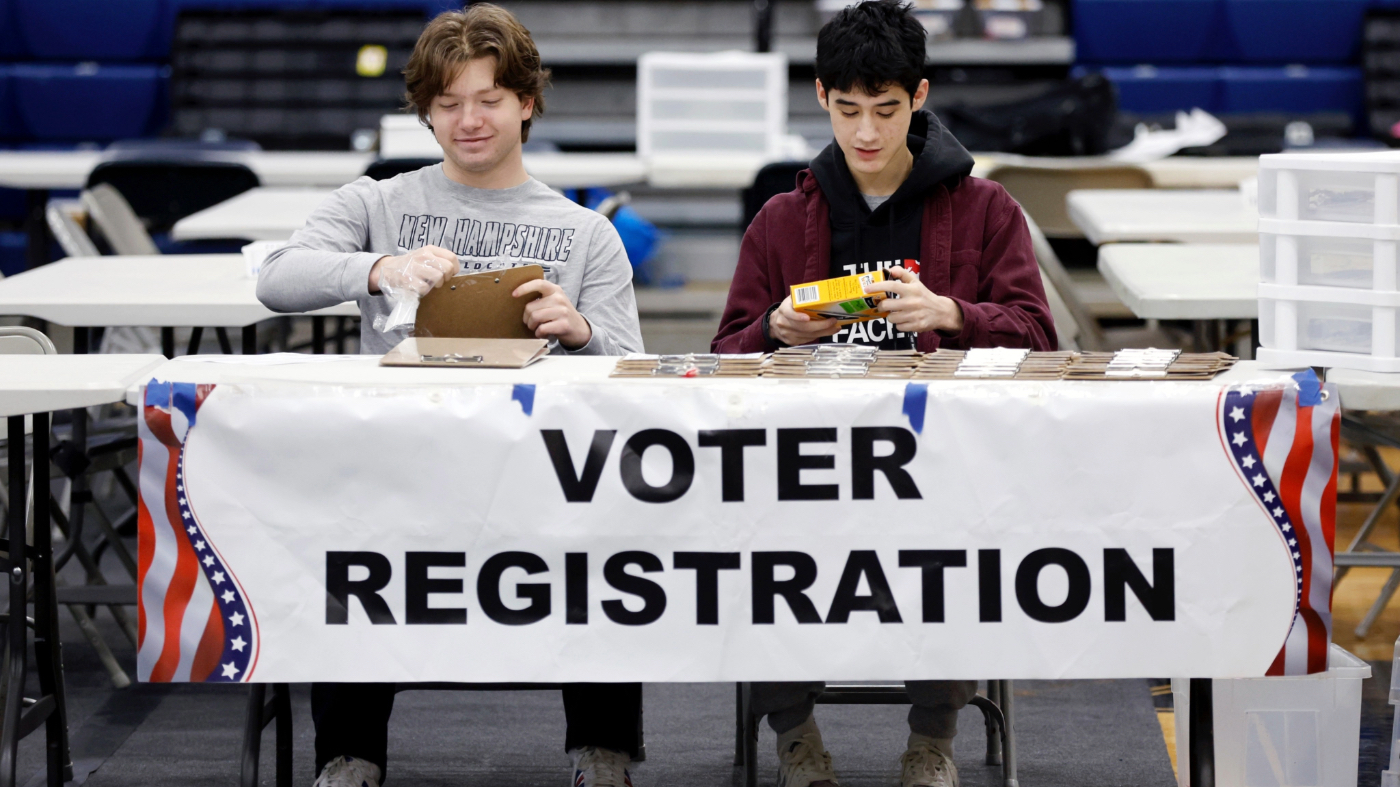
High school students Sawyer Brockman and Jack Skilling volunteered at a voter registration table at Windham High School, New Hampshire, on January 23, 2024. This study highlights the importance of young voter turnout in determining the election results. Democrats expect a favorable outcome, but youth participation could change a blue ripple into a blue wave in November.
The current political environment suggests young voters could sway the Senate’s control and solidify the Democrats’ House majority. Yet, there is a noticeable lack of investment in youth-focused organizing and media engagement on the left. In 2024, the right invested $1.2 billion in youth initiatives, significantly outspending the left by a 10 to 1 ratio.
Youth voters generally support Democrats, as demonstrated by their behavior in the 2025 elections and recent polls. Notably, young men who supported Trump in 2024 are shifting away from Republicans due to the Iran War and economic issues. In battleground states like Texas and Michigan, young voters favor Democratic candidates by 20 to 31 points, with an even more pronounced preference among students.
Despite this support, there remains uncertainty about whether young people will vote. They are less motivated than older right-leaning voters in this off-year election. In the last midterm, Gen Z’s turnout was 28% compared to 50% in 2024. From 2020 to 2024, participation among voters under 35 declined by nearly 7%, or 2.5 million young voters.
Additionally, 40% of Gen Z and 36% of those under 35 are not registered to vote, and 11% of both groups were registered but did not vote in 2024. Mobility challenges intensify this issue, as 36% of voters under 35 reported moving in the past two years, complicating their voting process. Many college students also experience difficulties due to cross-state moves for education.
Republican officials have imposed barriers for students, such as denying on-campus polling sites and restricting student IDs. However, young organizers are countering these actions. Groups like North Carolina College Democrats and Voters of Tomorrow’s Virginia chapter are actively working to ensure students can vote.
Young voters are a challenging demographic to reach through traditional methods. They tend to communicate through private channels that are inaccessible to standard media. Engaging with them requires utilizing individuals and channels that they already trust.
Efforts are underway nationwide to increase young voter turnout. Democrats must recognize the threat posed by Republicans’ billion-dollar outreach efforts. Young voters tend to support Democrats, but turnout is essential. With 28 states allowing same-day registration or close deadlines, the fight for the youth vote remains critical.