
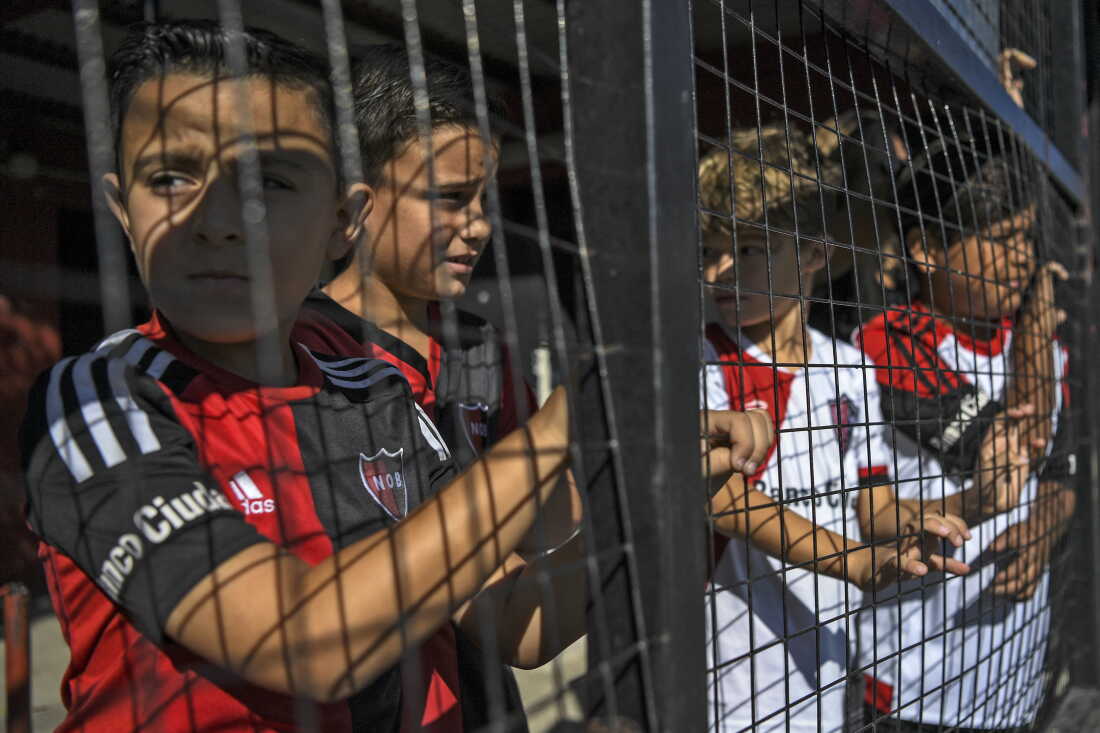
In Rosario, Argentina, Newell’s Old Boys stands out as a popular soccer club and home to one of the nation’s successful youth academies. This club is renowned for producing exceptional soccer talents, including Lionel Messi, who played there from ages 6 to 13.
Every week, approximately 700 children, aged 4 to 12, train at Newell’s facilities. Black and red murals adorn the center, celebrating famous alumni. At Newell’s ‘baby football’ academy, promising young players receive scholarships to train without cost, while others pay roughly $25 monthly for bi-weekly coaching from former professionals.
On weekends, these young players compete against other teams across the city. Carlos Gil, a fencing contractor, brings his eight-year-old son to practice at Newell’s. He appreciates the quality coaching provided at an affordable rate, contrasting sharply with the pricey fees of U.S. soccer, ranging from $1,000 to $3,000 annually. Gil believes such high costs would exclude many Argentine families, potentially undermining the country’s soccer success.
A debate continues in the U.S. on how to make youth soccer more accessible and whether the prevalent pay-to-play model hinders the country’s potential.
Newell’s, like many Argentine clubs, subsidizes youth training, independent of tuition fees or corporate donations. Its professional team competes in the top division, generating revenue through ticket sales, broadcasting rights, and young player transfers both locally and internationally.
Gustavo Tognarelli, head of youth development at Newell’s, emphasizes the importance of investing in today’s young talents for the club’s sustainability. In stark contrast, U.S. youth clubs are typically excluded from transfer payments, as Major League Soccer (MLS) is not required to share these profits with them. This practice is common in Europe and South America, where clubs benefit from training compensation and solidarity payments when players transfer.
Rory O’Neill, coaching a Pennsylvania under-13 team, points out that U.S. clubs are financially constrained, heavily relying on parents for funding. He advocates for an open soccer ecosystem, where club promotion and relegation create incentives to invest in youth academies. This system could potentially attract more investments in youth development, enhancing the overall quality of soccer in the country.
Filippo Silva, an Orlando-based business owner and coach, supports this view. He argues that merit-based systems encourage more investment, promising rewards for reaching top divisions.
In Argentina, the open system of promotion and relegation has thousands of clubs striving for the top division. While not all succeed, many invest in youth development, hoping for future transfers and solidarity payments. Newell’s exemplifies such commitment, training and educating around 400 players aged 12 to 18, while younger athletes receive scholarships for their practice sessions.
Carlos Gil, despite logistical challenges, brings his son to Newell’s regularly. Residing in a small town 120 miles from Rosario, he manages his fencing business challenges while supporting his son’s soccer aspirations. Newell’s scholarships and low training fees significantly ease his efforts.
Gil concludes, “In Argentina, our finances might be limited, but in other aspects, such as quality of life, we find strength.”