
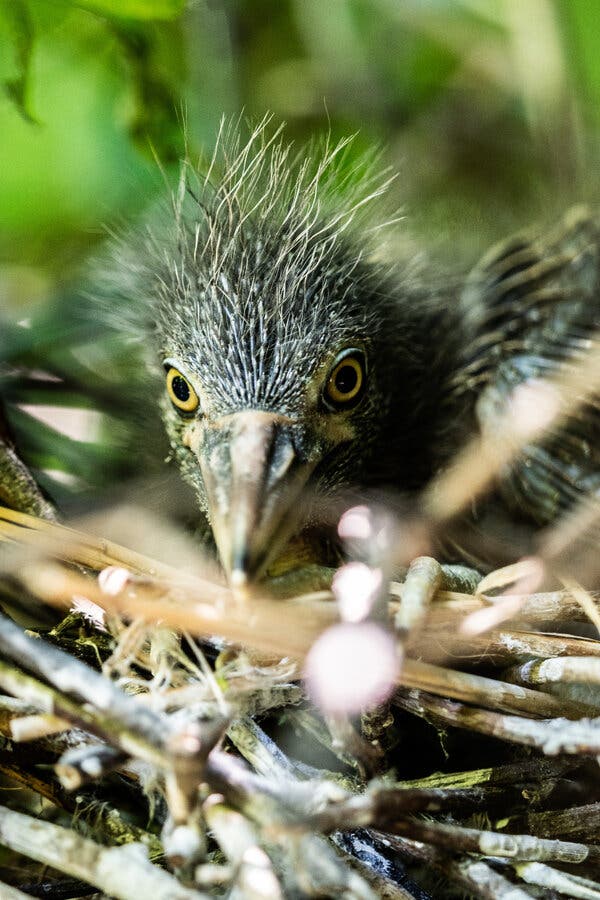
Black-crowned night herons, known for their muted colors and distinctive white tendrils, are iconic in New York City. These herons, often seen in areas like Harlem, East River in Queens, and Manhattan’s Lower East Side, may soon vanish from the city, similar to the passenger pigeon.
Dustin Partridge, director of conservation and science at NYC Bird Alliance, describes them as fashionable explorers of the city. These birds, nearly two feet tall, have been noted for their unique behavior, including their penchant for doing “absolutely nothing,” as observed by Valerie Wald, a high school teacher and regular walker in Central Park.
The NYC Bird Alliance has raised concerns over the herons’ possible disappearance in 11 years, based on findings from a study conducted with the Cornell Lab of Ornithology and Rutgers University. The reasons behind this decline remain unclear.
Potential threats to these birds include water toxins, climate change, human disturbances, and predators.
Bird loss is not isolated to these herons. Since 1970, North America has lost approximately three billion birds. The New York/New Jersey Harbor, home to the largest nesting population of herons and egrets in the Northeast, has seen a 27% decrease in nesting wading birds between 2000 and 2022. This drop is primarily due to the decline in black-crowned night herons, the harbor’s most common bird.
This situation highlights the broader issue of avian decline, emphasizing the need for continued research and conservation efforts to understand and mitigate these threats.