
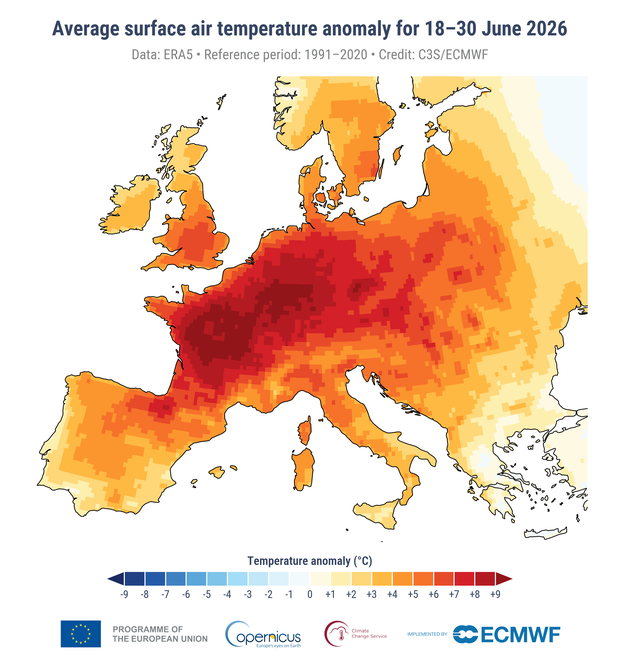
Western Europe experienced its hottest June on record in 2026, according to a report by the Copernicus Climate Change Service (C3S). The global temperature also marked June 2026 as the second-hottest ever recorded globally, highlighting escalating climate challenges.
The Extent of the Heat Wave
During the second half of June, Western Europe faced a historic heat wave, breaking both monthly and all-time temperature records. Average temperature anomalies compared to the 1991-2020 averages showed significant increases. June followed a similar heat spell in May, with predictions of continued extreme temperatures into July.
Impact and Concerns
Samantha Burgess, from the European Center for Medium-Range Weather Forecasts, emphasized the profound changes in climate reflected in June’s record temperatures. The heat coincided with marine heat waves affecting the Mediterranean and Atlantic coasts. Burgess remarked on the accumulation of heat in the climate system leading to severe heat waves, warm oceans, and heightened risks for ecosystems, infrastructure, and human health.
Severe Outcomes
Drought conditions fueled significant wildfires, especially in southern France, where over 11,000 acres burned and around 10,000 evacuations occurred. French PM Sébastien Lecornu reported drowning deaths due to extreme heat, as desperate individuals sought relief in the water.
Health Consequences
According to the World Health Organization, Europe reported over 1,300 heat-related deaths since late June, with France’s officials noting approximately 1,000 excess deaths, primarily among elderly residents.
Temperature Records
France and the UK both repeatedly broke temperature records throughout June. C3S highlighted continental Europe’s second-highest recorded June, with temperatures approximately 3.2 degrees Fahrenheit above average. The rise was even more pronounced in Western Europe, with figures around 5.5 degrees above normal.
The Role of El Niño
Sea surface temperatures were notably high in the tropical Pacific Ocean, where El Niño originates. This pattern, characterized by warm waters, could intensify global temperatures and incite extreme weather. Predictions suggest potential widespread flooding in the US and warmer-than-usual autumn in Europe.
Increasing Exposure to Extreme Heat
Europe’s frequent severe heat occurrences align with broader climate change trends. The World Health Organization noted globally escalating temperature events, with increasing frequency, duration, and magnitude. Between 2000 and 2016, the number of people experiencing heat waves climbed by about 125 million, posing risks to health infrastructure, water resources, energy systems, and food stability.
Conclusion
This information underscores the need for continued attention and action regarding climate change impacts, emphasizing the interconnectedness of warm phases like El Niño, regional weather patterns, and human-induced climate alterations.