
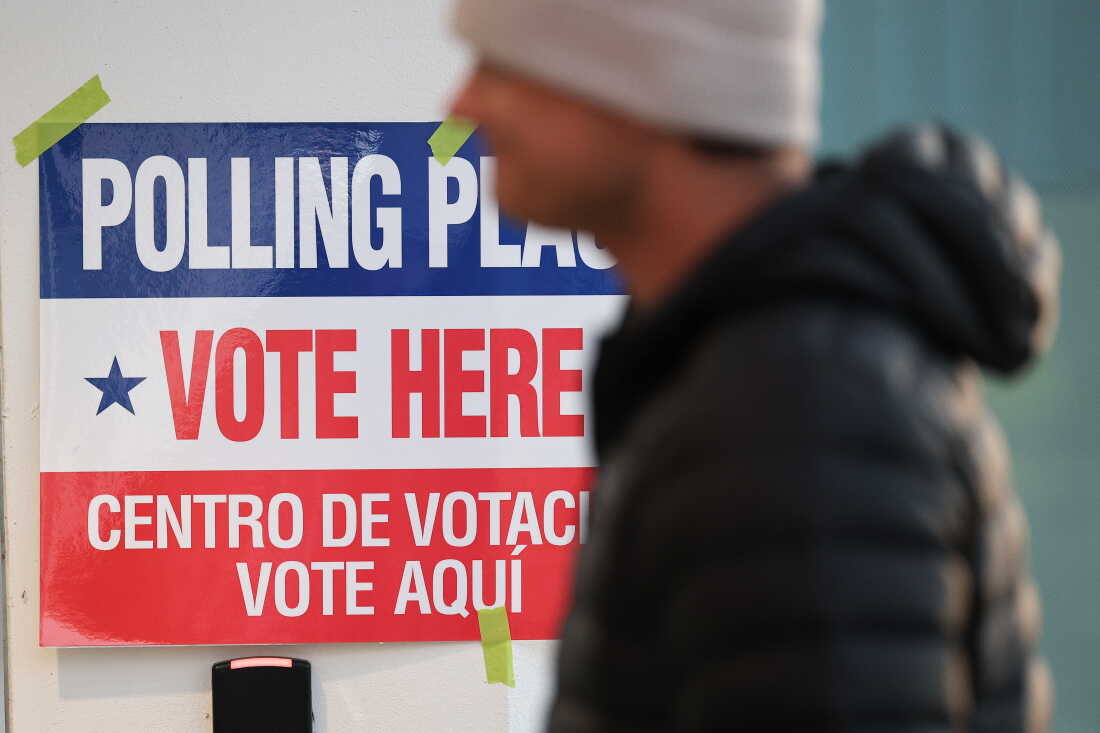
Polling places in Arlington, Va., saw voters casting their ballots on April 21. A local election official in Colorado, with 22 years of experience, remarked to NPR about the unprecedented uncertainty surrounding the elections this year.
Confusion among voters is prevalent, especially following the Supreme Court’s decision to halt President Trump’s executive order aimed at restricting mail voting. Despite this, no changes to mail voting rules have been implemented. Local officials across the nation report receiving inquiries from voters worried about election procedures and possible federal interference.
Carly Koppes, a Republican voting official in Weld County, Colo., hears questions from concerned voters about the process and security of ballots, noting that this election cycle is more uncertain than those in the past.
A survey conducted by the University of California San Diego shows less than half of voters expect the midterms to be fair. However, a separate NPR/PBS News/Marist survey reveals three-fourths of voters trust state and local officials to conduct fair elections. The surveys highlight two major concerns: the presence of federal immigration enforcement agents at polling places despite laws against armed federal troops at election sites, and decreased confidence in timely mail ballot delivery following the Supreme Court ruling.
Voter worries extend to the potential impact of legal or political disputes on their ballot, as indicated by a poll from the Partnership for Large Election Jurisdictions. This is contributing to widespread apprehension during the election year, according to Stephanie Thomas, Connecticut’s Democratic Secretary of State.
Election officials strive to address these concerns without causing undue alarm. Steve Simon, Minnesota’s Democratic Secretary of State, emphasizes the balance between informing and reassuring the public. He notes the state’s encounters with federal immigration authorities have left voters anxious about possible future federal actions.
Concerns about turnout remain, as midterm elections traditionally see lower participation compared to presidential years. Yet, Lauren Prather, a political science professor at UC San Diego, suggests the relationship between election confidence and turnout is complex. Previous cycles have seen high participation despite skepticism fueled by election denialism.
Brendan Nyhan, a political scientist at Dartmouth College, suggests that worries about disenfranchisement might also drive higher turnout as communities mobilize. He warns that while fears may encourage participation, they can also challenge the legitimacy of election results.
It’s essential for democracy that citizens not only vote but also trust the electoral process post-election. Distrust can enable challenges to election outcomes and threaten their legitimacy, Nyhan warns, leaving the democratic system vulnerable.