
Gathering to Honor Lives Lost
The streets of Chicago bore witness to a solemn vigil and protest, held in Grant Park, where hundreds assembled to mourn the deaths of two men shot by immigration agents during separate traffic stops. Lorenzo Salgado Araujo, a Mexican father, and Joan Sebastian Guerrero, a Colombian father, died in recent operations run by federal authorities.
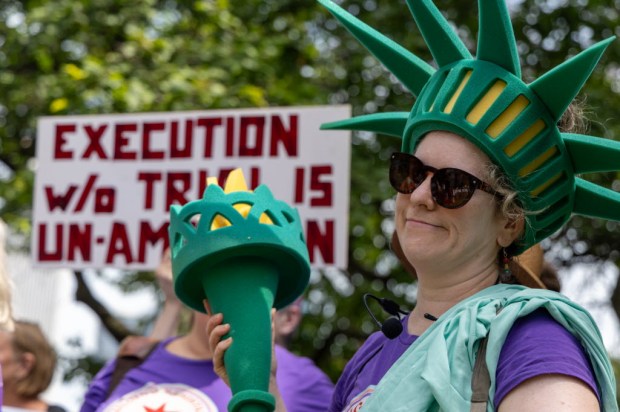
Leading figures such as Megan Sullivan, part of the advocacy group Singing Resistance, dressed as Lady Liberty, symbolizing the fight against federal immigration practices perceived as violent. Rev. Hannah Kardon from United Church of Rogers Park addressed the gathered crowd, urging participants to remember those who passed and strive for a world where such tragedies would not occur.
Demand for Change
The vigil was organized by four Chicago advocacy groups, pushing for an end to violence linked to excessive immigration enforcement. Despite the recent directive from the Department of Homeland Security to halt most vehicle stops, reports of invasive practices persist, spreading unease across immigrant neighborhoods.
Statistics from publicly available sources indicate that ICE and Border Patrol agents have been responsible for 11 fatal shootings since the beginning of President Trump’s second term. More than 50 individuals have died in ICE custody, according to the National Immigrant Justice Center.
Symbols of Solidarity
Volunteers held signs displaying over 60 names and dates of those killed, while others carried cardboard monarch butterflies, a symbol reflecting the migrant journeys. Singing Resistance Chicago contributed with chants and songs, imprinting hope amid sorrow. Attendee Mark Osing emphasized the importance of continuing protests, inspired by recent enforcement actions in Chicago.
Fear in Immigrant Communities
Melody Rose spoke about the lingering trauma from previous immigration operations, affecting everyday activities such as work and school for immigrant families. The presence of federal agents incited fear among communities, underscoring the need for vigilance and participation in demonstrations.
Ald. Michael Rodriguez recounted last year’s Little Village enforcement, mentioning how individuals like his chief of staff were detained without cause for extended periods—stressing the importance of remembering those unable to return home.
Ongoing Debate on Enforcement Tactics
Recent events have reignited discussions about the role of traffic stops in immigration enforcement. Despite a pause on vehicle stops, President Trump has criticized the directive, arguing that traffic stops are a vital tool for law enforcement. Reports indicate ICE agents continue targeting individuals around county courthouses to meet quotas, challenging the effectiveness of the policy.
A Silent March
The vigil took a poignant turn when Laura Garza from Arise Chicago read aloud the names of those lost to enforcement actions, inviting participants to honor their memory. Volunteers provided chalk for writing names on sidewalks, promoting remembrance and solidarity.
The solemn march proceeded to Michigan Avenue, directed toward Trump Tower, as police accompanied the demonstrators. Applauding bystanders and tourists joined, reflecting the public’s support. Amid the march, Jill Gray, a visitor from Iowa, watched with emotional tears, expressing pride for the protesters’ courage and indignation over the injustices faced.