
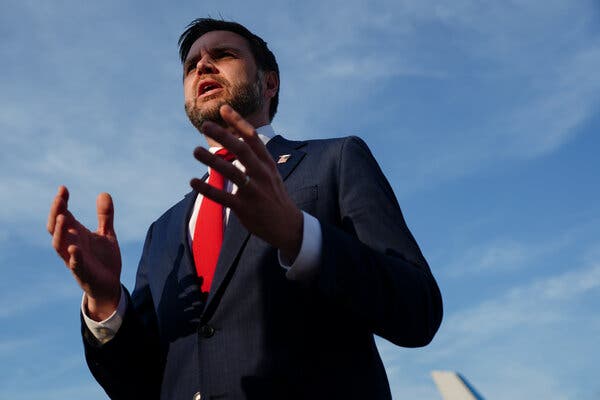
Vice President JD Vance is facing a complex political scenario that may impact upcoming Republican performance in the midterm elections and his potential as a successor to President Trump. During intensive negotiations with Iranian leaders, complications arose from President Trump’s untimely comments of potential military action.
President Trump issued threats regarding the Strait of Hormuz, suggesting dire consequences if it were closed—adding pressure on Mr. Vance as he leads the U.S. delegation in diplomatic talks. Despite these tensions, Mr. Vance has portrayed the initial negotiation phase as successful, paving the way for peace.
However, Mr. Vance is challenged with ending a conflict he originally opposed, while balancing the unpredictable nature of his superior’s responses. In a press conference, he addressed these dynamics, highlighting the administration’s perspective on Iranian statements and emphasizing the need for presidential responses to falsehoods.
Both parties have agreed to a memorandum of understanding to cease military actions and are working towards a substantial nuclear agreement within a 60-day timeframe. As Mr. Vance positions himself as a strong candidate for the 2028 Republican nomination, he must navigate the delicate international and political landscape presented by these talks.