
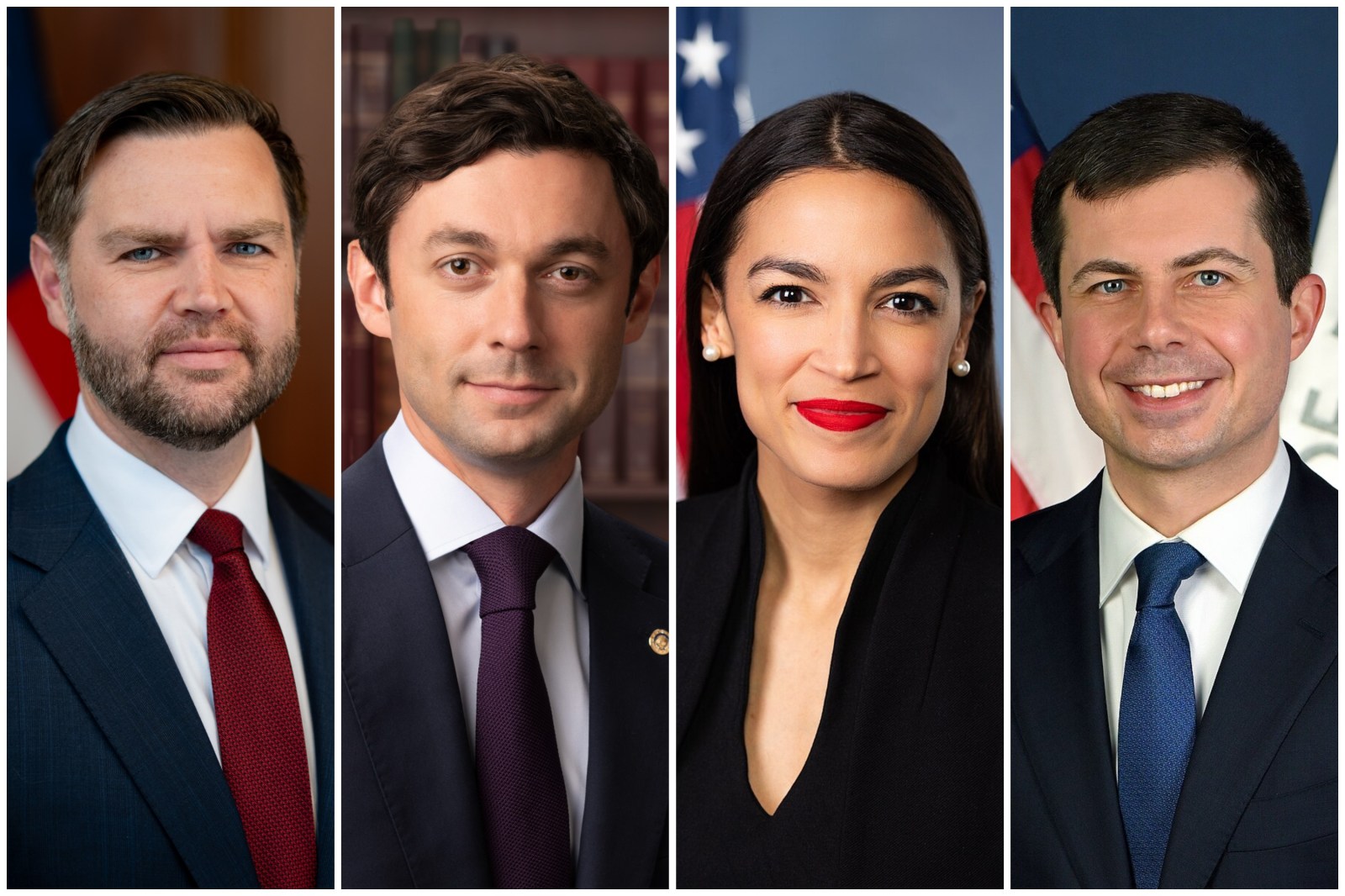
With the 2028 presidential election more than two years away, early polling reveals Vice President JD Vance trailing several potential Democratic rivals. A polling average by Race to the WH shows former Transportation Secretary Pete Buttigieg and Georgia Senator Jon Ossoff leading Vance in hypothetical matchups. Buttigieg leads with 48.5% against Vance’s 43.9%, while Ossoff has a similar margin with 48.5% to Vance’s 44.1%. Former Vice President Kamala Harris and California Governor Gavin Newsom also show leads over Vance, with Harris at 48.3% to 44.4%, and Newsom at 45.5% to 43.6%. Alexandria Ocasio-Cortez is the only Democrat trailing Vance, at 42% compared with Vance’s 44.9%.
No candidates have formally entered the 2028 race, though Buttigieg, Ossoff, Ocasio-Cortez, Harris, and Newsom are among the most polled Democrats. On the Republican side, Vance plans to wait until after the midterms to announce his intentions.
Buttigieg Leading Strongly Against Vance
Buttigieg holds the largest lead in the Emerson survey supporting the Race to the WH averages. He continues to gain ground, with 8% of voters undecided in the matchup. Buttigieg also maintains a five-point lead over Secretary of State Marco Rubio, a potential Republican contender. Ossoff and Newsom’s leads over Rubio are smaller, indicating a tight race. Harris, while leading against Vance, trails Rubio by five points.
In previous polling, Emerson’s July 2025 survey had Vance ahead of Buttigieg by one point. However, approximately 13% of the electorate remains undecided, suggesting a potential shift in preferences.
Buttigieg’s numbers align with his standing in a hypothetical Democratic primary. Emerson and other polls show him leading with significant percentages, reinforcing his strong position.
Ossoff’s Competitive Standing
Ossoff matches Buttigieg’s margin over Vance and leads Rubio by three points. His profile has grown over the year, evidenced by strong numbers in recent surveys. An August Quantus Insights poll places him third among Democrats, ahead of Ocasio-Cortez. Prediction markets also perceive Ossoff as competitive, with notable percentages on platforms like Kalshi and Polymarket.
Although Ossoff currently vies for another Senate term, his potential as a Democratic candidate remains strong.
Ocasio-Cortez Trails Vance
Among tested Democrats, Ocasio-Cortez trails Vance in current averages and against Rubio. After removing undecided voters, the gap narrows, favoring Vance at 51.9% to Ocasio-Cortez’s 48.1%. Detailed crosstabs from Quantus reveal coalition splits, with Ocasio-Cortez leading among women, younger voters, and minority groups, while Vance leads among men, older voters, and those without a college degree.
Despite one previous poll showing Ocasio-Cortez ahead, current trends indicate a competitive atmosphere.
Shifting Trends and Predictions
Over the past year, changes in Emerson’s polling reflect shifts in voter preferences. Vance has lost ground to both Buttigieg and Newsom, while Ocasio-Cortez sees minimal changes. The number of undecided voters has decreased, often favoring Democratic candidates.
Vance’s standing among Republican primary voters has changed. While he initially held a strong lead, his numbers have fluctuated with Rubio gaining traction. Rubio and Vance’s primary dynamics continue to evolve, with significant implications for the Republican race.
Despite slowing momentum, Vance conveyed his intention to discuss future plans post-midterms. Rubio, aligned with Vance, expressed his support if Vance runs for president.
Former President Trump has commented positively on both Vance and Rubio, pointing to potential strategic alliances.
Overall Political Landscape
The broader political environment has shifted in recent surveys, with Democrats generally leading the congressional ballot. Trump’s approval rating remains stable, influencing Republican prospects.
Prediction markets suggest strong Republican nomination odds for Vance, yet his likelihood of winning the presidency lags behind. This aligns with market perceptions favoring Democrats in the 2028 presidential race, with substantial odds on platforms like Kalshi and Polymarket.
The evolving landscape underscores the competitiveness among candidates and the dynamic nature of electoral politics.
Contact Newsweek editors on this story: Jason Lemon and Geoffrey Rowland.