
U.S. Vice President JD Vance arrived in Switzerland on Sunday to initiate formal negotiations with Iranian leaders. The focus is on reducing Tehran’s nuclear program and enhancing the interim deal aimed at ending the conflict in Iran.
Vance and his wife, Usha Vance, landed at Emmen Air Base near Lucerne shortly before 6 a.m. local time. The framework had been signed recently, and now U.S. and Iranian negotiators are tasked with reaching an agreement on technical details within 60 days. This period could significantly influence global economy and security.
The initial stages of negotiation were complicated by exchanges of fire in Lebanon between Israel and Hezbollah, backed by Iran. Iran’s military announced the closure of the Strait of Hormuz, crucial for the transit of oil and natural gas. Vance was initially scheduled to be at Bürgenstock resort near Lucerne, but the escalation in Lebanon delayed his departure from the U.S.
The U.S. Central Command countered Iran’s claim, stating that U.S. forces continued to monitor the strait to ensure traffic flow. According to Vance, millions of barrels of oil have been moved through the strait recently.
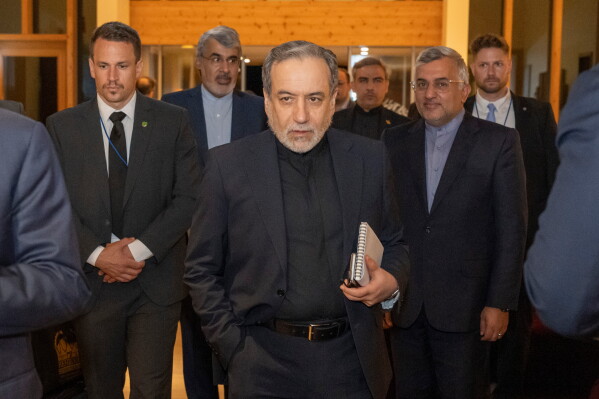
Vance departed the U.S. after Iranian state TV reported that Iran’s negotiators had arrived in Switzerland. Key Iranian figures include parliamentary speaker Mohammad Bagher Qalibaf and Foreign Minister Abbas Araghchi, along with central bank and oil officials.
Joining Vance are special envoy Steve Witkoff and Jared Kushner, son-in-law to President Donald Trump, who are already assessing the technical details of the nuclear talks. The talks also involve Pakistani Prime Minister Shehbaz Sharif and army chief Field Marshal Asim Munir, plus Qatari mediators.
Vance mentioned staying in Switzerland for a day or two, delegating intricate negotiations to Witkoff and Kushner.
His involvement has amplified scrutiny amid speculation of a 2028 presidential run. Trump and Vance have faced criticism within their party regarding the deal, drawing comparisons to a prior nuclear agreement by Obama’s administration.
The deal signed by Trump and Iranian President Masoud Pezeshkian permits Tehran to freely sell oil and access billions in currently frozen assets. Iran must dilute its stockpile of enriched uranium, believed to be housed in facilities struck by U.S. forces last summer.
The agreement permits 60-day commercial vessel passage through the Strait of Hormuz without fees but allows for future charges by Iran. Trump threatened U.S. tolls on the strait after 60 days absent a deal, citing compensation for protecting countries in the region.
Israel and Hezbollah are not party to the U.S.-Iran deal. Israeli Prime Minister Benjamin Netanyahu committed to maintaining forces in southern Lebanon until all threats are neutralized. Hezbollah demands Israel’s withdrawal from Lebanon prior to stopping attacks.
The initial conflict following the U.S.-Iran agreement resulted in 47 casualties in Lebanon and four Israeli soldiers.