
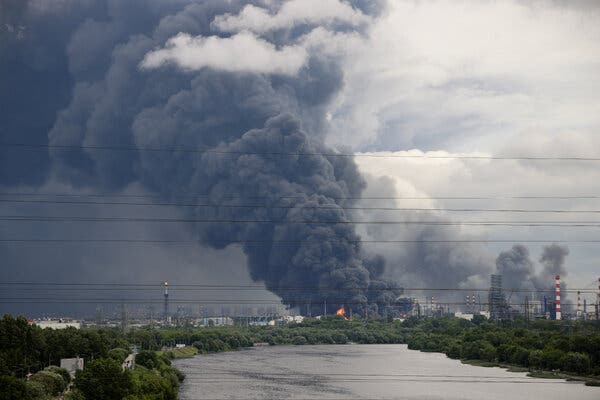
Ukrainian drone attacks have marked significant advancements. Yet, experts and officials assert that only ballistic missiles could compel Russia to reconsider its war objectives.
Footage of Ukraine’s large-scale drone attack on Moscow flooded social media recently, displaying black smoke over the Russian capital. The images offer a glimpse into Ukraine’s growing capacity to retaliate against Russian air assaults. President Volodymyr Zelensky encapsulated this sentiment by stating, “If Ukraine burns, then your Moscow will burn as well.”
However, such celebratory responses may overlook a complex situation. Despite the effectiveness of Ukrainian drones, they still lack ballistic missiles—the cornerstone of Russia’s most destructive air attacks.
Ballistic missiles deliver a much heavier payload than drones. Their high velocity makes them difficult to intercept, allowing for damage far exceeding that of drones. Russian missile strikes have regularly overwhelmed Ukrainian air defenses and wreaked havoc on the energy grid, particularly during the harsh winter. This disparity represents the largest tactical mismatch in the war and a major source of pressure on Ukraine.
Recognizing this challenge, Ukrainian officials have emphasized efforts to develop domestic ballistic missile capabilities. Kyiv sees these weapons as crucial for applying pressure on Moscow and potentially forcing negotiations.
“Ukrainian ballistic capability will fundamentally change the nature of this war,” stated Ukrainian defense minister Mykhailo Fedorov in a recent television interview. He conveyed cautious optimism about developing and deploying ballistic missiles against Russia.