
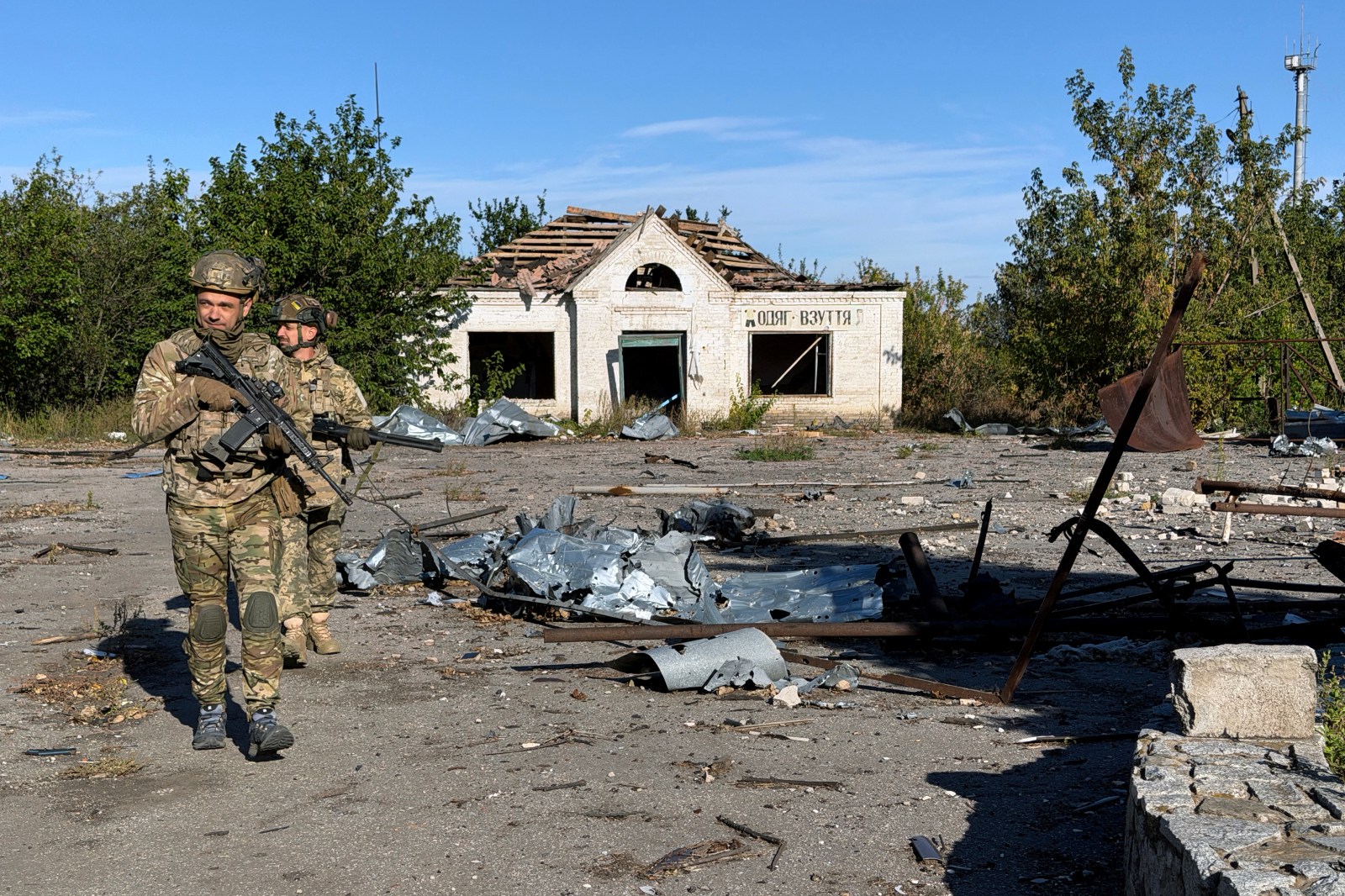
The recent territorial progress in Ukraine’s counteroffensive in Donetsk signifies an important achievement. However, as winter approaches, a new set of challenges emerges. Weather shifts and the possibility of increased bombardment from Russian forces add layers of complexity to the conflict. Russia’s tactics may include heightened long-range strikes aimed at energy infrastructure, threatening to cripple Kyiv during the harsh winter months.
Operation Vivaldi and Technological Advances
Ukraine’s Third Army Corps has employed advanced technologies in ‘Operation Vivaldi,’ using drones and remote-controlled robots. This operation successfully impeded Russian advances in the Fortress Belt area, essential for defending the Donbas region. President Zelensky announced plans for a fourth phase in the Lyman area, aiming to disrupt Russian control in the Donbas.
Brigadier-General Andrii Biletskyi highlighted the use of ground robotic systems to reclaim 68 square miles. Notably, attack ground robots penetrated Russian positions, while a robotic amphibious platform facilitated supply routes across challenging terrain. The operation’s success hindered Russian attempts to cut crucial highways and potentially encircle key regions.
Winter’s Impending Challenges
As winter looms, Ukraine braces for intensified strikes on its energy infrastructure. Russian forces have already executed large-scale drone and missile attacks. Prime Minister Serhiy Koretskyi noted that recent strikes were the most significant since April. Targeting energy facilities could plunge Kyiv into severe disarray, particularly if critical bridges continue to be compromised.
Oleksandr Kravchenko, the economy minister, warned of a challenging winter. Continuous attacks on bridges could isolate Kyiv, causing a humanitarian crisis. The essential connections across the Dnipro River facilitate the movement of necessary supplies, and any disruptions could exacerbate the situation.
Yuriy Boyechko, CEO of Hope for Ukraine, cautioned that severing transport corridors could severely impact municipal supply lines. In conjunction with falling temperatures, energy disruptions pose a significant threat to urban survival.
Current Battlefield Dynamics
Despite Russian claims of capturing land in September, analyses suggest otherwise. The Institute for the Study of War reported significant losses for Russian forces. Putin’s portrayal of the situation starkly contrasts with independent assessments.
Revishvili commented on the tactical environment, emphasizing Ukraine’s potential difficulties in facing increased equipment deployment by Russia. Winter weather could impair visibility and reconnaissance, offering Russian forces more opportunities to advance.
The coming months will be crucial for Ukraine, balancing defensive initiatives and technological advancements against evolving threats. Strategic planning and international support remain critical in navigating this complex landscape.