
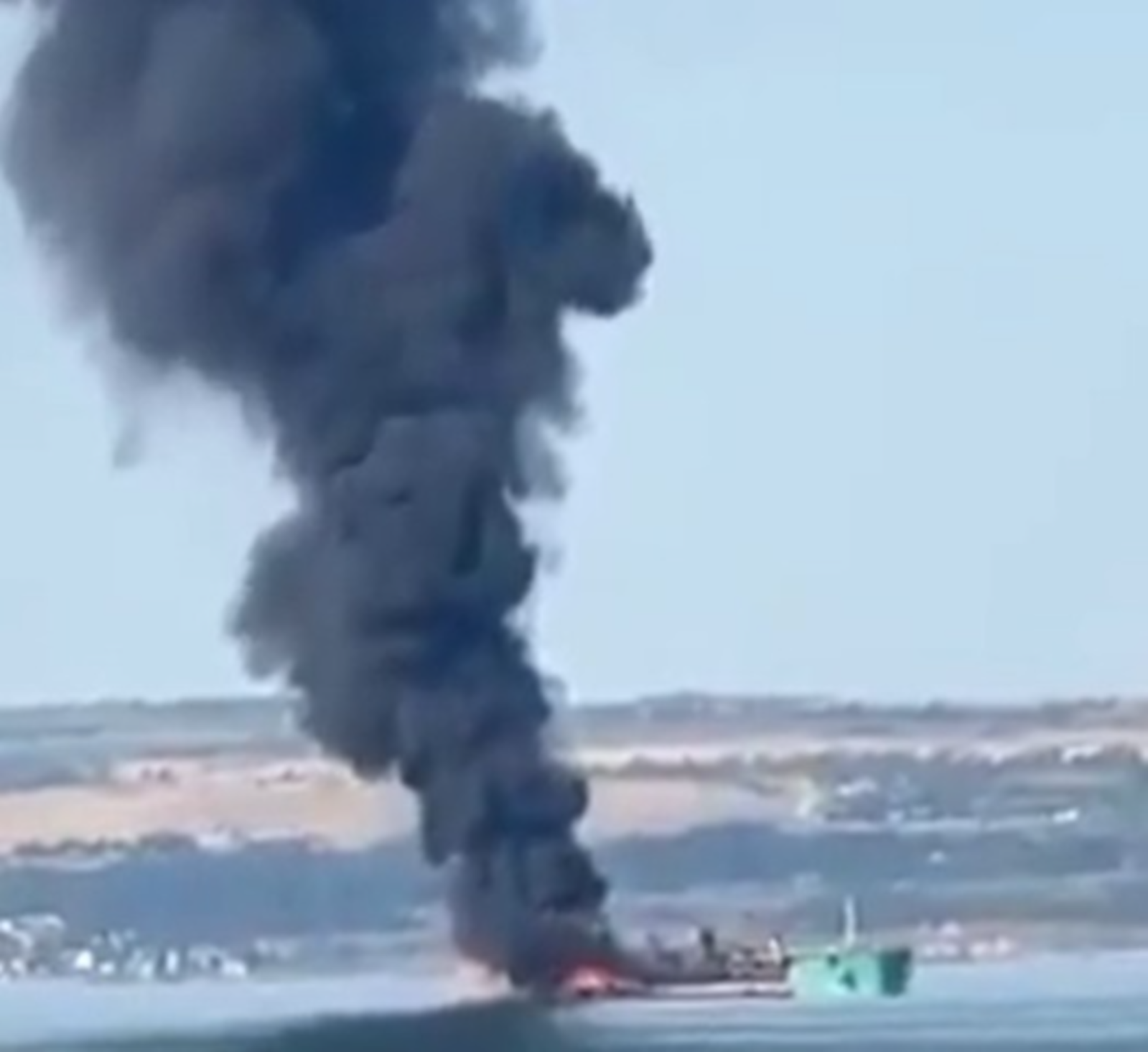
A key figure in Ukraine’s naval operations has announced a strategic shift in their maritime campaign targeting Russian shipping in the Sea of Azov. Robert Brovdi, leader of Ukraine’s Unmanned Systems Forces, made a significant announcement after his unit reportedly struck 20 Russian ships overnight. This adds to a total of 136 Russia-affiliated ships hit by Ukrainian drones from July 6 to 15, according to Brovdi.
The Sea of Azov, connected to the Black Sea through the Kerch Strait, plays a vital role for Russia’s crude oil exports. By targeting ships tied to Russia’s “shadow fleet,” Ukraine aims to undermine vessels with concealed links to Moscow, circumventing sanctions imposed due to the full-scale invasion ordered by President Vladimir Putin.
Last week’s attacks on vessels in the Sea of Azov prompted Moscow to halt shipping through the Don-Azov Channel, a crucial route that connects to the Don River. The campaign’s scope has expanded into heavily guarded Russian-controlled airspace, showcasing Ukraine’s extensive air and sea coordination. Retired Australian Army Major General Mick Ryan noted this coordination on his Futura Doctrina Substack, emphasizing that, for each hit ship, a Russian air defense system in Crimea or southwestern Russia was also targeted. This operation represents a significant shift from traditional naval warfare, as Ukraine relies heavily on unmanned systems in the absence of a standing Black Sea fleet.
Further strikes by Ukrainian drones were reported by Brovdi, who operates under the call sign Magyar. Brovdi’s unit, known as “Magyar’s Birds,” is credited with introducing FPV drones as effective strike weapons in this conflict. Recent strikes included 17 oil tankers, two gas tankers, and a tugboat. These activities coincided with the Day of Ukrainian Statehood and a notable attack on the Russian Federal Security Service’s (FSB) Izumrud border guard ship using a Sargan-3000 unmanned surface vehicle near Novorossiysk in Russia’s Krasnodar region.
Maritime traffic has significantly decreased in the Sea of Azov. From July 6 to July 12, ship numbers dropped from 132 to 43, as SAR imagery from the open-source channel Oko Gora indicates. Remaining vessels are mainly smaller, such as tugboats.
In parallel interviews, Brovdi explained Ukraine’s strategy of isolating Crimea by disrupting supply routes instead of targeting the Kerch Bridge, emphasizing their focus on impeding access points rather than exit routes. This approach anticipates further logistical challenges for Russian forces operating in the region.