
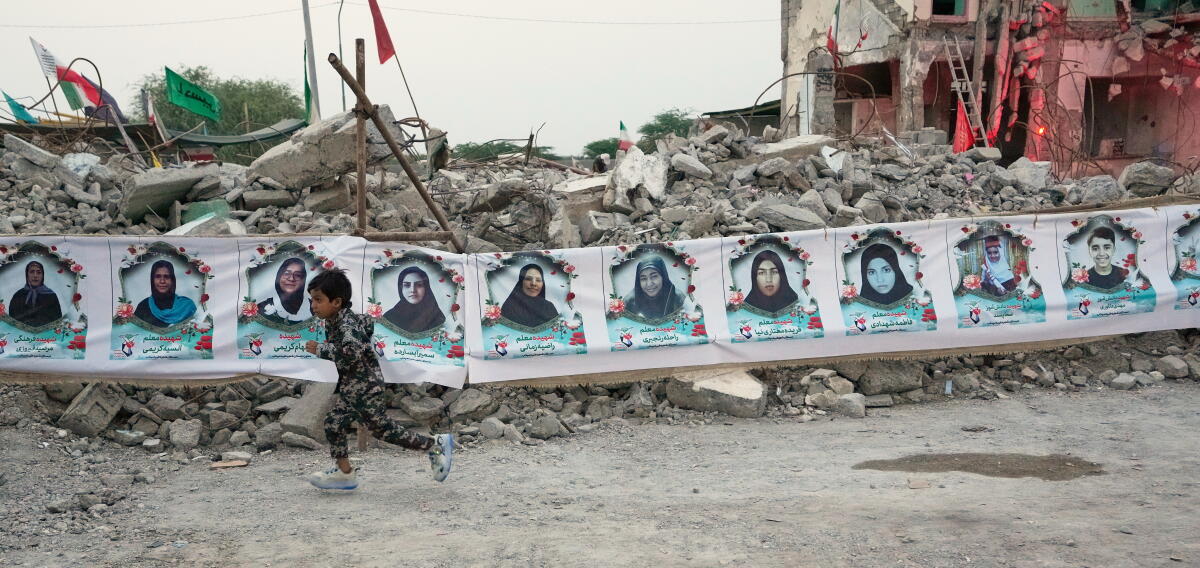
A missile strike on February 28 targeting an Iranian school left more than 150 people dead, including at least 123 children. This incident, attributed to the U.S., marks the deadliest American military targeting error concerning child casualties in the 21st century, according to officials involved in an internal investigation.
United Nations investigators reported that the strike on Minab, along with another U.S. attack that day, potentially constitutes a war crime. Despite mounting evidence, the U.S. has not publicly accepted responsibility, with President Trump attributing the incident to Tehran.
Officials tied to the Pentagon’s investigation revealed a series of preventable errors led to the disaster. These ranged from compressed target finalization timelines to reliance on outdated intelligence and overreliance on artificial intelligence (AI). Within the first 24 hours of the attack, over 1,000 Iranian targets were hit, driven by urgent orders from the Trump administration.
The Pentagon investigation into the strikes is ongoing, and transparency regarding full details remains limited. Officials faced constraints on information sharing, although early reviews in March indicated U.S. responsibility for the Minab strike.
“The United States does not target civilians,” said a senior administration official when addressing inquiries regarding the attack.
UN’s report highlighted the U.S.’s failure to verify the school as a military target, describing the error as extending beyond negligence. While U.S. officials cited outdated intelligence and an artificial intelligence system that did not flag modifications at the site—like its development into a school since its previous classification as military ground—concerns persist.
Inside Centcom, reliance on the AI-powered Maven system overshadowed human intervention in reviewing outdated intelligence. Maven, by Palantir Technologies, processes extensive data inputs to guide military operations but was not responsible for intelligence verification. Post-incident, Palantir added capabilities to Maven that improved review processes and error flagging functionalities.
The tragedy raises significant questions about gaps in civilian protection efforts, driven by administrative cuts under Defense Secretary Pete Hegseth. Centcom’s civilian harm team, reduced drastically, wasn’t involved in target reviews.
The Minab school was misclassified as a Revolutionary Guard facility, feeding into the Pentagon’s target list and propelling the site into the multi-stage “kill chain” assessment process. Traditional procedure involves numerous checks and balances from various specialists within the military, often assisted by human review prior to operations, particularly concerning objectives and potential civilian harm.
A rapid preparation of target lists — accelerated by Maven — led to the tragedy. Analysts typically require hours for such assessments, but the condensed timeline induced by Maven resulted in expedited evaluations across the board.
Since the incident, wider implications emerge. Iranian forces along vital trade routes highlight ongoing tensions. The school built years ago on former military grounds remained misclassified, a severe flaw uncorrected quickly enough to prevent the tragedy.
Human rights advocates and experts reconstructing the attack gather firsthand accounts, revealing the horror of missile impacts and their aftermath. The targeted school, visible on satellite imagery with colorful additions dating from 2017, operated openly as an educational site, contradicting its outdated classification.
While officials assert haste triggered the tragedy, there remains advocacy for deeper assessments to ensure due diligence in future military operations.
Historical military planners maintain libraries targeting varying degrees of Iranian threats. Such catalogs necessitate rigorous upkeep to mitigate errors amidst evolving site dynamics. The Minab site exemplifies risk when aged satellite imagery guides targeting decisions, now prompting reassessments of intelligence database systems.
Political repercussions across both Iranian and U.S. spectra underscore mounting demand for robust investigation transparency and accountability. This incident becomes central to discussions regarding military oversight and operational ethics.