
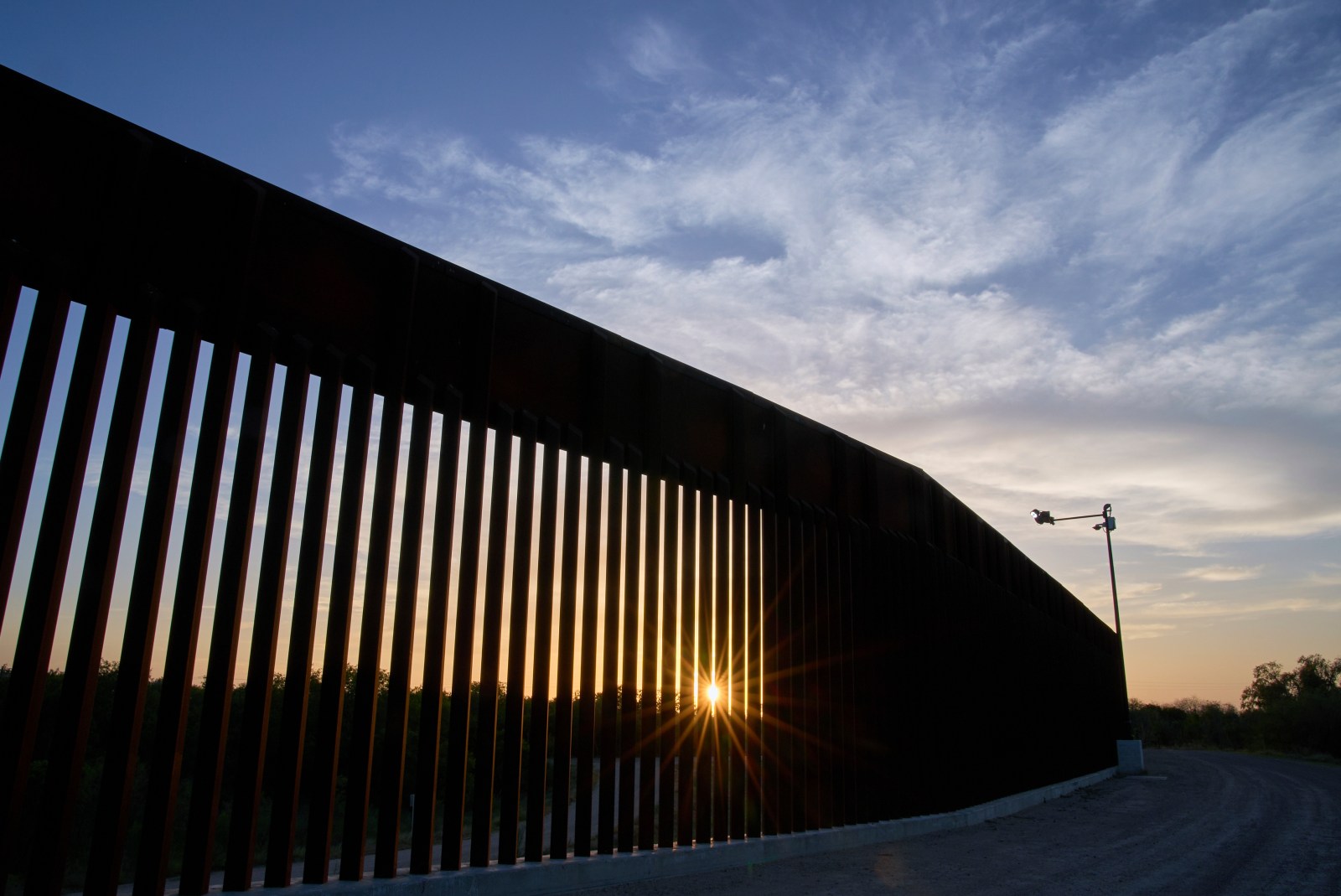
A federal judge has ruled in favor of the Trump administration in its initiative to extend the southern border wall. The court rejected a petition from the Tohono O’odham Nation to stop construction along a 62-mile section of their reservation on the Arizona-Mexico border. The Tohono O’odham Nation contends that the project would harm sites of cultural and religious significance, disrupt religious customs, and divide tribal communities that span both sides of the border.
The Court’s Decision
U.S. District Judge Richard Leon, appointed by President George W. Bush, denied the tribe’s request for a temporary injunction. He found the tribe’s claims unlikely to succeed in court. Judge Leon noted that the federal Roosevelt Reservation has existed along the border since 1907, before the tribe’s modern reservation was set up. The Tohono O’odham Nation argued it held aboriginal title to the land prior to the Roosevelt Reservation’s creation.
I conclude that plaintiff is unlikely to succeed on the merits because the federal Roosevelt Reservation exists along the international border and, in any event, plaintiff has not established that construction of a border wall will indeed alter Reservation boundaries.
Judge Leon also emphasized the government’s interests in border security and public safety. While he refused the preliminary injunction, he acknowledged the importance of future consultations with the tribe to address concerns about wall construction.
The Tohono O’odham Nation’s Response
The tribe holds a vast 2.8-million-acre reservation in Arizona, 62 miles of which run alongside the international border with Mexico. According to tribal filings, their ancestral lands stretch into Mexico where 17 O’odham communities reside, and members frequently cross the border for religious purposes. The Nation’s lawsuit aimed to prevent border wall construction, which they argue would alter reservation boundaries and trespass on tribal land.
The tribe has historically collaborated with the federal government on border security. They established a vehicle barrier in 2004 along the border that allowed people to cross. The Nation has also partnered on a task force against drug trafficking. Despite this cooperation, the tribe expressed disappointment with the ruling. Chairman Verlon M. Jose stated that critical issues such as the destruction of sacred sites were not adequately addressed.
Too many critical issues were not adequately addressed, such as inevitable impacts construction will have on the Nation’s land and the permanent destruction of sacred sites. The Nation will consider all possible options for moving forward, as this issue is simply too important to the O’odham.
Area Impacted by the Wall
The construction affects a 62-mile stretch of the reservation along the U.S.-Mexico border in Arizona’s Sonoran Desert, an ecologically sensitive area home to unique wildlife and desert plants. Notably, the saguaro cactus only grows naturally in this desert environment.
The Nation provided a map showing their ancestral lands, which extend beyond current reservation limits past cities like Phoenix and Tucson and into Mexico.
Trump Administration’s Border Goals
Border security remains a priority for the Trump administration. Congress allocated billions in July 2025 for border barriers and security measures. The federal government plans to use these funds for construction projects.
Legal battles have arisen over the wall’s construction, not only with the Tohono O’odham Nation but also with religious groups and landowners. For instance, the government seeks land near Mount Cristo Rey, a Catholic pilgrimage site, raising religious freedom concerns.
The administration has also initiated construction within Big Bend National Park in Texas. Plans involve new access roads and surveillance technology. Environmentalists and local leaders argue that these developments are harmful to the surrounding natural habitat and local economic activities tied to tourism.
For further details, contact Newsweek editors Steve Mollman and Anthony Murray.