
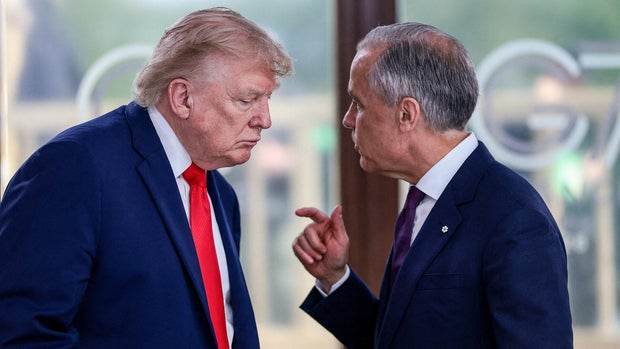
On Tuesday, the United States implemented a ban on nearly $1 billion worth of Canadian imports, including alcoholic beverages, dairy products, and motorcycles. This move marks an escalation in trade tensions between the two nations, which have been long-standing allies and trade partners.
The ban is part of President Trump’s second-term trade policies, particularly targeting Canada. It affects a small portion of the $880 billion annual trade flow between the U.S. and Canada, but symbolizes a significant step in the ongoing trade conflict.
This ban certainly won’t help ease the trade tensions between the United States and Canada,said Patrick Childress, a trade attorney and former U.S. trade official. He noted that the goods on the banned list already faced a 50% tariff, effectively acting as an economic barrier.The friction began over the summer when Trump used a Great Depression-era law to levy 50% tariffs on $20 billion worth of Canadian imports. Trump accused Canada of unfair practices against U.S. producers of dairy, automotive, and alcoholic products. In retaliation, Canada imposed tariffs of 15% to 50% on U.S. imports.
In response to Canada’s countermeasures, the U.S. banned certain Canadian products starting Tuesday. Jacob Jensen from the American Action Forum calculated that the ban covers $967 million worth of imports, with 87% being alcoholic beverages. Canada faced restrictions on exporting these due to some provinces banning U.S. alcoholic products.
Besides alcoholic beverages, the ban includes whey, a dairy product, and motorcycles from Bombardier Recreational Products in Quebec. The company expects the impact of the ban will be minimal for the current cycle, as most production and shipments are completed.
This marks another escalation… that could lead to further retaliation from Canada,Jensen said. He emphasized the desire of affected exporters and importers for a resolution.The conflict endangers the renewal efforts of the U.S.-Mexico-Canada Agreement—a pact originally established during Trump’s first term, which allowed duty-free trade across North America. Trump’s tariff announcements have cast a shadow over future trade in the region.
Canada’s Response
President Trump has directed significant criticism toward Canada, seeking to shift Canadian manufacturing to the U.S. He has suggested that Canada should consider becoming America’s 51st state, provoking Canadian public opinion.
Canadian Prime Minister Mark Carney, in office since last year, is determined to oppose Trump’s trade actions. Besides retaliating with tariffs—similar only to China’s approach—Carney aims to reduce dependency on the U.S., which accounted for 70% of Canadian exports last year. He intends to double Canada’s trade with non-U.S. markets in the next decade.
Carney has pursued ties with the European Union and India to diversify trade relationships. Recently, he forged an agreement with China, allowing a limited number of Chinese electric vehicles into Canada with reduced tariffs in exchange for lower tariffs on Canadian canola.
Gabriel Brunet, a spokesman for Canada’s Trade Minister Dominic LeBlanc, stated,
Our priority remains on protecting Canadian workers and businesses from these unjustified actions.He reinforced Canada’s focus on building domestic strength and diversifying international trade partnerships.Trump expressed confidence in negotiations with Canada, stating,
I think a deal will be made, but it’s gonna be fair.However, Childress predicted that the current impasse may persist for months.