
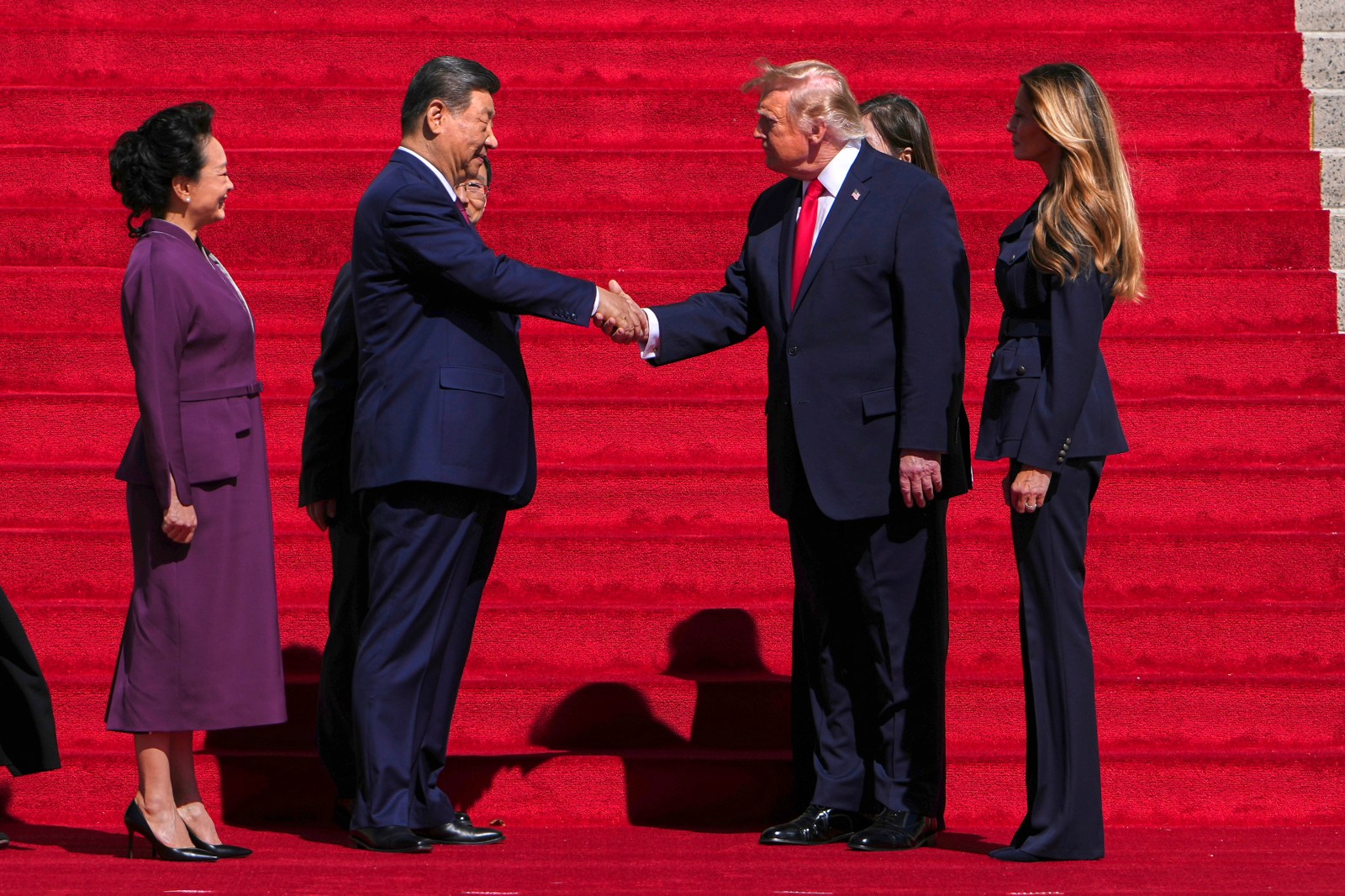
President Donald Trump has asked Chinese President Xi Jinping to boost China’s output of certain petroleum products. This move comes as the White House grapples with high gas and diesel prices just before November’s significant midterm elections. During President Xi’s first state visit to the U.S. in over a decade, Trump encouraged Xi to increase refined petroleum production to help stabilize global supply, as detailed in a Friday White House statement.
Supply Disruptions in Global Energy Markets
Global energy markets have faced continuous challenges following the Iran war, which began with U.S. and Israeli strikes on Tehran in late February. Iran’s control of the crucial Strait of Hormuz, a vital international waterway, has restricted a corridor that previously facilitated about a fifth of the world’s oil and gas transportation. Seven months into the conflict, no peace agreement has been reached between Washington and Tehran. Reports indicate Trump rejected an Iranian offer to reopen the waterway within a week.
Brian Mast, chairman of the House Foreign Affairs Committee, commented on Fox News that if Trump can ensure China stops arming Iran, it would help stabilize global oil routes and crude prices, which impact U.S. gas prices.
Russian diesel production has also been impacted due to sanctions following its invasion of Ukraine in 2022. Ukrainian strikes on Russian refineries this year have reduced Moscow’s diesel production by nearly 30% and decreased its foreign exports.
China’s Role in Fuel Exports
Amid rising supply concerns in March, China, a major producer of refined oil, limited its gasoline and diesel exports to protect its domestic inventories. By late 2025, China’s oil stockpile reached nearly 1.4 billion barrels, with Beijing adding about 1.1 million barrels daily. Analysts from RBN Energy suggest that China’s government might export more gasoline, diesel, and jet fuel to ease global supply tensions and price increases.
This summer, China eased restrictions on refined fuel exports. According to Reuters, exports increased by 13% year-on-year, with jet fuel exports hitting record levels in August.
Impact on American Households
Rising diesel prices have strained American households, farmers, truckers, and construction businesses. According to the American Automobile Association (AAA), diesel prices reached nearly $6.50 a gallon early Saturday, climbing from about $3.70 a year ago. Gas prices have also risen, with the national average reaching almost $4.49 a gallon, and six states have prices exceeding $5 a gallon.
AAA noted that fall usually leads to lower gas prices, but the Strait of Hormuz’s instability and high crude costs are causing price hikes. The prices are expected to set a new record for September.
Political Ramifications Before Midterms
Higher energy prices pose a political challenge for the White House as vulnerable Republicans prepare for upcoming elections. Trump has minimized the economic effects of the war, while some Republicans suggest halting diesel exports and suspending gas taxes. Trump has considered a 90-day export ban before the midterms, though the White House dismissed this as fake news.
Several Republican candidates, like Iowa Senate nominee Ashley Hinson, have called for the Iran war to end, highlighting the impact of fuel costs on Americans. Ohio Senator Jon Husted also advocated for ending the conflict to lower gas prices.
U.S.-China Agreements at Trump-Xi Summit
A Friday readout from the White House stated the U.S. and China reached a consensus on tariff recommendations for $30 billion in traded goods. Xinhua, China’s state news agency, confirmed a mutual agreement on a two-way tariff reduction of the same value.
U.S. Treasury Secretary Scott Bessent announced that a trade truce initially set last year has been extended by two months, now ending on January 10, 2027. A new Board of Investment has been established to discuss potential investments and challenges. The two countries also agreed to start discussions on artificial intelligence, referred to as ‘super intelligence,’ with an upcoming session scheduled for November.
Additionally, China will import at least 10 million metric tons of U.S. coal yearly during 2027 and 2028, and both nations agreed that Iran should never acquire nuclear weapons, referencing the importance of international waterways.