
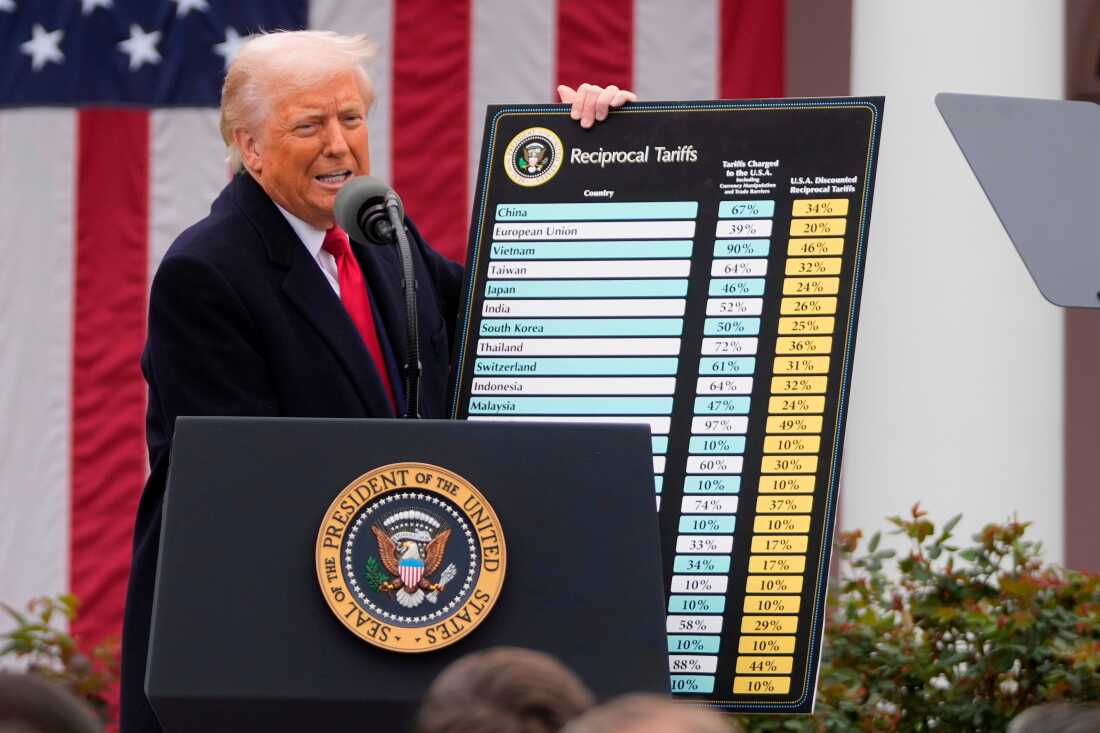
President Donald Trump has announced the implementation of double-digit tariffs on imports from dozens of countries. These new tariffs are expected to affect 99% of U.S. imports. The decision comes as temporary worldwide tariffs expire, following the Supreme Court’s decision against Trump’s previous tariffs. The U.S. Trade Representative, Jamieson Greer, emphasized the importance of enforcing bans on goods produced by forced labor, aiming to correct both human rights abuses and distortive trade practices.
The new tariffs will be enforced under Section 301 of the Trade Act of 1974. This allows the president to apply import taxes and sanctions against countries engaging in unjustifiable, unreasonable, or discriminatory trade practices. This strategy has been previously used against China and withstood legal challenges. Trump plans further investigations under Section 301 for 16 countries.
Last year, Trump adjusted U.S. trade policy significantly by invoking the International Emergency Economic Powers Act (IEEPA) to impose tariffs globally, addressing the trade deficit as a national emergency. However, the Supreme Court ruled against these tariffs, resulting in refunds to importers. Now, Trump has resorted to tariffs under Section 122 of the Trade Act of 1974, which are limited to a 150-day period.
The announcement of forced labor tariffs earlier prompted some countries to tighten enforcement, resulting in lower tariffs for certain nations. Exemptions include oil, gas, and fertilizer products, as well as those qualifying for duty-free status under the US-Mexico-Canada Agreement.
The burden of tariffs falls on U.S. companies importing foreign goods, often leading to higher consumer prices. This poses a risk ahead of the midterm elections.
Human rights advocates, like Martina Vandenberg of The Human Trafficking Legal Center, argue that while skeptical of the tariffs’ motivations, they could address forced labor effectively. The International Labor Organization estimates that 27.6 million people were in forced labor worldwide in 2021.
Vandenberg expressed concerns about the tariffs in testimony, advocating for a gradual implementation to allow countries time to build enforceable ban mechanisms. She highlighted the importance of establishing meaningful and enforceable systems rather than relying on thin slips of paper.
Kenya Davis, a partner at Boies Schiller Flexner, referred to the Uyghur Forced Labor Prevention Act as significant prior legislation in U.S. efforts against forced labor. Though its effectiveness remains debated, it has raised awareness about labor trafficking and forced labor.
Isabelle Glimcher from NYU Stern Center for Human Rights identified a flaw in the tariffs as targeting imports, not domestic production. However, she noted that the tariffs threat has prompted several countries to modify their foreign trade policies to include import bans. Upcoming European Union regulations aim to contribute to these efforts.
While the Section 301 investigations are one factor, countries appear to be responding to the pressure and taking the issue of forced labor seriously.