
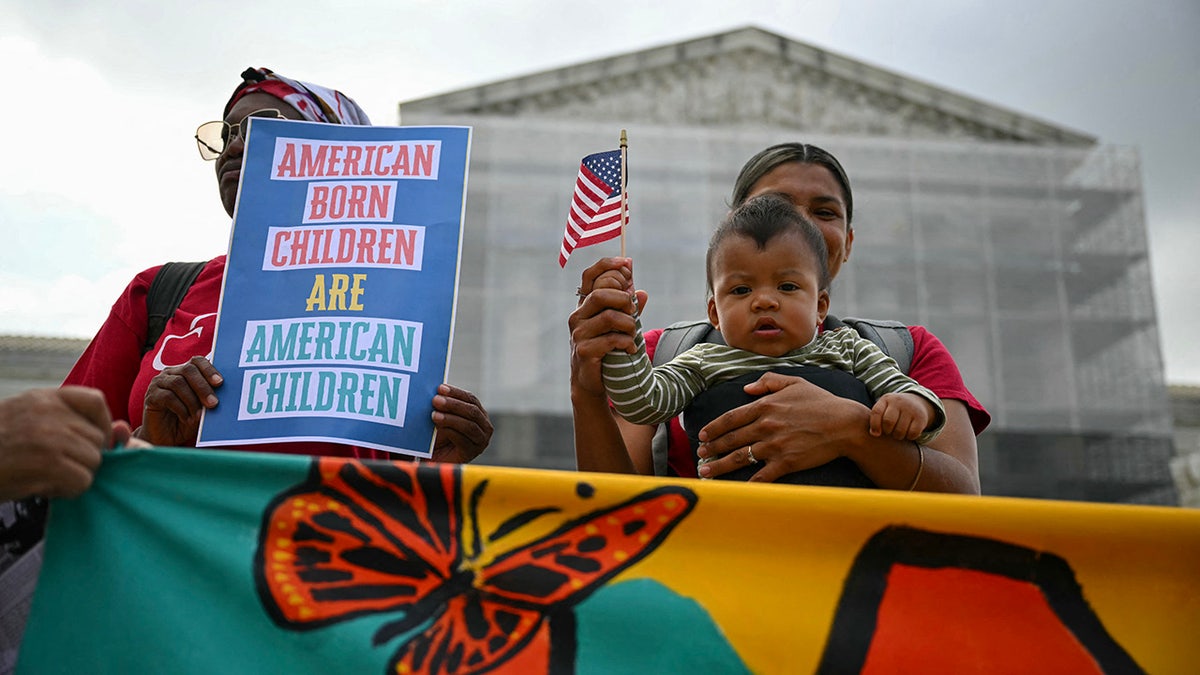
Conservative legal experts argue that President Donald Trump’s recent efforts to refine birthright citizenship laws and address birth tourism are legally stronger than past attempts. Following a Supreme Court judgment in June, affirming that children born in the U.S. to parents who are unlawfully or temporarily present are citizens, Trump issued two executive orders with more focused aims.
Two New Executive Orders
The first order, signed on August 6, directs federal agencies to withhold citizenship documents for certain children born when neither parent is a U.S. citizen. This policy applies to children whose parents might be members of foreign terrorist organizations, employees of foreign governments, or engaged in fraud to gain birthright citizenship.
Organizations like the Manhattan Institute and America First Policy Institute support this narrower scope. They believe Trump’s order aligns with historic exceptions to birthright citizenship.
Legal Opinions and Historical Context
“The Supreme Court has long recognized exceptions to birthright citizenship under the 14th Amendment for children of invading armies or ambassadors,” Chad Mizelle, a senior fellow at America First Policy Institute, told Fox News Digital.
The landmark 1898 Supreme Court case, United States v. Wong Kim Ark, identified exceptions for children of diplomats or alien enemies during occupation. Trump’s executive order argues that foreign terrorist members could be considered under this exception.
Ilya Shapiro from the Manhattan Institute states that the new order addresses traditional exceptions, such as loyalty to foreign governments. This includes diplomats and potentially foreign terrorists.
Challenges and Concerns
David Bier from the Cato Institute warns against redefining ‘alien enemy’ without Congressional action. He finds the unilateral decision on U.S. jurisdiction by the president to be a significant leap in executive power.
Amanda Frost, of the University of Virginia School of Law, references historical context. Only children of enemies occupying national territory are denied birthright citizenship. The order might misapply this to non-occupying terrorists.
Challenges abound regarding who qualifies as a foreign diplomat or a terrorist. Defining this impacts prosecution for other criminal acts, compounding legal arguments against the order.
Potential Legal Standing
The issue of legal standing concerns whom the executive order directly affects. Gene Hamilton from America First Legal questions who might pursue legal action if they find themselves defined under the order’s terms as members of a terrorist organization.
Executive Orders Targeting Birth Tourism
The second executive order instructs the State Department and the Department of Homeland Security to deny travel visas and consider removal actions for those engaged in birth tourism. Birth tourism involves non-citizens entering the U.S. to give birth and secure citizenship for their child.
Hamilton describes this order as legally sound, citing the sovereign rights of countries to manage visa grants and denials. Since 2020, rules have already allowed for visa denial if the intent is birth tourism.
Critics like Debu Gandhi of the Center for American Progress argue that existing policies already target birth tourism without new orders. He states the Trump administration attempts to unilaterally define U.S. citizenship against constitutional guidance.
If these attempts to limit birthright citizenship do not hold, more restrictive advocates may turn to Congress or pursue constitutional amendments requiring state approval.
The White House did not comment on these developments.