
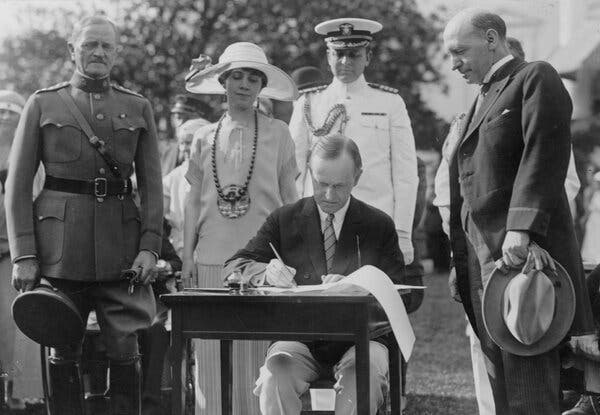
In 1924, Congress conveyed a clear message: the United States would no longer welcome the world’s tired, poor, and huddled masses. This shift was driven by concerns over crime, changing demographics, and economic challenges. Lawmakers set quotas that limited immigration from countries like Italy, Poland, and Russia, effectively barring Asian immigrants. At that time, only 150,000 immigrants were allowed annually, clashing with the welcoming vision of Emma Lazarus’s famous poem.
Representative Albert Johnson, a Republican from Washington, emphasized that the U.S. should cease functioning as an asylum. Today, some historians observe similarities in the current immigration landscape. Notably, President Trump is reinforcing border controls largely through his executive authority, bypassing Congress.
Supported by new powers from the Supreme Court, Trump has significantly reduced all immigration forms. He banned asylum at the southern border and ended deportation protections for individuals from disaster and conflict-stricken countries. Refugee admissions have halted, except for a small group of mainly white South Africans. Policies limiting long-term immigration from parts of the Middle East and Africa have been enacted, and green card issuance is restricted for those perceived as potential government benefit dependents.
Furthermore, Trump has deported hundreds of thousands and incentivized voluntary departures with threats of forced relocation to perilous third countries. These actions mark a significant shift in U.S. immigration policy.