
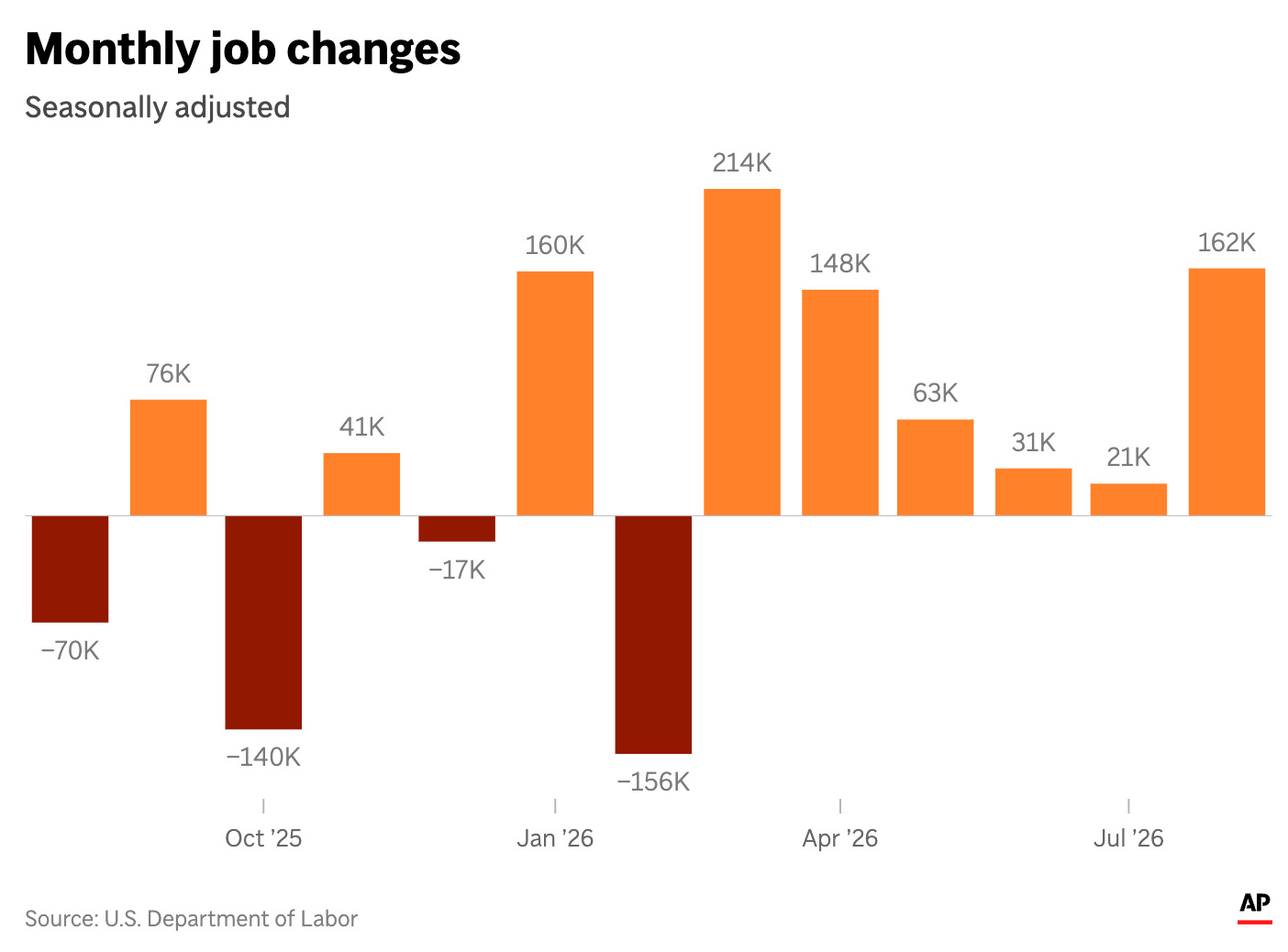
President Donald Trump often spoke of an economic boom on the horizon, yet recent developments tell a different story. The August job report showed a surprising increase of 162,000 jobs, breaking a period of sluggish hiring. However, this led to frustration for Trump, rather than celebration.
Trump’s Reaction to Economic Developments
From the Oval Office, Trump voiced grievances about inflation and interest rates. He contradicted the economic notion that job gains contribute to inflation, proclaiming, “Success does not cause inflation. Stupidity causes inflation.” The stock market’s negative reaction fueled his discontent.
During his campaign, Trump promised to trigger a new economic boom if reelected. Despite these assurances, growth has averaged about 2% annually, falling short of previous expectations set during the Biden administration.
Claims and Realities of Economic Growth
Trump attributed slower growth to high interest rates, suggesting the U.S. might halt trade with foreign nations as a retaliatory measure. The national debt has surpassed $40 trillion, with the 10-year U.S. Treasury note rates rising to 4.79%.
Trump’s credibility on economic issues suffered as projected growth remained elusive. His administration’s policies have contributed to the inflation and interest rates he criticizes. Echoing this view, Joe Brusuelas of RSM US emphasized the gap between predictions and economic realities.
Policy Challenges and The Fed’s Role
Trump pushed for lower interest rates to boost the economy, claiming GDP could increase significantly. Yet, this approach could exacerbate inflation. Trump’s approval rating on economic matters hit 32% during summer polls, compared to 50% in the 2018 midterms. His tariff policies, such as those against Canada, have sparked political challenges for Republicans.
Administration’s Vision for Economic Improvement
Trump’s officials remain optimistic, highlighting artificial intelligence, tariffs, and tax cuts as drivers for future growth. Christopher Phelan of the White House Council of Economic Advisers supports these policies, asserting that the job growth rate exceeds population growth needs.
Yet, experts like Ernie Tedeschi caution against over-optimism. He warns that historical data does not support expectations of sustained high growth driven by technology advancements alone.
The Fiscal Challenge: Deficits and Debt
Even with potential growth exceeding 3% annually, addressing the national debt remains a complex challenge. Treasury Secretary Scott Bessent and others work towards strategies to manage the $2 trillion budget deficit.
Meaningful solutions would likely involve reduced government spending and increased taxes. Brusuelas notes that sacrifices may be necessary for sustainable fiscal health.