
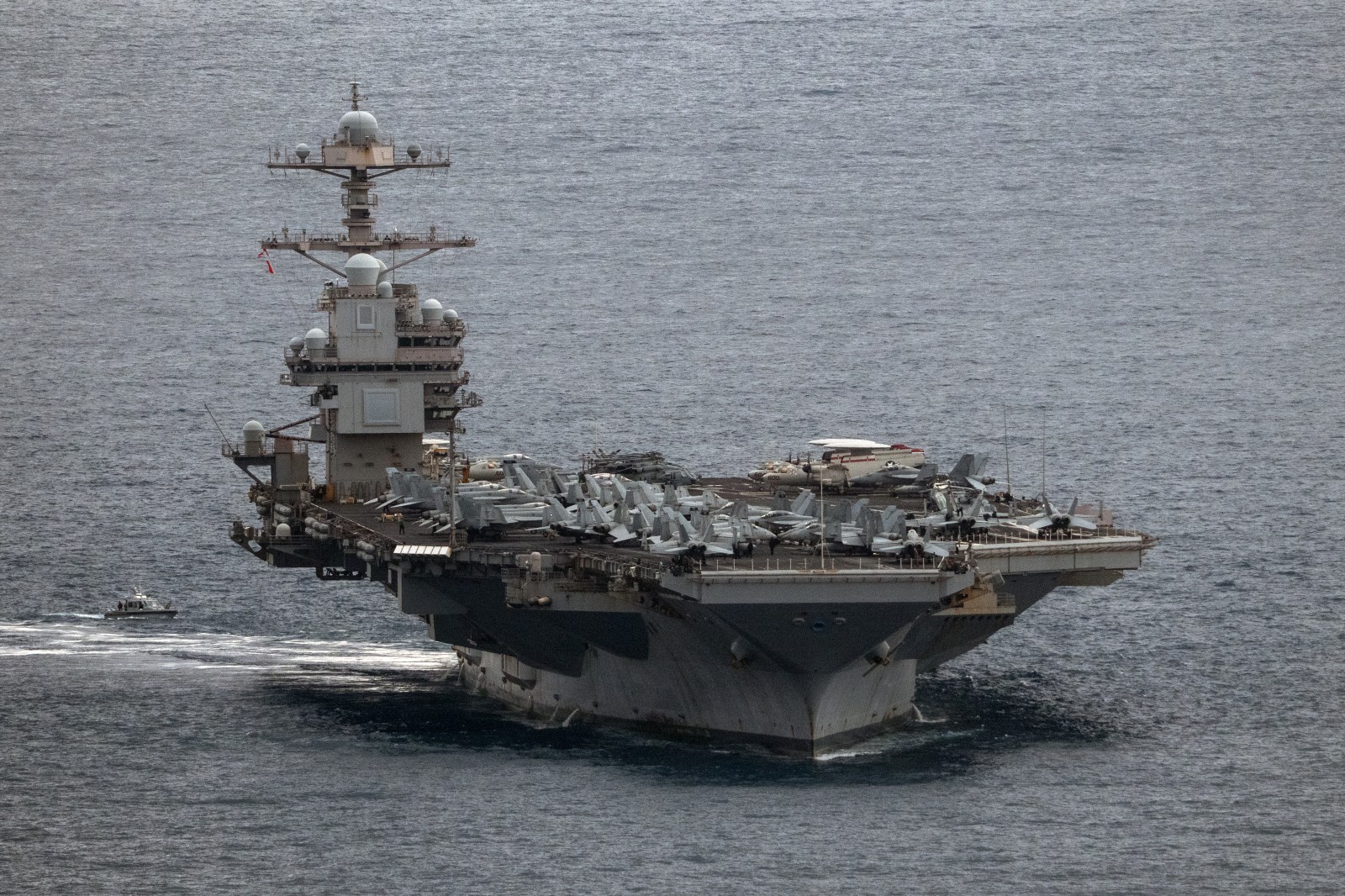
President Donald Trump’s recent initiative to modify the latest U.S. Navy aircraft carriers has sparked warnings from defense experts, contractors, and former officials. They caution that the proposed changes may inflate costs, delay construction, and undermine design decisions that the Navy has developed over years.
Following Trump’s signing of a national security memorandum, the Pentagon and Navy were directed to devise a plan within 60 days to substitute the Electromagnetic Aircraft Launch System (EMALS) and Advanced Weapons Elevators on the USS Doris Miller, a future Ford-class aircraft carrier, with steam catapults and hydraulic systems. This move aims to align with Trump’s preferences for the ships’ appearance.
The Ford-class carriers, set to replace the aging Nimitz-class fleet, have faced renewed debate. Reports suggest Navy officials are also examining moving the island or command tower, on these carriers farther forward, a redesign deemed “very disruptive” by Bryan Clark of the Hudson Institute.
Navy officials assert that repositioning the island was originally intended to enhance operational efficiency, offering more aircraft parking space and improving launch operations.
Further evaluation indicates that relocating the island might incur significant expenses and delays. The Ford-class fleet, including USS Gerald R. Ford, USS John F. Kennedy, USS Enterprise, and USS Doris Miller, faces scrutiny amid these potential alterations.
Steam Catapult Debate
Trump has long criticized EMALS for being overly complex. The administration favors “proven, reliable and affordable technologies.” However, the Navy argues that EMALS improves aircraft launch rates and reduces personnel needs. Reports indicate it decreases the number of operators needed aboard ships significantly.
Globally, other nations like China and France are adopting electromagnetic systems for their carriers, adding another layer to the debate over technology choices.
Cost and Delay Risks
General Atomics, the EMALS manufacturer, has warned of significant risks associated with changing systems at this stage of the USS Doris Miller construction. They report that catapult and arresting gear production is halfway completed. Halting these systems now could bring substantial cost, schedule, and integration challenges.
Defense analyst Bryan Clark cautions that altering established systems can lead to major disruptions, touching on a broader issue of shipbuilding delays and maintenance backlogs.
Critics Push Back
Several analysts question the value of these disruptive changes. Todd Harrison of the American Enterprise Institute labeled Trump’s redesigns “highly unusual,” especially since they weren’t Navy-initiated.
Senator Mark Kelly, a former Navy pilot, criticized Trump’s proposal, emphasizing his aviation experience but deferring to Navy engineers’ expertise. He argued during an interview with The Hill that redesigning ongoing ship projects “probably” involves billions in costs.
Mark Kelly said, “Donald Trump knows nothing about this stuff. Not in any world would I suggest to the Navy to change the design of some system on a ship at this point.”
Critics believe that redesigning vessels mid-construction might undermine modernization efforts, escalate costs, and extend schedules, potentially negating the Navy’s long-term strategic plans.