
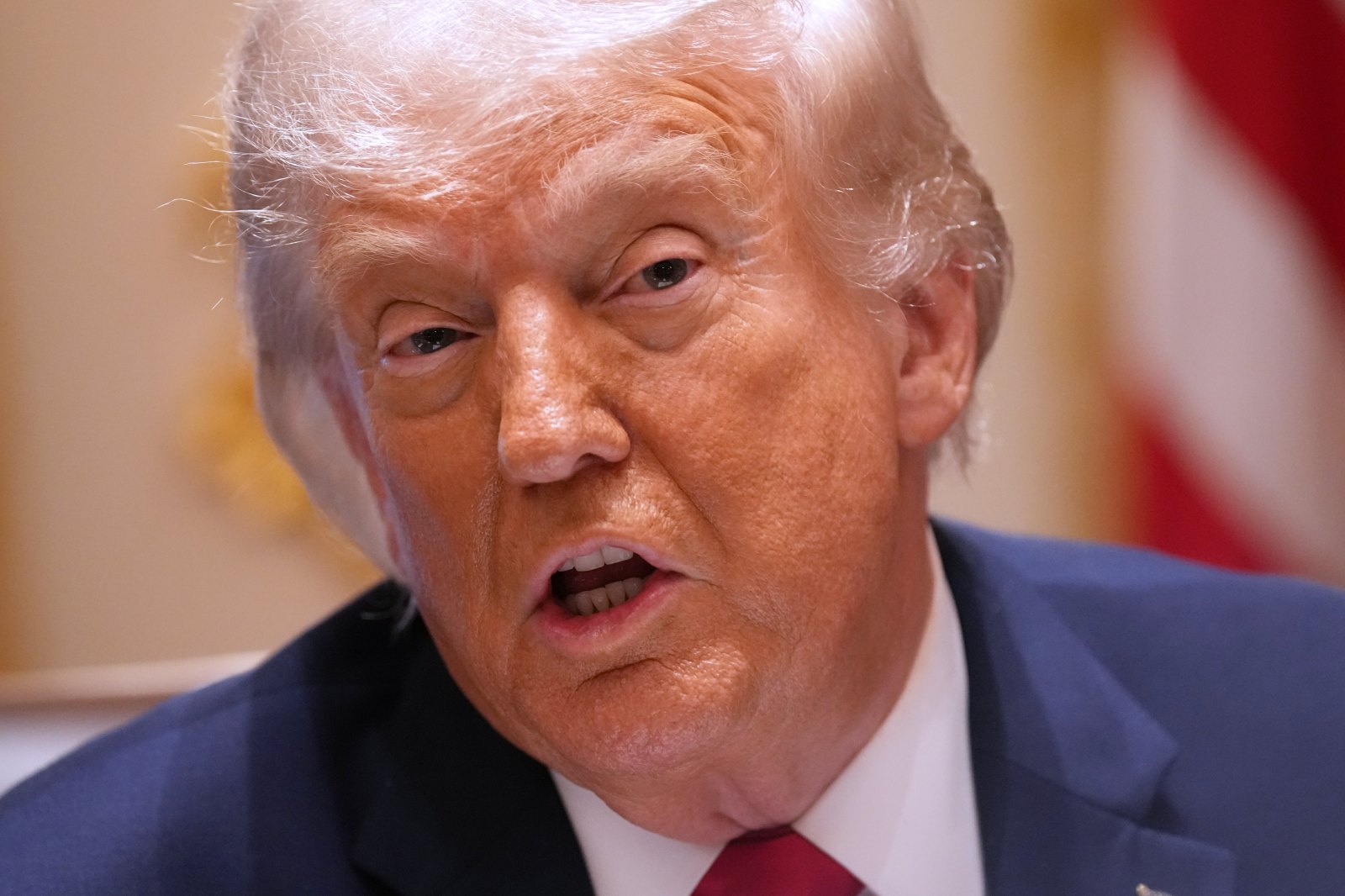
President Donald Trump’s approval rating has dropped to a new low in a Big Data Poll. This survey was conducted from May 24 to 27 and included 3,121 registered voters. The results show that 39.4 percent of respondents approve of Trump’s job performance. Within this group, 19.9 percent strongly approve. This marks the first time Trump’s approval dipped into the crucial 30s during his second term.
The poll, known for favorable ratings for Trump, now reveals a significant downturn. This shift suggests that dissatisfaction might be spreading beyond his usual critics. Rich Baris, the director of Big Data Poll and a former supporter of Trump, has expressed criticism during Trump’s second term. Baris has concerns over Trump’s policies related to Israel and Iran. In June of the previous year, Baris cautioned that escalating involvement in Iran could endanger the MAGA movement.
“After a year of voters being clear while granting an unheard-of amount of political grace, Republicans have dug themselves into a massive hole by not heeding their warnings,” Baris stated in the May poll report.
The May survey results indicate growing discontent within the Make America Great Again movement. Voter disapproval is rising over issues like the economy, foreign policy, and the administration’s handling of matters related to Jeffrey Epstein. A White House spokesperson, Davis Ingle, defended Trump’s record, citing his accomplishments. He referred to the November 5, 2024 election, where Trump received nearly 80 million votes as the ultimate poll.
“No other President in history has accomplished more for the American people than President Trump, who is working tirelessly to create jobs, cool inflation, increase housing affordability, and more,” Ingle commented to Newsweek.
Historical Decline in Approval Ratings
Trump’s approval rating stands at 39.4 percent in the May survey, reflecting a drop from 44.8 percent in January. This is a further decline from a 55.5 percent approval rating when Trump re-entered office the previous year. Now, 57.4 percent disapprove of his job performance, with 46.2 percent strongly disapproving.
The intensity index, which shows the gap between strong approval and disapproval, is at -26.3. This marks the widest negative measurement by the firm. More voters strongly disapprove of Trump’s job performance than those who approve, according to the survey results.
Negative Ratings Across Key Issues
Trump’s approval rating is now negative across all major issues. On economic matters and jobs, 38.5 percent approve while 56.9 percent disapprove. This leaves Trump 18.4 points in deficit. Previously, 46.8 percent approved and 49.2 percent disapproved in January.
Regarding the cost of living, 29 percent approve of Trump’s handling while 66.5 percent disapprove, leading to a negative spread of 37.5 percent. Earlier in January, 38.5 percent approved and 48.6 percent disapproved. On the Iran conflict, 58.3 percent disapprove of Trump’s management, while 33.7 percent approve. In January, those figures were 48.3 percent and 38.6 percent respectively.
Big Data Poll’s margin of error stands at plus or minus 1.8 percent for registered voters and plus or minus 1.7 percentage points for likely voters. The poll shows that 36.5 percent support U.S. military action in Iran, whereas 53.4 percent oppose it.
Voters Shift Trust to Democrats on Key Issues
Rich Baris noted in the report that voters’ patience with the administration and majority party has waned. Survey results show a shift in trust toward Democrats on crucial voting issues like the economy, cost of living, and foreign policy. However, Republicans maintain more trust over immigration and border security, with 42 percent siding with them compared to 39.1 percent for Democrats.
The year has seen prominent MAGA figures, such as Marjorie Taylor Greene, Candace Owens, Tucker Carlson, and Megyn Kelly, distancing themselves from Trump. These critics argue that Trump’s foreign policy and actions in Israel deviate from his ‘America First’ stance.
In Kentucky’s 4th Congressional District, Representative Thomas Massie’s primary contest became a focal point for Republican Party directions. Massie, who disagreed with Trump on Epstein, Iran, and the One Big Beautiful Bill Act, faced criticism from Trump. He was supported by Republicans with more libertarian views. Ultimately, Massie lost the primary to Trump-endorsed Ed Gallrein, demonstrating Trump’s continued electoral influence.