
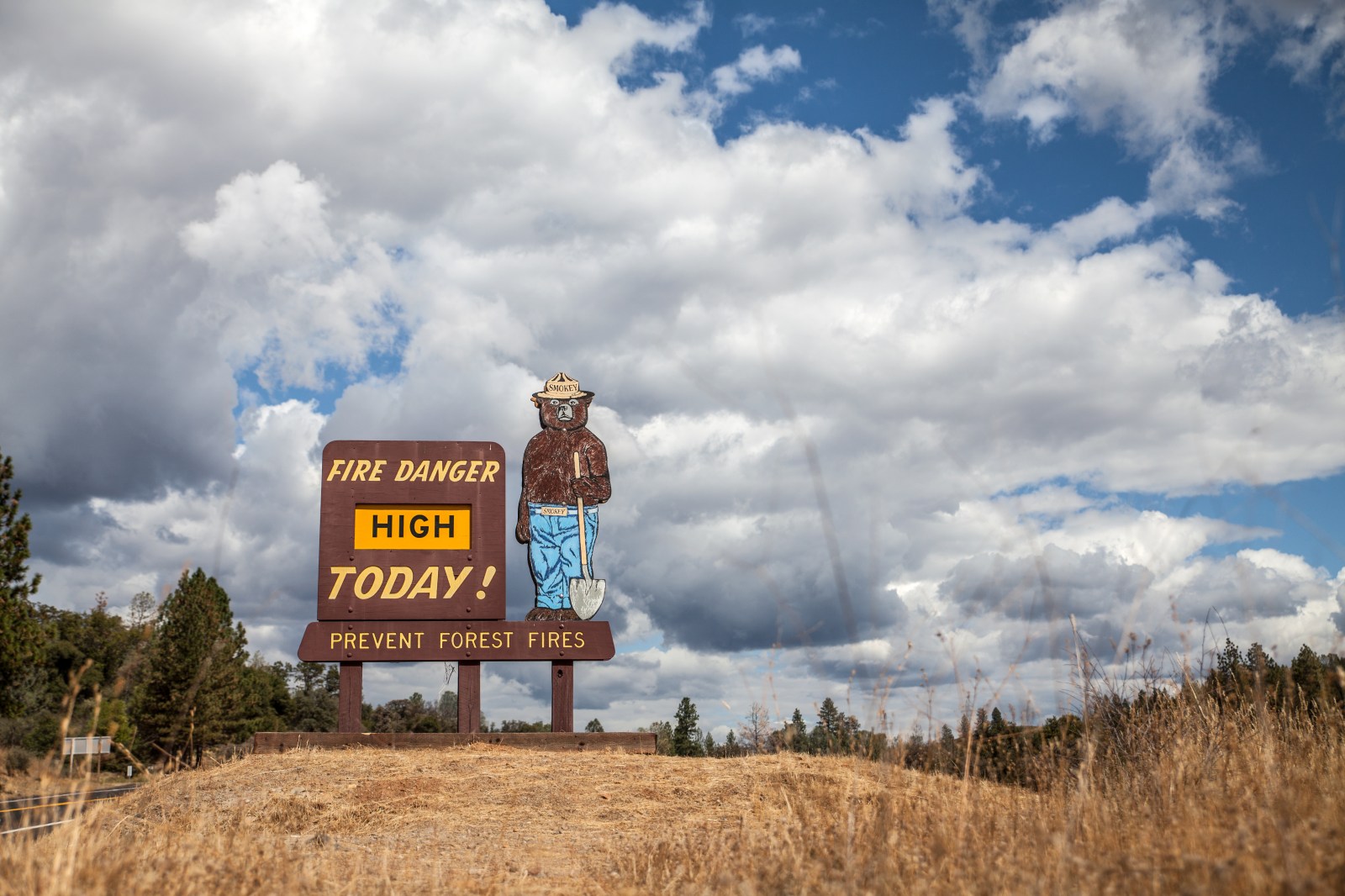
Smokey Bear, the emblematic figure for forest conservation, once had a clear message: “Only you can prevent wildfires.” This has shifted with former President Donald Trump’s approach: allow more logging to prevent fires. The broader plan seems to replace conservation with exploitation, impacting public lands significantly.
The Trump administration aimed to increase logging by 25%. It sought to repeal the “roadless rule” that kept logging away from 45 million acres of untouched forest. Environmental protections were diluted, favoring fast-tracking for loggers and miners. A key regulation, the Public Lands Rule, which balanced conservation with development, was removed. The administration claimed that logging could prevent forest fires, but evidence suggests that human actions, not forest density, start fires. Increased logging and human activity may, in fact, lead to more fires.
The debate over Trump’s ability to alter public land policies often overlooks important legal distinctions. The federal government owns vast areas, with the Bureau of Land Management managing 245 million acres. National parks, totaling 52 million acres, are protected by congress and require management that leaves them unimpaired for future generations to enjoy. Yet, Trump’s tenure saw attempts to give parts of these lands to private developers and reduce protections.
In Yosemite, plans were made to hand over land to private developers. Big Bend National Park faced destruction to expand a border wall. Drilling buffers around Chaco Culture National Historical Park saw removal attempts. The U.S. Virgin Islands National Park, donated by conservationist Laurence Rockefeller, faced significant threats. The Park Service had plans in place to develop a storm-damaged eco-resort while maintaining public access and protecting the land. The Trump administration opened the entire area for development, removing guest limits and access roads, and prioritizing commercial over local business interests.
Efforts are underway by local residents to combat these changes. An Environmental Assessment by the National Park Service had deemed the administration’s plans detrimental. Federal law stipulates actions should be rational, aligning with conservation goals, which these plans do not.
Historically, Republican presidents have been strong proponents of conservation. Dwight D. Eisenhower established the Virgin Islands National Park, and Ulysses S. Grant created Yellowstone, the first national park. Trump’s idol, Theodore Roosevelt, championed national parks significantly. Past leaders understood conservation’s value.
Accompanying Smokey Bear was the mascot Johnny Horizon, promoting respect for public lands as shared assets. This principle of stewardship asks why the approach has diverged from this legacy.
Thomas G. Moukawsher is an ex-Connecticut complex litigation judge and author. He has written The Common Flaw: Needless Complexity in the Courts and 50 Ways to Reduce It, along with an upcoming book on legal actions against the government. The opinions in this article are his own.