
Donald Trump’s administration is reforming savings accounts named after him to allow donations of individual company stocks. This change aims to enhance the accounts’ wealth-building potential, but it has also raised some concerns.
As of now, 70 million Trump Accounts have been created for American children—an increase from less than 10 million—thanks to an effective automatic enrollment process. The White House recently celebrated this milestone, highlighting that these accounts are “already investing billions for American children.”
According to a press release, since their launch on July 4, more than $4.5 billion has been deposited into Trump Accounts. This includes $1.3 billion in $1,000 seed contributions, over $600 million from family and friends, and $2.6 billion in philanthropic gifts.
In addition to auto-enrollment, the government is opening avenues for account funding by permitting the donation of individual stocks.
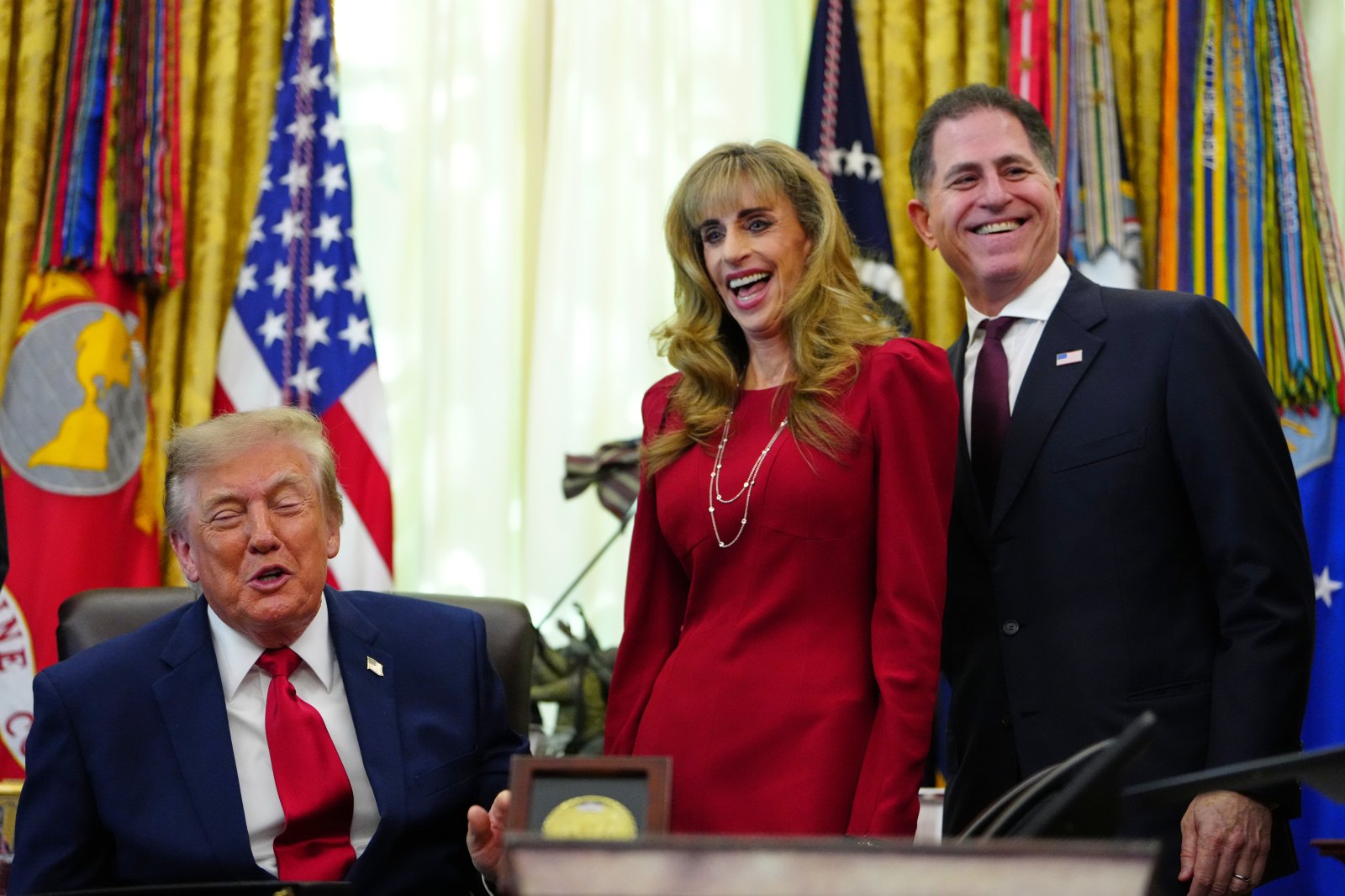
Michael Dell, founder and CEO of Dell Technologies, defended this significant change. At an event alongside his wife, Susan, Dell called criticisms of the reform “nonsense.” He believed it would motivate more wealthy philanthropists to contribute.
What Are Trump Accounts?
Authorized by the One Big Beautiful Bill Act, Trump Accounts are tax-advantaged savings vehicles for children in the United States. They allow up to $5,000 in annual contributions, with growth being tax-deferred until withdrawals are made, possible only when the account owner turns 18.
For those born between January 2025 and December 2028, the Treasury Department seeds accounts with $1,000. Numerous companies have committed to matching the federal donation or employee contributions.
The administration aims to auto-enroll all children, ensuring each has access to a Trump Account, according to officials. This effort intends to guarantee even children from lower-income households have savings prospects.
Elaine Maag from the Urban-Brookings Tax Policy Center noted that auto-enrollment could help solve historical disparities in account uptake.
The New Rule
In July, the Treasury proposed accepting major philanthropic contributions of public company stock. SpaceX President Gwynne Shotwell and her husband have pledged to gift stock to over two million children in regions with lower household incomes.
The new rule, detailed in the Federal Register in September, allows publicly traded companies to donate stock directly to Trump Accounts. This is a departure from earlier guidelines, which stipulated investments in mutual or exchange-traded funds only.
Account holders or their parents can’t select specific stocks, with securities typically held for five years. The government is considering feedback on this holding period.
Treasury officials suggested that stock contributions with a mandatory holding period create personal investment stakes for families. However, Adam Bergman from IRA Financial cautioned that a market downturn could limit families’ options to manage losses.
The Role of the Dells
Gwynne Shotwell’s stock donation has sparked interest in space and finance among children, a sentiment echoed by Michael Dell. He argued that such contributions have educational value.
The Dells have significantly supported Trump Accounts, pledging $6.25 billion to deposit $250 into accounts of younger children in certain zip codes.
Appearing with Trump to promote the accounts, Susan Dell urged parents to claim them. “These accounts are ready, they’re waiting,” she said, encouraging families to secure their children’s economic futures.