
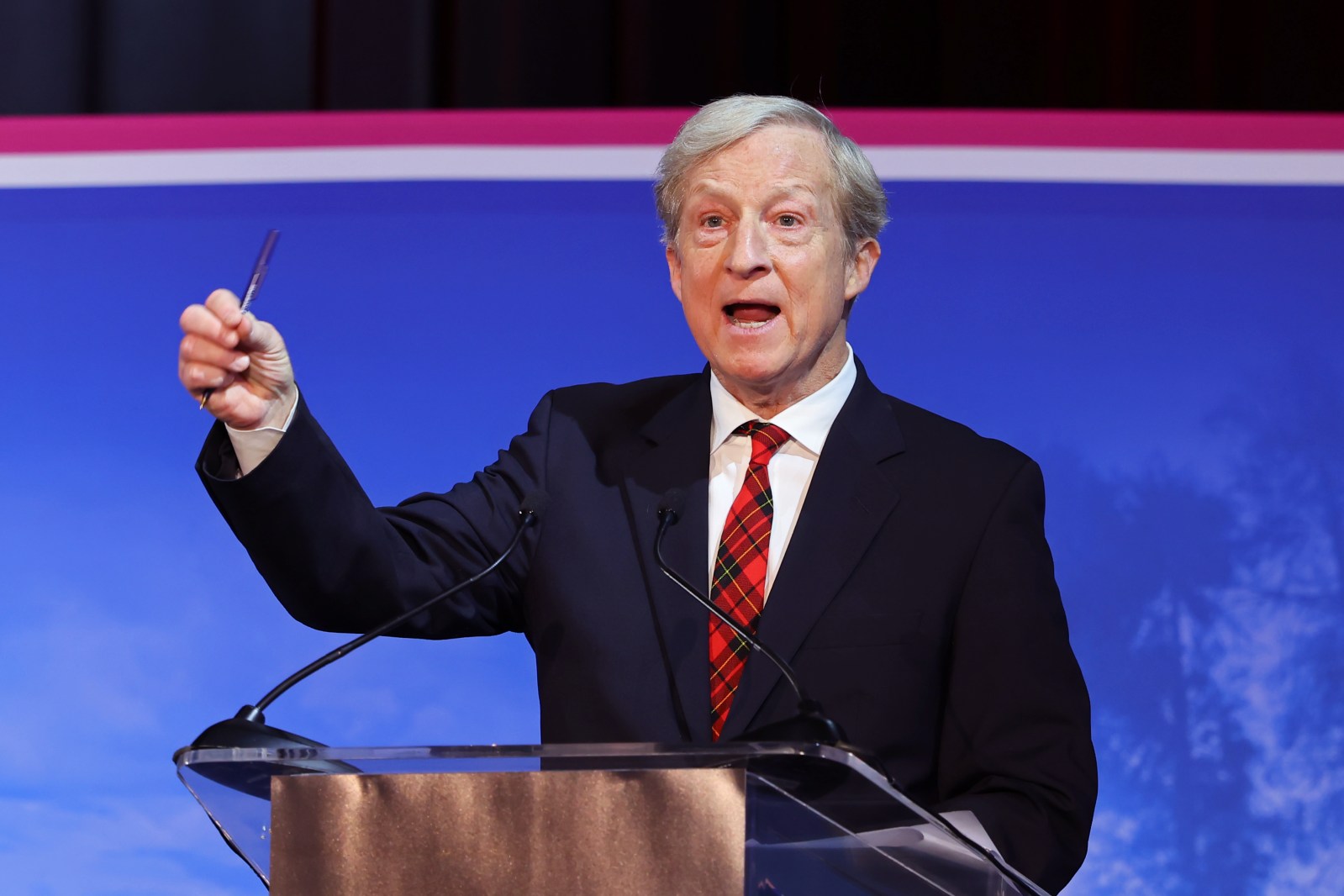
Tom Steyer, a billionaire investor and progressive activist, seeks elected office after years of supporting political causes. Once a hedge fund executive at Farallon Capital, he shifted towards climate advocacy and Democratic politics. Steyer is now a contender in the crowded 2026 race for California governor, aiming to take over from term-limited Governor Gavin Newsom.
The Political Landscape
The race involves several Democrats with varying ideologies. Former U.S. Health and Human Services Secretary Xavier Becerra represents a more traditional party establishment. In contrast, former Representative Katie Porter runs as a policy-driven, anti-corporate progressive, focusing on consumer protection. Former Los Angeles Mayor Antonio Villaraigosa is seen as a centrist figure. Steyer distinguishes himself as an outsider with a populist progressive message, emphasizing climate policy and economic inequality. He uses his personal wealth to finance an assertive campaign.
Republican candidates include Riverside County Sheriff Chad Bianco and former Fox News host Steve Hilton. Bianco represents conservative values, while Hilton embodies a populist outsider approach. Both candidates face significant challenges in a predominantly Democratic state. However, California’s top-two primary system can offer opportunities in a split field. Notably, President Donald Trump endorsed Hilton recently.
Steyer’s Campaign Approach
In a recent interview, Steyer discussed his campaign strategies. When asked why the political establishment opposes him, he explained he is confronting corporate special interests. These interests, he said, fund the establishment. He asserted that his focus is on working people, contrasting with the establishment’s corporate alliances.
Steyer’s advocacy affects his relationships in California politics. He noted that he tries to maintain honest conversations, acknowledging that some individuals act in self-interest, which he believes is unfortunate. He sees the race as a choice between real change and the status quo, focusing on whether power belongs to people or wealthy corporations.
Building a Progressive Support Base
Steyer emphasized his efforts to build a progressive bench. During his campaign, he met and gained endorsements from various progressive leaders. He acknowledged the general perception of California as a liberal state, but pointed out that the real power has not been with progressives. He supports those leading the progressive charge, reflecting on California’s affordability crisis, exemplified by employed residents living in cars or sacrificing healthcare to pay rent.
Comparisons to Other States
When discussing progressive figures, Steyer commented on California’s lack of a strong national figure like New York’s Representative Alexandria Ocasio-Cortez or New York City Mayor Zohran Mamdani. He expressed surprise over the lack of focus among candidates on improving conditions for working Californians. He criticized other Democratic contenders for their ties to special interest corporations, expressing astonishment at their lack of desire for change.