
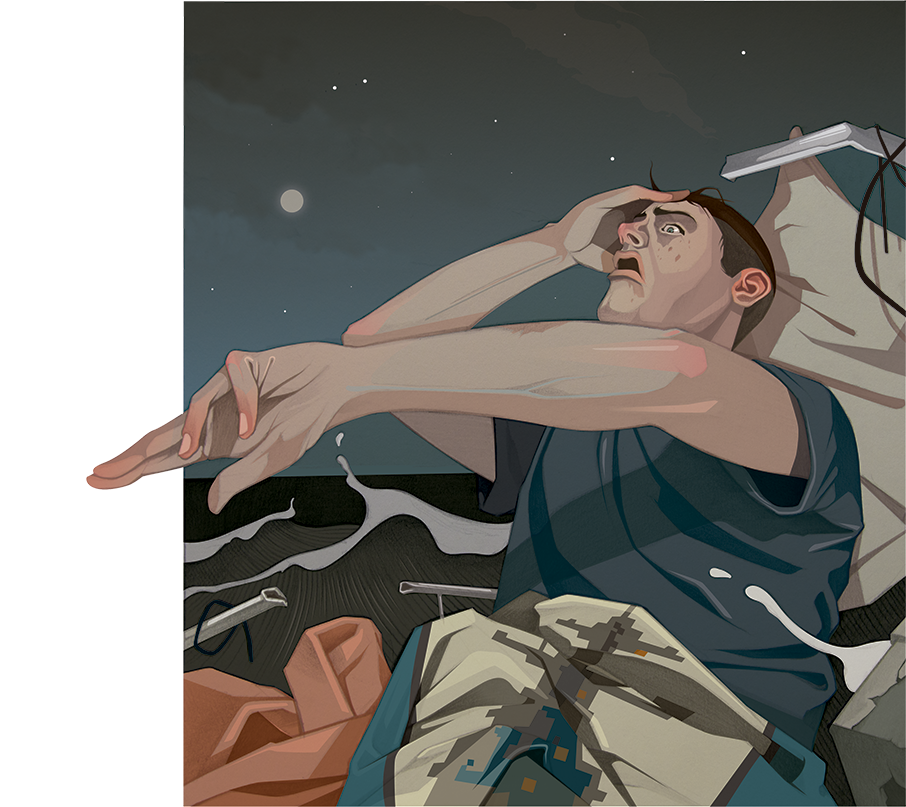
In the early morning hours of June 17, 2017, a catastrophic event unfolded aboard the Navy destroyer USS Fitzgerald. As petty officer Alexander Vaughan awoke to the chilling grip of cold water, he found himself in a dire situation. The ship had been struck by a massive cargo vessel, resulting in chaos and flooding in the sleeping quarters below deck, known as Berthing 2.
Sailors were awoken by water gushing into their compartment, displacing beds, personal belongings, and ultimately the lives of the young men stationed there. Danger was imminent as tens of thousands of gallons of seawater flooded in through a gash that had torn open the hull of the Fitzgerald, threatening the lives of 35 sailors.
Vaughan, who had sustained a leg fracture, did not let the pain deter him. His first instinct was to save his comrades, immediately pushing fellow sailors toward the escape ladder. Chaos reigned as the compartment filled with debris and murky waters, but Vaughan and his companions acted swiftly. The stakes were as high as the water level rising in their midst.
The USS Fitzgerald had been on a covert mission in the South China Sea. The collision with the ACX Crystal—a cargo ship more than three times its size—caused severe structural damage and propelled the destroyer spinning in the Pacific’s depths. This was the Navy’s gravest sea mishap in over 40 years, resulting in seven tragic deaths, and numerous physical and psychological injuries.
The Fitzgerald’s ill-fated voyage uncovered a thread of negligence. The destroyer was part of the esteemed 7th Fleet, yet it was led by an inexperienced crew. The captain, asleep during the collision, had assigned the tasks of navigation and decision-making to team members without extensive experience. Widespread exhaustion plagued the crew, alongside undertraining and crucial equipment failures. Various systems on the Fitzgerald—including radars deemed outdated—were barely functional.
The chain of command must continually evaluate risks and opportunities in a complex environment.
Navy leadership faced serious repercussions. Admiral John Richardson labeled the tragedies as preventable. An array of admiralty staff faced firing and disciplinary actions. Meanwhile, former 7th Fleet commander Vice Admiral Joseph Aucoin, relieved of his duties post-tragedy, voiced concerns regarding Navy leaders’ accountability, citing a lack of transparency in the face of substantial operational struggles.
In terms of raw heroism, the valiant efforts of the Fitzgerald’s crew during their desperate fight to save the vessel speak volumes. Overcoming significant challenges, they managed to guide the crippled destroyer back to port. The fearless endeavor of sailors like weapons specialist Jackson Schrimsher, and others who operated under dire conditions, remains commendable. In the absence of electronic guidance systems, they relied on manual calculations to steer the limping vessel home.
The collision raised innumerable questions, largely centered on why two advanced warships were susceptible to such tragic accidents. Investigations revealed systemic issues, including lapses in both technology and training. Petty Officer Sarah Coppock, in command on the bridge that night, failed to follow protocol, culminating in devastating outcomes for her and her team.
For the families of the seven fallen sailors, the wounds run deep. Among them were men just beginning their Navy careers, sailors like Seaman Dakota Rigsby and Sonar Technician Ngoc Huynh. Their stories, their dreams, and their spirit best reflect the depth of this tragedy. The ensuing months were marked by probes and trials, each command under scrutiny for failure and accountability.
Costing an estimated $330 million in repairs, the USS Fitzgerald epitomizes challenges faced by an undermanned Navy. Inevitably, the lessons learned, and the stories of bravery and sacrifice will persist, becoming a crucial chapter in modern naval history. For all involved, this event underscores the critical need for robust leadership, proficient systems, and comprehensive training.