
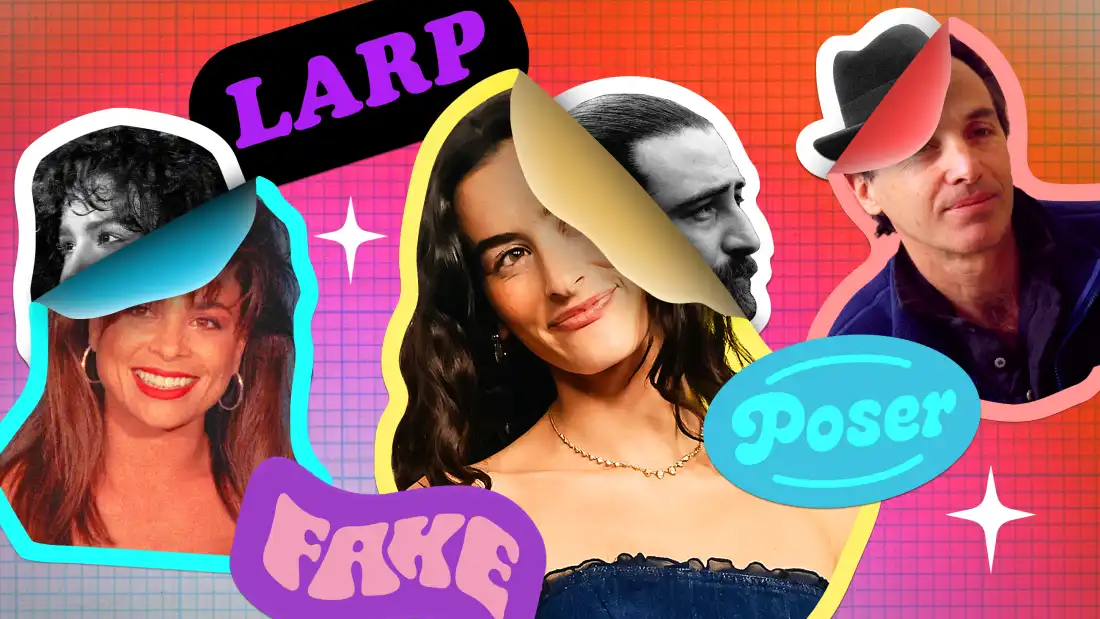
Questions about music’s authenticity have resurfaced in 2026, challenging perceptions of what constitutes ‘real’ music. The vocal techniques of Paula Abdul, similarities in the music of Stella Lefty and Noah Kahan, and the influential works of Ry Cooder have fueled ongoing debates. Discussions focus on the industry’s authenticity, especially with topics around AI and ‘industry plants’.
Twisted Teens’ song ‘Is it real?’ epitomizes this questioning of authenticity. Caspian Hollywell, the band’s lead, uses the song to explore salvation, medication, and the essence of music itself. His plea for truth resonates in an industry rife with artificiality, scams, and manipulated fame.
Many mainstream artists face accusations of imitation and deception. Meanwhile, new artists embrace raw and confrontational styles. Bands like Twisted Teens and GENA take a stance against the AI-driven music models popular today. Their DIY methods are gaining appreciation as they battle for the authenticity of music.
Hollywell argues that while opinions on their music vary, their authenticity remains unchallenged. This sentiment traces back to debates from the early 20th century, examining what makes music genuine.
Authenticity debates intensify with technological advancements, changing demographics, and political anxieties.
Ry Cooder, a notable guitarist, sparked a similar debate in 1979 when he used digital recording for his album ‘Bop Till You Drop’. Despite the clarity, Cooder missed the ‘real’ ambiance of analog recordings. Paula Abdul faced criticism in the ’90s for potentially using technology to alter her vocal tracks, stirring discussions on the authenticity of her hits.
Decades earlier, critics challenged authenticity in events like Woodstock and radio broadcasts of orchestras. Concerns arose around whether technology diluted music’s ‘real’ essence. Reid Reynolds, another critic, challenged these notions, asserting that modern synthesizers and studio tools gift music new life.
Hugh Barker and Yuval Taylor identified three authenticity types in music: representational, cultural, and personal. Each examines different authenticity aspects, encompassing performance, community ties, and genuine expression.
2026 amplifies authenticity concerns in unprecedented ways, blending societal issues with technological threats. Lionel Trilling’s 1972 lecture on authenticity questioned the pursuit of the ‘real self’. Now, rampant scams and AI influence the industry. Fandom and artistry exist in an environment with blurred authenticity boundaries.
Artists and fans grapple with a murky idea of ‘real’. AI can produce entire tracks, and artists may not genuinely own their creations. This period of uncertainty fosters a cynical atmosphere, with weekly revelations fueling conspiracy theories.
Underlying social issues, like class and race, echo in the authenticity debate. The music industry has navigated these dynamics since Black performers redefined authenticity in the early 1900s.
Today, artists feel pressured by technological advancements and social challenges. Stella Lefty’s ascent on TikTok highlights this paradox. Critics claim her music lacks originality, echoing past authenticity battles. Yet, her journey reflects a broader discussion on viral fame and personal identity.
Insights gained from past incidents, such as Milli Vanilli’s scandal and Rebecca Black’s rise, suggest that even those branded as ‘fake’ find paths to authenticity in due time. The music industry’s evolving landscape challenges perceptions, prompting renewed discussion on real versus artificial.