
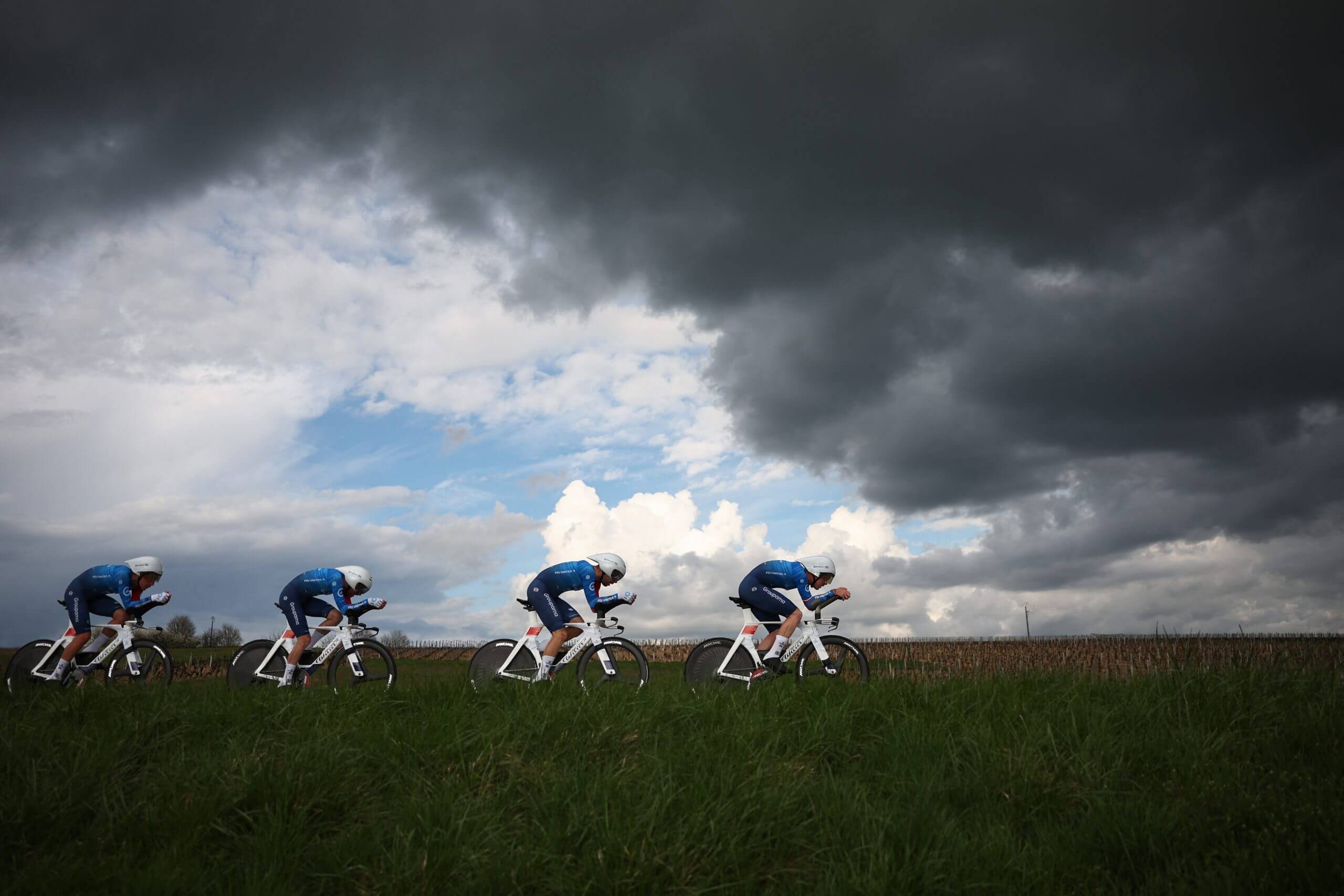
Team time trials in cycling present an impressive spectacle as riders navigate the course in a synchronized fashion. The overhead views capture the dynamic movements of the cyclists, each donning aerodynamic gear and helmets. These riders take turns at the front to optimize speed, creating what EF Pro Cycling’s Jacob Tipper describes as the ‘truest team element’ in the sport.
Despite the polished appearance, team time trials involve significant unseen effort and strain. Riders endure intense periods of exertion, reminiscent of the swan analogy: graceful on the surface, but paddling vigorously beneath.
Tour de France Stage 1: A Unique Team Time Trial
The Tour de France’s opening stage, a 19.6-kilometer TTT around Barcelona, combines physics and physiology. As Tipper explains, each rider has limitations on how long they can lead and must recover while following their teammates. He likens the TTT to battling a bear: perseverance is critical until the challenge is overcome.
This year’s TTT marks its return to the race after seven years, with updated rules. The clock now stops when the first rider crosses the finish line, emphasizing individual performance. Leadership in this uphill finish requires domestiques to support the fastest times for their leaders.
The Art and Science of a Successful TTT
Proper execution of a TTT involves intricate planning and teamwork. Coaches and aerodynamic specialists assess gain maximization long before competition begins. As Tipper points out, the power of riders, their cohesion, and aerodynamic efficiency are key to success.
Team EF Education-EasyPost faces budgetary constraints compared to larger teams. They lack extensive resources for aerodynamic testing, making strategic efficiency more crucial.
Teams simulate the effort required months in advance, often using motor racing circuits for testing. This allows for equipment trials and course corner simulations in a safe environment. Netcompany INEOS exemplifies this method by utilizing circuits for preparation.
Strategizing for Victory
On race day, teams meticulously strategize—from warm-ups to power distribution. Tipper cautions against overly complex models, favoring simple calculations based on rider capacity. Traditional models factor in anaerobic energy usage, but real-time feedback during the race remains challenging.
The ability to pace effectively without constant data monitoring is vital. As experienced cyclists, the team leads by feeling, adjusting speeds wisely on the undulating terrain.
Communication and Course Challenges
Communication at high speeds requires concise signals between riders. Race radios deliver crucial updates from directors, and riders rely on audibility and hand signals to adapt.
Team time trials serve as demanding events, pushing riders to intense physical limits. The combination of technical skill and teamwork parallels that seen in sports like football, emphasizing the demanding nature of cycling.
Conclusion: Teamwork and Strategy
As the trial progresses, the original strategy may shift. Stronger riders may enhance their effort to support the team, showing adaptability in racing strategies as terrain and conditions change.
The course includes flat stretches leading to challenging climbs. Tipper notes the less dynamic nature compared to other WorldTour routes, impacting strategic decisions and rider management.
Winning requires adept handling of accelerations and positioning. Team leaders must be ready to exert maximum power on critical inclines, striving for the yellow jersey in the final moments.
Ultimately, the TTT signifies collective victory. Team members contribute distinctly, enhancing the joy of success beyond individual glory. EF Education-EasyPost aims for a strong start to set a positive tone for the race.
While they may not claim the jersey, their engagement in competition establishes their value and begins the Tour on firm footing, as outlined by Tipper.