
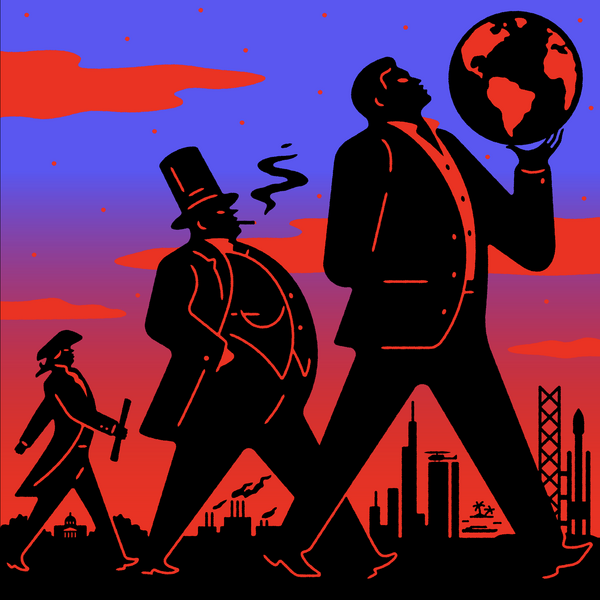
Some influential figures in Silicon Valley express doubts about contemporary ideas of egalitarianism and even show disdain for equality. Peter Thiel, a tech investor involved in the rise of companies like PayPal and Palantir, discussed in his 2014 book, Zero to One, an economic reality where a few significantly surpass rivals. He refers to this as a universal law of power dynamics.
Elon Musk suggested in a post last year that humanity might merely serve as a foundation for digital superintelligence, implying our role as mere inputs for wealth creation. Additionally, Carlos Carvalho, president of the University of Austin, backed by tech figures including Mr. Thiel, delivered a convocation speech titled ‘In Defense of Inequality.’
These messages might seem like a new strain of political thought. Many Americans regard the nation as deeply committed to equality, tracing back to Jefferson’s assertion in the Declaration of Independence that ‘all men are created equal.’ Yet, this view is not wholly accurate.
The United States has maintained a thread of anti-egalitarianism, particularly economically. In his speech, Dr. Carvalho acknowledges that we are ‘created’ equal. However, voices throughout history suggest that while political democracy coexists with capitalism, inequality should be seen as natural and beneficial.