
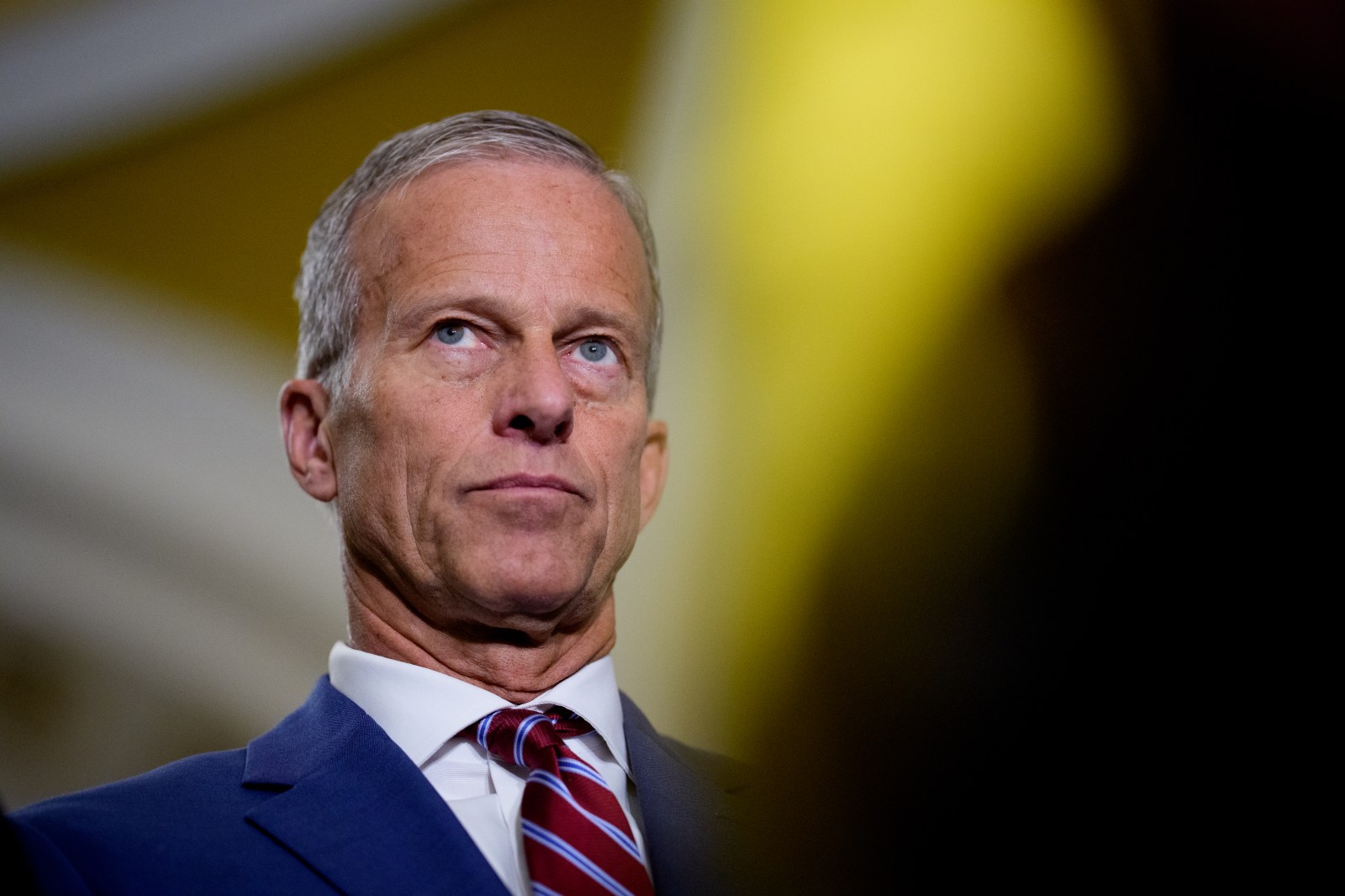
Senate Majority Leader John Thune responded sharply to White House press secretary Karoline Leavitt’s remarks about President Donald Trump’s frustrations with Senate Republicans regarding the stalled SAVE Act. Thune suggested that contacting those who hold the power to vote could be more effective. He pointed out, ‘It’s 50 around here,’ emphasizing the need for votes.
This exchange highlighted rising tensions between Senate Republican leadership and the White House. Trump has increased pressure on Senate Republicans to advance the SAVE Act, a crucial part of his election agenda, before the August recess. A White House official declined further comments, referring to Leavitt’s briefing and Trump’s speech in Georgia criticizing the Senate’s approach to the legislation.
White House Pressures Senate
Leavitt stated during a briefing that Trump’s patience is wearing thin with the lack of progress on the legislation. She emphasized that Trump wants significant portions of the SAVE Act implemented before August. According to Leavitt, Trump’s proposals resonate with voters, as evidenced by applause during his recent travels.
Leavitt stressed that, ‘The House did its job, the Senate needs to do its job too,’ indicating that the administration expects the Senate to act swiftly.
Thune’s Response on Responsibility
Thune rebuffed the White House criticism, arguing that Democrats are to blame for the legislation’s roadblocks, not Republicans. He suggested focusing efforts on those blocking the act on the Senate floor.
Thune’s remarks show the challenge he faces in balancing Trump’s demands with the realities of Senate politics. Historically, Thune has avoided public disputes with the White House, though pressure is mounting from Trump’s allies over the matter.
Trump’s Intensified Push
Trump has continuously urged Congress to pass the SAVE Act, part of broader election reforms he advocates. In a recent address, he highlighted the act’s role in strengthening election security by requiring proof of citizenship for federal voter registration.
With an emphasis on the upcoming midterms, Trump maintains that the act is crucial, although its potential impact on future elections remains debated.
The Legislative Hurdles
The SAVE Act would mandate citizenship proof for federal election registration and nationwide voter ID requirements. Strong Democratic opposition and Senate filibuster rules requiring 60 votes pose challenges. Despite Trump’s strong urging, Senate Republicans struggle to advance the bill without Democratic support or rule changes.
Thune noted the difficulty: ‘The priority is funding the government,’ highlighting pressing fiscal obligations alongside legislative efforts. The House’s budget, which includes election-related provisions, faces uncertainty in the Senate.
Internal GOP Divisions
Resistance isn’t solely from Democrats. Republicans like Senators Lisa Murkowski and Susan Collins oppose the SAVE Act, despite generally supporting voter ID measures. They argue it would create voter registration barriers, particularly in remote areas. For instance, Murkowski cited the costs of reaching election offices in Alaska, arguing these requirements impose undue burdens on voters.
Murkowski’s Wall Street Journal opinion piece highlighted logistical and financial challenges the bill could create in her state, potentially preventing many from voting.
Impact and Criticisms
Critics, including Democrats and voting-rights advocates, argue the SAVE Act could disenfranchise eligible voters. Documenting citizenship proofs often required by the act might be inaccessible for many, thus hindering the voting process.
The Brennan Center for Justice’s research estimates millions of Americans lack immediate access to citizenship proof. Additionally, married women and military families might struggle with discrepancies between legal documents and identification records.
GOP’s Internal Challenges
The pressure on Senate Republicans isn’t only from Trump. Conservative activists and House Republicans push for the bill’s advancement, some criticizing Thune for perceived inaction. Despite approval of related provisions in the House, the bill remains stuck in the Senate.
Senator John Cornyn highlighted the GOP’s internal friction, stating, ‘We just don’t have the votes,’ dismissing the notion of simple persuasion as unrealistic.
Uncertain Legislative Future
Trump’s SAVE Act remains a top priority but lacks a clear passage path. The White House’s pressure continues, and Senate Republican leaders weigh options. Despite Trump’s advocacy, Senate leaders lack the necessary support. Until sufficient votes materialize, Trump’s frustration and pressure campaign likely persist.