
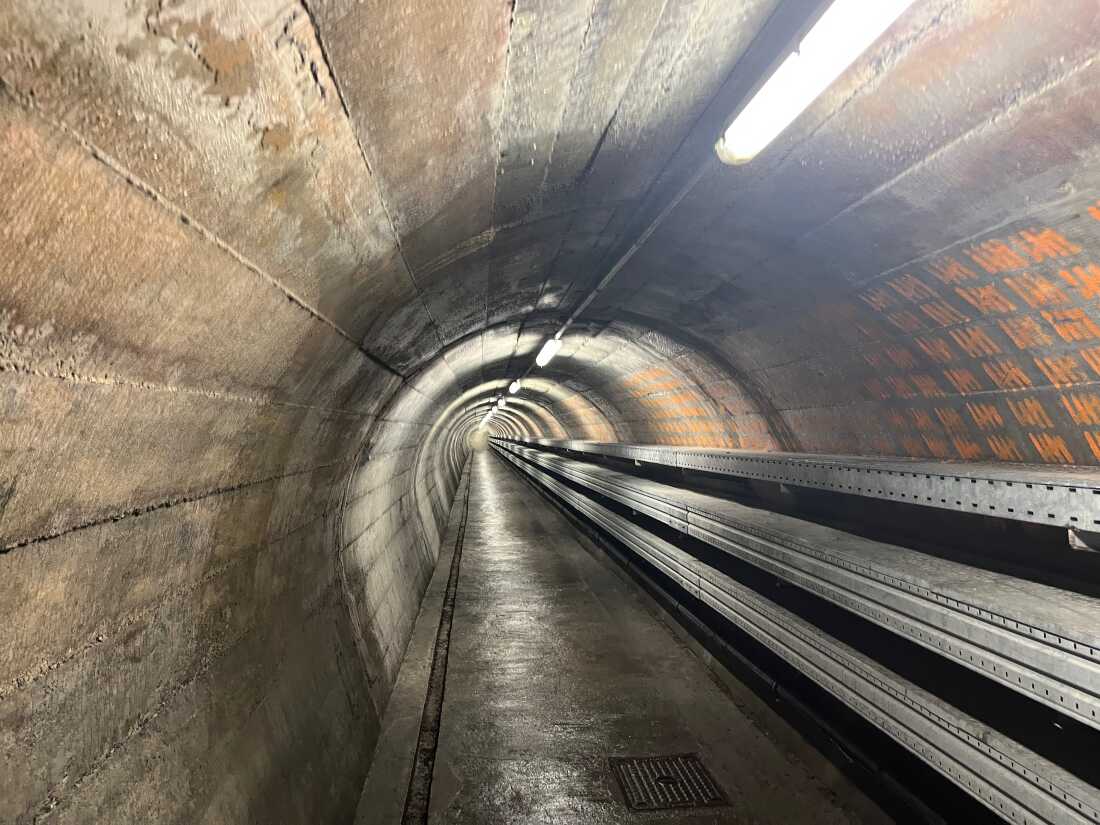
In Lucerne, Switzerland, the Sonnenberg nuclear bunker reveals a complex facility deep underground. Touted as the largest underground nuclear bunker globally, it was designed in the 1970s to accommodate 20,000 people during a nuclear event. The bunker, hidden behind a children’s playground, features a blast-proof door and a descending tunnel leading to its core structure.
Zora Schelbert, a guide at Sonnenberg, explains the bunker was intended to shelter a third of Lucerne’s population if there was a nuclear war, particularly between superpowers like the U.S. and the Soviet Union. Swiss officials believed Switzerland’s neutrality would spare it from direct attacks, yet they planned for nuclear fallout from neighboring countries. The facility is equipped with diesel generators to sustain operations for two weeks.
Switzerland’s commitment to civil defense didn’t wane after the Cold War. The country hosts over 370,000 nuclear bomb shelters. Every citizen has a guaranteed place in one. In 2011, amid initiatives to abandon these shelters, an event changed policymakers’ minds. The Fukushima Daiichi nuclear disaster in Japan reaffirmed the importance of maintaining these structures as a national safeguard.
Daniel Jordi, from Switzerland’s federal office of civil protection, recalls parliamentary debates that resolved in favor of the shelters, emphasizing their role in emergency preparedness. Legislation mandates that developers either build bunkers in new residential buildings or contribute to state-managed shelters. Residents pay upfront fees for construction and maintenance.
In peacetime, these bunkers transform into wine cellars, saunas, or storage, as seen at the University of Bern. Silvia Berger Ziauddin, an expert on bunkers, explains that Switzerland’s neutral stance has fostered this network, likening the nation to an island of tranquility amid global chaos. Through school programs, students learn about civil defense, sometimes spending nights in these bunkers to understand their purpose.
Illustrating the complex reality, the Sonnenberg bunker, initially intended for 20,000, now houses capacity for 2,000 due to logistical and social challenges. Parts serve as temporary housing for vulnerable groups, facing criticism for this alternative use. Despite never being used for nuclear fallout, the Swiss government invests significantly in the upkeep of these structures.