
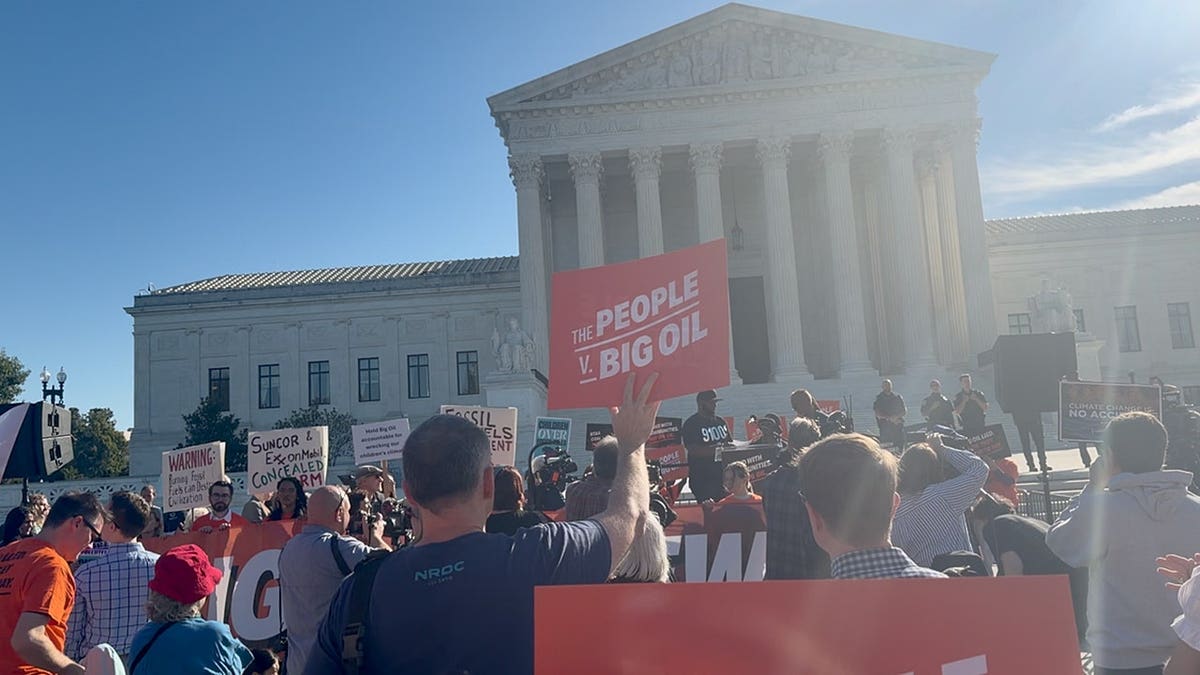
The Supreme Court faces a critical decision regarding climate change lawsuits, which could significantly affect the oil industry and consumers. Energy policy experts express concerns that if the Court allows states and cities to seek billions in damages from fossil fuel companies, it could lead to financial difficulties for these businesses, as well as potential price increases for consumers at the fuel pump.
During recent arguments in the case of Suncor v. Boulder, Justice Clarence Thomas questioned Boulder’s attorney about the potential broad implications of these lawsuits. Concerns were raised about whether other businesses, beyond oil producers, could face similar legal challenges, possibly including large retailers.
The city and county of Boulder sued ExxonMobil and Suncor Energy in 2018, alleging that the companies knowingly contributed to climate change and misled the public about its dangers. Boulder is seeking damages to address climate-related costs, and similar lawsuits are active in multiple U.S. jurisdictions.
Boulder’s lawsuit points to historical evidence from ExxonMobil, such as a 1977 internal memo acknowledging the role of fossil fuels in rising CO2 emissions. Former Boulder counsel David Bookbinder described the lawsuit as a way to create an indirect carbon tax, but Boulder insists the case aims to hold companies accountable under state law for local damages.
“States have long been able to provide remedies for injuries within their borders, even if the causes occurred elsewhere,” Boulder’s attorney stated.
The broader implications of this case worry figures such as O.H. Skinner, who view the lawsuits as attempts to exert control over the energy industry through the courts. Skinner argues that the legal actions are akin to imposing backdoor carbon taxes.
Justice Samuel Alito recused himself from the case without explanation, while CEO Jason Isaac warns that a decision favoring Boulder might invite similar lawsuits from numerous governmental entities, significantly increasing defense costs for energy companies.
Other voices, such as Utah’s Attorney General Derek Brown, argue that such disputes should be addressed by federal law rather than state actions due to the global nature of emissions.
The potential consequences of the Supreme Court’s decision extend widely, impacting not just oil companies but potentially every part of the fossil fuel supply chain, according to Skinner. The ruling may set precedents on how emissions-related damages are handled, whether at the federal or state level.