
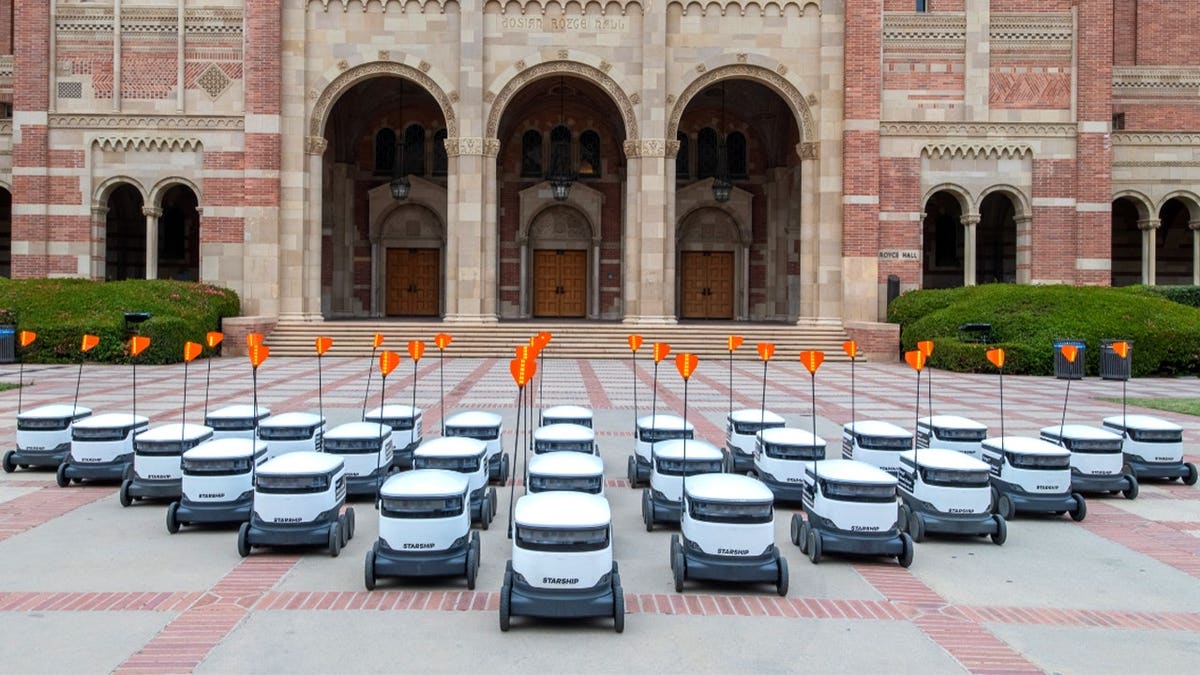
Starship Technologies, known for its autonomous delivery robots, plans to wind down operations on U.S. university campuses. More than 1,200 robots will be reassigned to deliver groceries and hot food in urban areas across the U.S. and Europe.
Why Starship is Moving Away from College Campuses
The company’s focus now lies in grocery delivery. Starship forecasts significant growth in this sector over the next two years, driven by major retailers in both regions. In Finland, the company’s robots already deliver one in five grocery orders, presenting a successful model they aim to replicate elsewhere.
College campuses have been vital for Starship’s U.S. branding. These environments provided the perfect testing ground due to students’ irregular eating schedules and openness to new technologies, especially those that offer convenience.
Transition from Campuses
The move away from universities won’t happen instantly. Starship has coordinated with campuses and industry partners to continue operations through the 2026–2027 school year while transitioning its fleet for urban deliveries.
Students familiar with the robots may view this shift as the end of an era. However, Starship sees this move as targeting a more economically viable market. The company claims that its robots can deliver groceries at a cost $3-$4 less per delivery compared to traditional methods, appealing to retailers aiming to cut last-mile delivery expenses.
Challenges on City Sidewalks
This transition to urban areas presents new challenges. Robots must navigate crowded sidewalks shared with pedestrians, strollers, wheelchairs, and more. Design choices become crucial, as robots must avoid creating obstacles.
Reports have highlighted incidents of delivery robots bumping into people and getting stuck, raising accessibility concerns. Cities like Chicago have seen pushbacks due to safety issues, suggesting that Starship must address these problems to gain city dwellers’ acceptance.
The Grocery Delivery Shift
Grocery delivery differs fundamentally from campus food delivery. It involves heavier items, more frequent trips, and demands consistent reliability. Successful implementation could meet grocery stores’ desires for cheaper local delivery and customers’ needs for fast service without high fees.
Starship claims the global food delivery market is worth $650 billion. The company has achieved over 10 million deliveries, giving it a competitive edge in sidewalk robot delivery.
The public, however, needs convincing. Robots could be welcome for urgent deliveries but may face backlash if obstructive. Local regulations may play a role in how smoothly Starship can transition.
Estonia’s Significance
Founded in Tallinn, Estonia, the company maintains its core engineering and AI development team there. As the robots move from campuses to urban spaces, accurate engineering and AI are crucial for seamless operation.
Implications for the Public
You may soon see more delivery robots in areas with grocery stores, restaurants, and apartment buildings. Observe their behavior: whether they respect pedestrian areas and manage crowds effectively.
If problems arise, document them. Safety concerns should be reported to city officials or delivery companies to help establish rules reflecting real-world issues.
Privacy concerns exist due to the sensors and cameras used by robots. Understanding data collection policies is vital for preserving privacy.
Ultimately, Starship’s shift signals the future of autonomous delivery. College campuses offered charm and initial acceptance. Yet, grocery delivery will test profitability and public accommodation.
Companies need trust and well-designed robots that respect urban environments without becoming a nuisance.