
President Donald Trump’s Attendance at NATO Summit Driven by Relationship with Erdoğan
President Donald Trump is attending the NATO summit in Ankara, Turkey, primarily to engage with Turkish President Recep Tayyip Erdoğan. Trump emphasized his connection with Erdoğan, labeling him as both a friend and a respected leader. His remarks hint at potential future defense cooperation between the United States and Turkey. Notably, the summit is set to commence on Tuesday in Ankara.
Historical Shift in U.S.-Turkey Relations
In recent years, the relationship between Washington and Turkey has undergone significant changes. After Turkey acquired Russia’s S-400 air defense system in 2019, the U.S. removed Turkey from the F-35 fighter program and imposed sanctions on Turkish defense procurement. These actions marked Turkey as a challenging ally within NATO.
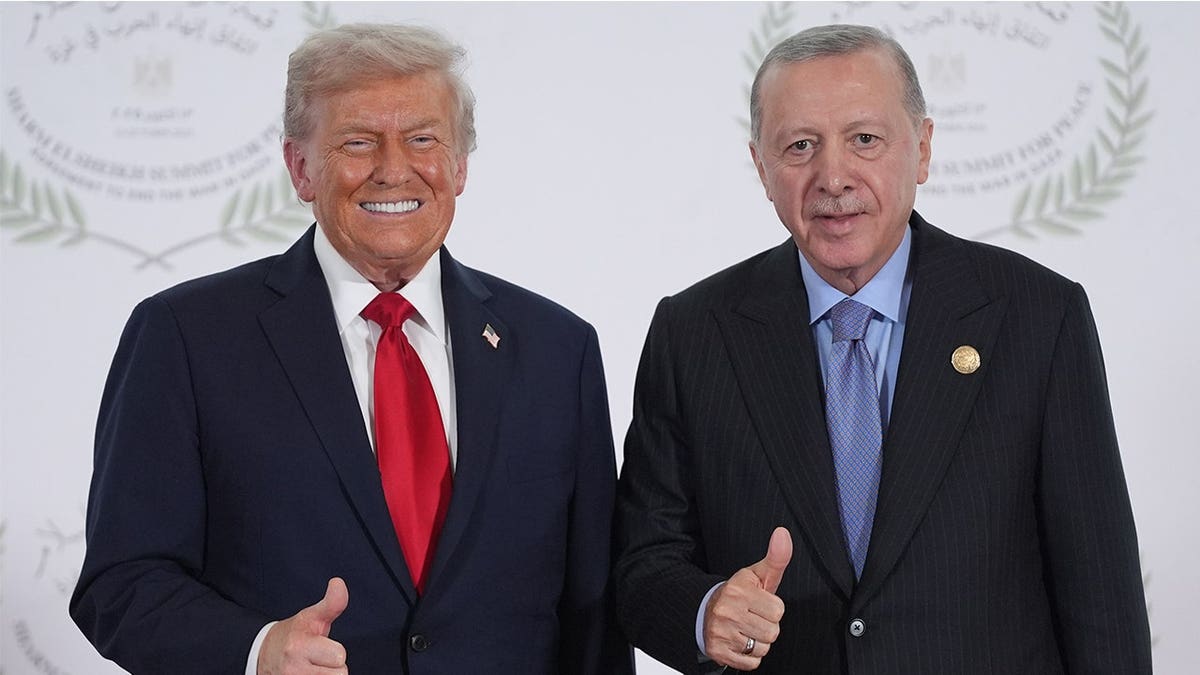
President Donald Trump greets Turkey’s President Recep Tayyip Erdoğan during a summit to support ending the Israel-Hamas conflict, on October 13, 2025, in Sharm El Sheikh, Egypt. (AP Photo/Evan Vucci/Pool)
Turkey’s Growing Importance in NATO
Despite unresolved disputes, Turkey’s strategic significance has increased within NATO as the alliance faces challenges from Russia, Middle Eastern instability, and Black Sea tensions. Former U.S. Ambassador to Turkey James Jeffrey confirmed Turkey’s critical role, emphasizing its geographic and military strengths.
White House spokesperson Anna Kelly stated that Trump planned a bilateral meeting with Erdoğan, underscoring the strategic importance of their relationship. Jeffrey noted Turkey’s pivotal position in maintaining U.S. influence around Eurasia due to its military capability and willingness to exert power.
NATO’s Strategic Shift and Turkey’s Military Strength
NATO is refocusing on collective defense, pressuring allies to contribute significant military power. Can Kasapoğlu of the Hudson Institute highlighted the forthcoming defense spending target of 5% of GDP for NATO allies in 2025, underscoring Turkey’s role given its substantial military forces and defense industry.
Rich Outzen, a former State Department advisor, stressed that NATO’s security depends on Turkey’s full integration, given its strategic location and military capacity.
Turkey’s Role in Regional Stability
Turkey’s influence in the region, especially concerning Ukraine, has strengthened its strategic value. Analysts point to its enforcement of the Montreux Convention, limiting Russian naval movements in the Black Sea, and its early provision of drones to Ukraine. Additionally, Turkey’s support for Syrian opposition forces contributed to the downfall of Bashar al-Assad’s regime, impacting Iran and Russia.
Criticism and Diverging Foreign Policy
Critics raise concerns about Turkey’s foreign policy diverging from NATO allies, especially its support for Hamas and ties with non-Western organizations like BRICS and the Shanghai Cooperation Organization. These affiliations, along with its possession of the S-400 air defense system, complicate U.S.-Turkey defense relations.
Sinan Ciddi from the Foundation for Defense of Democracies highlighted Turkey’s unique position within NATO, noting its support for Hamas and pursuit of advanced U.S. defense technology.
Challenges to U.S.-Turkey Arms Deals
The Trump administration faced congressional resistance over a proposed $700 million arms sale to Turkey. Rep. Gregory Meeks criticized the State Department for not adequately addressing concerns about Turkey’s S-400 system.
Jeffrey argued that the F110 fighter engines sale is less challenging than reintegrating Turkey into the F-35 program. He noted that the operation of S-400 systems presents a technical issue, potentially compromising U.S. technology.