
Efforts to honor the nation’s birth often meet with internal conflicts about how such celebrations should occur. George Orwell’s observation in 1984 that controlling history helps maintain power rings true today. The present administration’s interest in history reflects this notion, sometimes staging unusual events like cage fighting at the White House.
The Trump administration has engaged in legal actions concerning historical sites and slavery narratives. A key example is in Philadelphia, where an executive order aimed to remove content it deemed disparaging to America. The National Park Service took down panels at the President’s House Site that discussed George Washington’s slaves. Philadelphia sued, and a federal judge initially ruled to reinstate the displays. However, an appeals court later allowed the administration to remove and replace them.
Changes are also proposed at the Smithsonian. In 2025, Trump signed an executive order to ‘restore truth’ to American history, claiming divisive ideologies had influenced the museum. The order named Vice President JD Vance and Lindsey Halligan to oversee removing ‘improper ideology.’ The definition of ‘improper,’ however, varies by perspective.
“Who controls the past controls the future.” – George Orwell
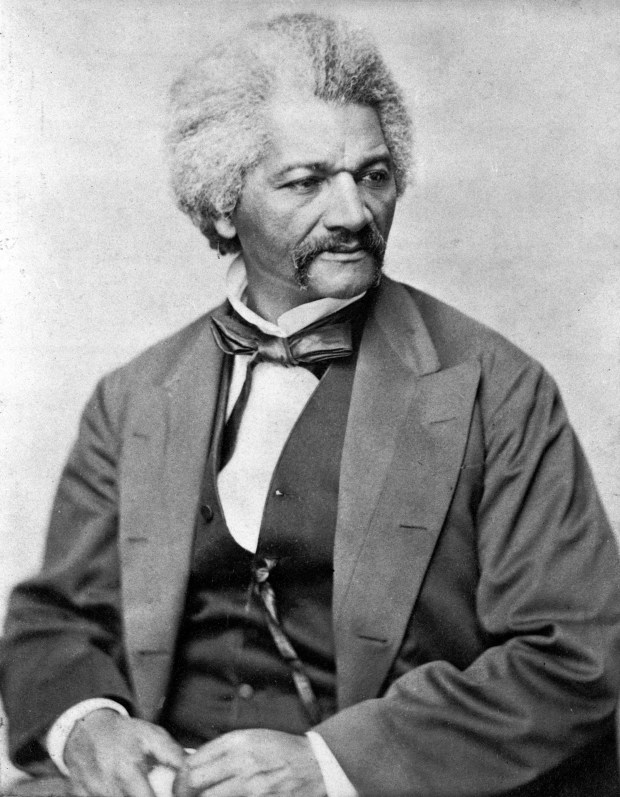
Frederick Douglass eloquently highlighted this issue on July 5, 1852. A former slave and abolitionist, Douglass addressed the hypocrisy in celebrating independence while slavery persisted. His speech, “What to the Slave Is the Fourth of July?” condemned American double standards on liberty.
Douglass pointed out that slavery undercut America’s claims to equality and freedom. His stance was echoed in the Dred Scott v. Sandford case, where Chief Justice Roger B. Taney’s ruling reflected racial prejudices, stating Black individuals had no rights respected by white men.
Despite this, Douglass found hope in America’s founding documents. He argued that the Constitution, rightly interpreted, could be a ‘glorious liberty document.’ His optimism extended to the eventual clash between the Constitution’s promise and slavery’s infamy.
Today, the U.S. Constitution remains a document debated for its capacity to further liberty. Recent Supreme Court rulings on birthright citizenship under the 14th Amendment have renewed these discussions. Three justices suggested a limited view, countering historical precedents set after Dred Scott, which affirmed citizenship for all born in the U.S., including former slaves.
The quest for a ‘more perfect union’ invites diverse interpretations, sometimes clashing with perceived ‘improper ideologies.’ Yet the ongoing dialogue seeks to enhance, rather than diminish, the nation’s foundational principles.
Contact Clarence Page at [email protected] and sign up for his weekly column. Letters to the editor, up to 400 words, can be submitted or emailed to [email protected].