
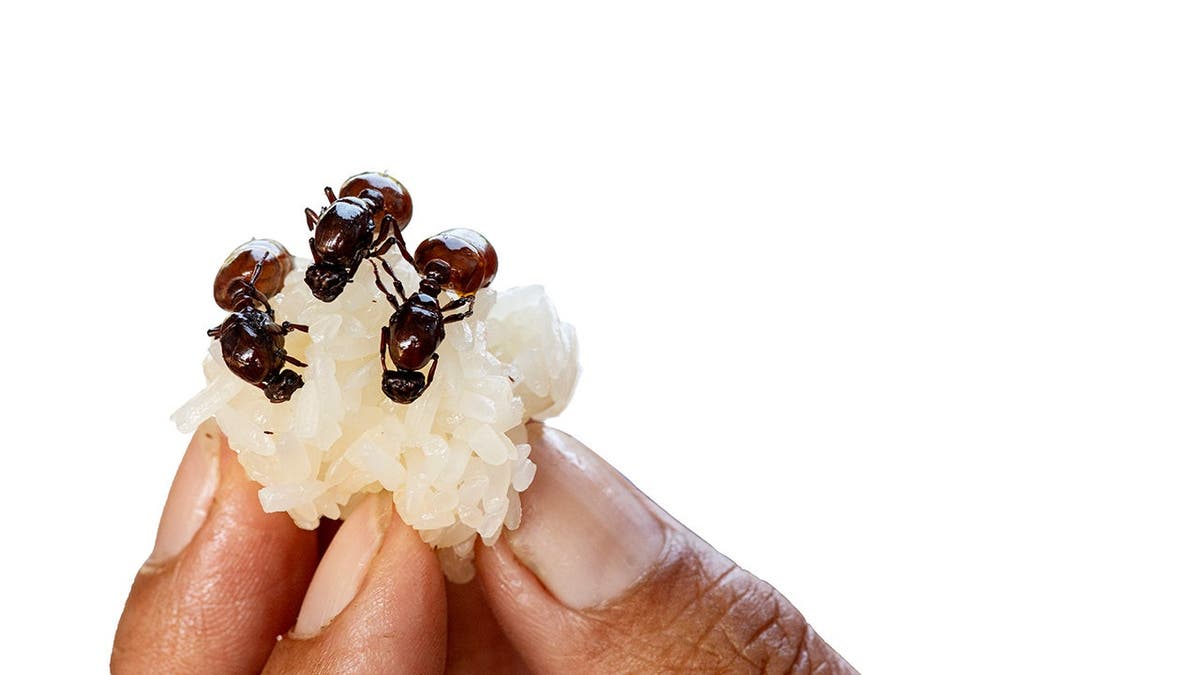
The owner of a prestigious Michelin-starred restaurant in South Korea is confronting legal consequences, including up to a year in jail, and a fine amounting to approximately $13,510. This arises from allegations that the restaurant served ants as a topping on sorbet dishes.
The identity of the restaurant proprietor remained undisclosed in court documents. However, the owner acknowledged the serving of ants, which are not sanctioned for human consumption under South Korea’s Food Sanitation Act. This regulation permits 10 specific insect species for human consumption, excluding ants, as reported by the BBC.
The Ministry of Food and Drug Safety in South Korea identified the breach following social media postings and online reviews from customers that mentioned the presence of ants.
Approved Insects for Consumption
South Korea’s food regulations permit various insects such as grasshoppers, mealworms, silkworm pupae, locusts, and two-spotted crickets, adhering to health and nutritional criteria.
The restaurant owner faces accusations from prosecutors that the ants contained hazardous heavy metal concentrations, up to 55 times the permissible limit for other edible insects. Additional allegations include the importation of dried ants and using around 49,000 such insects in culinary offerings since 2021.
The defense team challenged these claims, as reported by The Chosun Daily. They argued that ants were provided as an optional garnish for sorbet, with only 60% of patrons opting for ants over alternatives such as fermented vinegar and edible flowers.
The court’s decision is anticipated in September.
Expansion of the Edible Insect Market
Globally, the market for insect-based foods exhibits progressive growth, previously highlighted by Fox News Digital. Predictions include market expansion from $1.73 billion in 2025 to $13.23 billion by 2034. This growth is propelled by increased interest in sustainable nutrition and diversified protein sources, according to Fortune Business Insights.
Beetles are forecasted to lead the insect food market by 2025, holding a 33% market share, as Persistence Market Research reported. Yellow mealworms and lesser mealworms have significant rankings, while crickets and grasshoppers represent the fastest-growing segments.
Research conducted at the University of Beira Interior in Portugal uncovered a surprising level of curiosity and receptivity towards insect-based foods. Though ants are not approved for human consumption in South Korea, other insects are sanctioned.
Ashley Gearhardt, Ph.D., a psychology professor at the University of Michigan, shared insights with Fox News Digital, noting consumer openness to novel nutrient sources.
In the U.S., several insect-based food products are accessible. Chirps Chips, crafted from cricket flour, exemplify tortilla-style chips. Other brands offer cricket protein powders and snack bars.
Jiminy’s grain-free dog cookies consist of crickets and grubs, expanding the variety of insect-based offerings.