
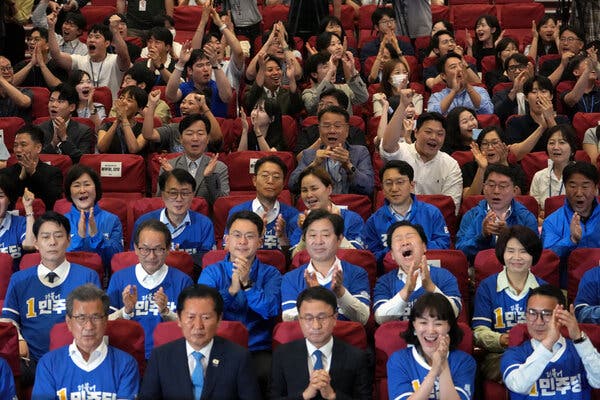
The center-left Democratic Party of South Korea experienced mixed results in recent local elections. While achieving significant victories across the country, they faced a notable defeat in the capital city of Seoul.
Mixed Outcomes for the Democratic Party
The Democratic Party, led by President Lee Jae Myung, dominated 12 out of 16 contests for metropolitan mayors and provincial governors. This included winning the governorship of Gyeonggi Province and the mayor’s seat in Busan, which is the second-largest city in South Korea. These areas have traditionally been strongholds for conservative parties.
However, the party suffered a setback in Seoul, losing the mayoral race. Although pre-election surveys and exit polls indicated that the Democratic candidate would win, the incumbent Oh Se-hoon, a conservative, retained his position. He emphasized that the result reinforced the principle of checks and balances within the democratic system.
Impact and Historical Context
The most recent elections highlight a continued shift in South Korean politics. The People Power Party only managed to secure victories in Daegu and two other provincial positions in the southeastern Gyeongsang region.
Four years prior, the People Power Party had a stronger presence but faced a decline following the controversial actions of its former leader. In late 2024, former President Yoon Suk Yeol declared martial law, leading to his eventual removal from office and life imprisonment on charges of insurrection.
These developments suggest a significant transition in voter sentiment and the ongoing evolution of political dynamics across South Korea.