
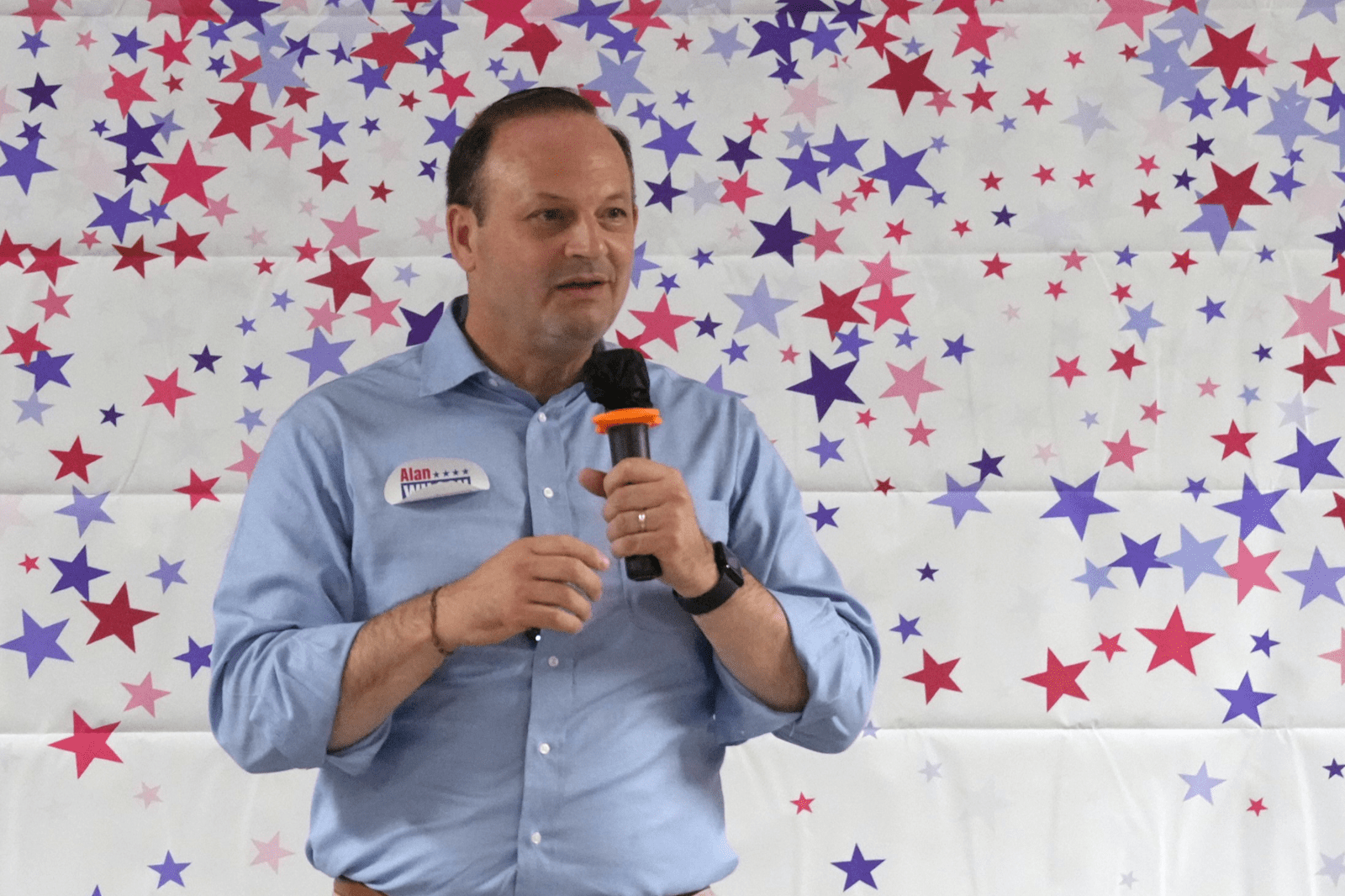
Hours before South Carolina Republicans vote, a poll suggests the gubernatorial runoff favors Attorney General Alan Wilson. An InsiderAdvantage survey taken June 19-20 among 800 likely Republican voters shows Wilson with 61% support, while Lieutenant Governor Pamela Evette has 29%. Ten percent remain undecided.
Wilson’s late momentum could clinch the nomination outright in a low-turnout runoff where minor shifts have significant impact. Both candidates received endorsements from President Donald Trump, making the race a test of organization and turnout. Newsweek reached out to Wilson’s campaign for comments.
Key Points
- InsiderAdvantage poll: Wilson 61%, Evette 29%, Undecided 10%.
- Before the primary, polling suggested a fragmented field with no clear leader.
- Prediction markets now heavily favor Wilson, with his chances above 98%.
- South Carolina is a solid Republican state, favoring the runoff winner in November.
Primary Overview
The runoff follows a crowded June 9 primary where no candidate secured a majority, necessitating a second round. Runoffs depend on consolidating support from eliminated candidates, making late polling vital. Evette received 28.9% of votes to Wilson’s 26.1% in the primary. Since then, Representatives Nancy Mace and Ralph Norman, who did not advance, have endorsed Wilson.
Outgoing Governor Henry McMaster, term-limited from reelection, endorses Evette. A spokesperson for Evette’s campaign described the choice as between a “proven business leader and conservative fighter” versus “a career politician.” They emphasized outreach across all 46 counties and highlighted turnout’s importance as Evette promotes her conservative vision.
What the InsiderAdvantage Poll Reveals
The latest poll using mixed-mode text and panel methodology has a margin of error of 3.46%. The results are:
- Alan Wilson: 61%
- Pamela Evette: 29%
- Undecided: 10%
Wilson’s 30-point margin suggests a consolidation effect, with voters coalescing around him post-primary. Even if undecided voters lean toward Evette, the gap remains hard to close without significant turnout differences.
Polling Averages Before the Primary
Before voting, averages showed a divided field without a dominant front-runner:
- RealClearPolitics: Evette 20.2, Wilson 18.2
- Race to the White House: Evette 19.3, Wilson 17.6
- Decision Desk HQ: Evette 19.6, Wilson 18.5
- 270toWin: Wilson 18.8, Evette 18.7
- FiftyPlusOne: Evette 20.1, Wilson 17.4
The average showed Evette 19.6% and Wilson 18.1%, with Evette +1.5% margin. This illustrates a multi-candidate dynamic, where votes split among many mask underlying support. As weaker candidates exit, support consolidates rapidly, often favoring candidates with broader acceptability.
Insights from Prediction Markets
Prediction markets, where traders forecast political outcomes, heavily favor Wilson:
- Kalshi: Wilson at 98.4% probability, Evette 1.5%
- Polymarket: Wilson about 98%, Evette negligible
These markets incorporate diverse data streams and frequently outperform traditional polling. But limitations include liquidity sensitivity and non-representative participants. Late-breaking turnout factors are challenging to model accurately. Despite this, decisive market shifts typically reflect strong expectations.
General Election Forecast
Looking past the runoff, experts see South Carolina as securely Republican:
- Inside Elections: Solid Republican
- Race to the White House: Likely Republican
- RealClearPolitics: Likely Republican
- Sabato’s Crystal Ball: Safe Republican
- Cook Political Report: Solid Republican
This consensus underscores the stakes. The GOP runoff winner is the clear favorite for the general election against Democratic nominee State Representative Jermaine Johnson, who leads his primary with 59.7% of the vote. South Carolina has not elected a Democratic governor since 1998.
What Lies Ahead
The race might be structurally decided, but low-turnout runoffs offer space for unexpected outcomes through mobilization instead of persuasion. Polls remain open from 7 a.m. to 7 p.m., offering uncertainty not in preferences but in voter turnout.