
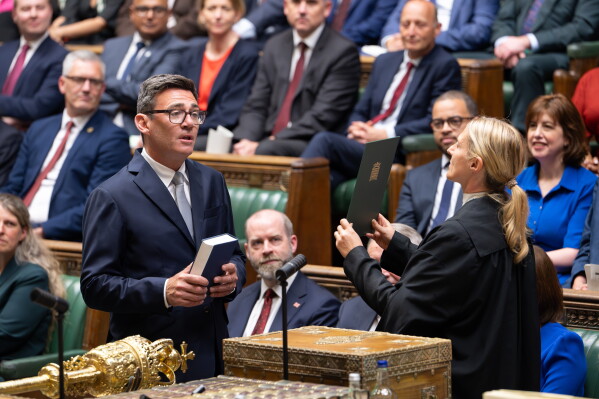
Andy Burnham, newly elected as a British lawmaker, met with Prime Minister Keir Starmer, whom he aims to succeed. Burnham is the leading candidate for Labour Party leadership following Starmer’s announcement to step down. Starmer’s tenure, lasting two years, was marred by errors that weakened his position with both the party and the public.
Burnham, a former Cabinet minister and mayor of Greater Manchester since 2017, secured his spot in Parliament through a special election. His main goal is to challenge Starmer for leadership of the party and the country. Burnham gained significant support when former Health Secretary Wes Streeting, considered his primary competitor, publicly endorsed him.
The U.K.’s parliamentary system permits ruling parties to change leaders—and consequently prime ministers—without a general election. The next general election is not required until 2029. Labour leadership nominations open on July 9 and close the following week. If no other contenders emerge, Burnham might become prime minister by July 17. A contest would lead to a winner being decided by September 1, when Parliament returns from recess.
Starmer indicated to his Cabinet that he intends a smooth transition. He emphasized the need for an “orderly transition” and expressed hope that his successor will succeed. Despite his upcoming departure, Starmer remains committed to current affairs but is restricted from introducing major new policies or financial commitments.
The European Union announced a postponement of a crucial U.K.-EU summit scheduled for July 22 due to the political uncertainty. Nonetheless, the British government is expected to divulge a defense investment plan before the NATO summit in Turkey on July 7-8, which Starmer plans to attend.
Burnham, popular during his mayoral tenure for revitalizing Manchester, promises to extend his “Manchesterism” approach nationally. While many anticipate Burnham’s charisma will better connect with the public compared to Starmer’s managerial style, some Labour members are eager for him to clarify his policies as many remain untested and unknown.
Former Armed Forces Minister Al Carns, who resigned recently over defense spending issues, called for a comprehensive discussion on the country’s future. Although hinting at a potential leadership bid, he remains undecided. Darren Jones, a senior Cabinet minister and ally of Starmer, has also been suggested as a candidate, though he has not yet commented.
Leadership candidates require endorsements from at least 81 Labour lawmakers to enter the race, highlighting the party’s divide and fueling political uncertainty.
Starmer’s resignation follows his acknowledgment that his leadership no longer benefits the Labour Party heading into the next election. Despite leading Labour to a decisive electoral victory in July 2024, his tenure has been criticized for a failure to stimulate economic growth, improve public services, or alleviate living costs. Public confidence waned as Starmer faced various missteps.
Labour struggles with losing support to the Green Party and the rise of Reform UK, an anti-immigration party led by Nigel Farage, which frequently tops opinion polls.