
Last fall, Roy Lee Harvey used a Lyft in Phoenix, engaging the driver in conversation about his business. Harvey discussed buying high-end Nike sneakers and flipping them for profit. The driver found the idea promising, resulting in an exchange of numbers. Later, they met at an apartment in Scottsdale. According to police, Harvey showed the driver a room filled with various Nike sneakers and their boxes.
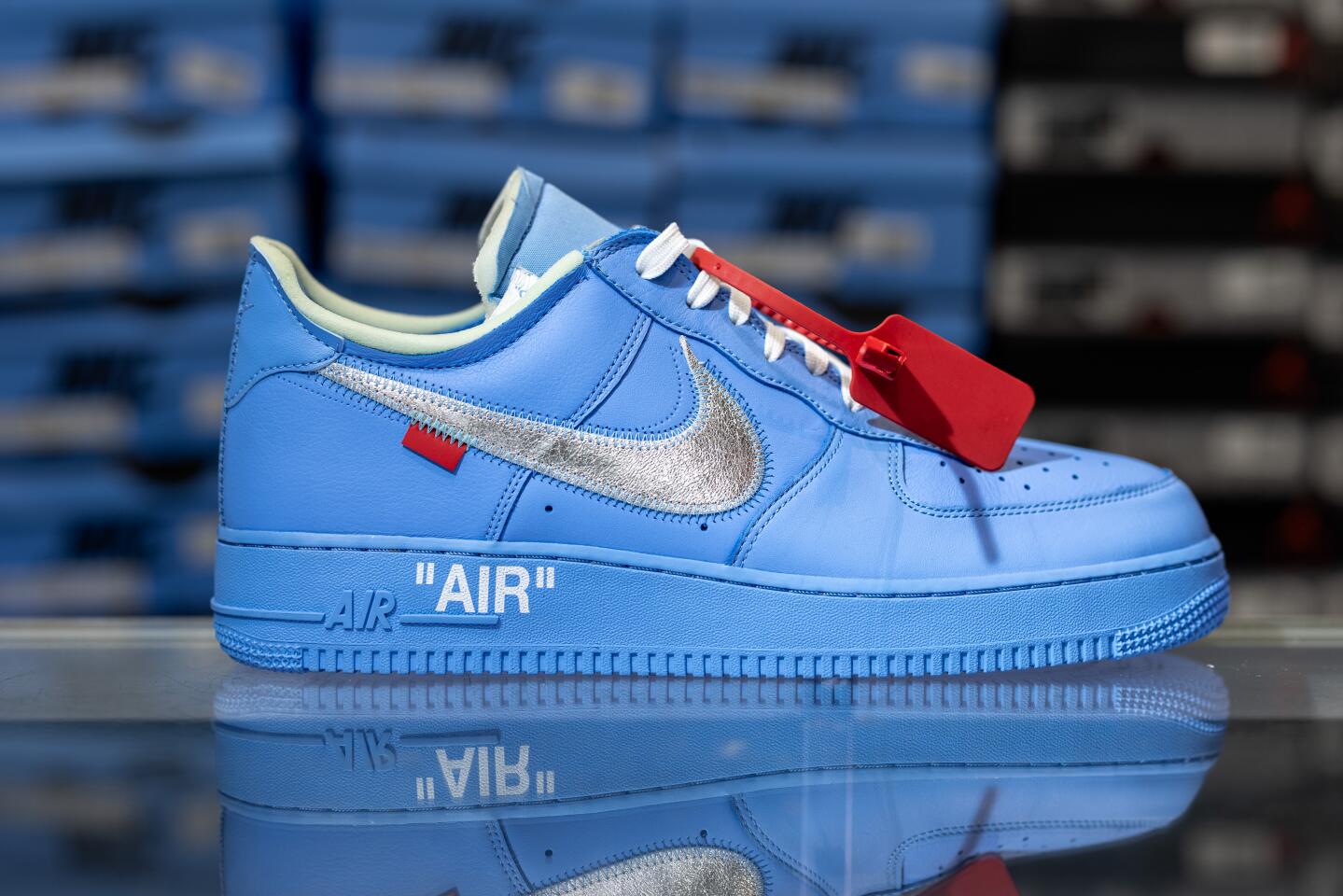
The sneaker reselling market has become a global billion-dollar industry. Rare models can command three to four times their retail price. Influencers drive this market with unboxing videos, while sneaker enthusiasts, or “sneakerheads,” pay premiums for rare pairs. Some see them as investments, untouched to maintain condition. Like vintage cars or wine, their value can rise over time. Sneakers like the Off-White “MCA” and Travis Scott Nike Dunk Low fetch high prices, selling for $3,500 and $1,600 respectively.
Harvey’s extensive collection raised the Lyft driver’s suspicions. After departing Harvey’s apartment, the driver googled him, discovering his charges in California for alleged involvement in a sneaker theft ring. Recently, federal prosecutors indicted Harvey and several shoe resellers for colluding with Nike employees to steal rare shoe styles and resell them. Harvey’s attorney claims police overstepped, asserting no proof of his knowledge that the shoes were stolen.
Det. Marc Sternin from the Los Angeles Police Department explained that an investigation began in January 2024 following a tip from Nike in Memphis. They found unexpectedly labeled packages in a postal truck bound for Harvey’s addresses, not a Nike store. The investigation revealed the use of fake “ghost” labels to redirect shipments. Nike identified at least 28 such packages. Police inserted GPS devices into these boxes, watching Harvey and an accomplice retrieve them. Seizing them later, the police found $5 million worth of stolen goods in a Hawthorne warehouse.
Authorities also accessed Harvey’s phone records, revealing frequent contact with a Memphis-based number belonging to Nike supervisor Michael Reno Perkins. Perkins allegedly recruited coworkers for the scheme. Harvey instructed them which sneakers to steal based on demand. Perkins, Harvey, and others were indicted for conspiring to steal roughly $2 million in Nike products from 2021 to 2024.
One co-defendant, Bereket Abraham, a former CoolKicks co-owner, has not yet pleaded. CoolKicks claimed his termination and absence of wrongdoing by their business. Meanwhile, CoolKicks’ other owner, Adeel Shams, was detained during an October LAPD search, later freed without charges.
Detective Sternin noted that Harvey coordinated thefts via phone with accomplices, including securing U-Hauls to collect packages. Kelcie Slaton, a researcher at the University of North Texas, stated that while resale eats into Nike’s profits, it boosts demand and consumer loyalty to Nike.
Los Angeles, noted for being a cargo theft hotspot, faces challenges from supply chain thefts. Detective Kyle Crowley of the LA County Sheriff’s Department explained the cycle of stolen goods flipping through various buyers. LAPD has faced community skepticism over its recent operations, but critiques of resellers’ awareness persist. Harvey remains under scrutiny, with possible bail revocations following allegations of threats. When traveling amid legal constraints, he was released pretrial, barred from shoe sales and traveling outside California without permission.