
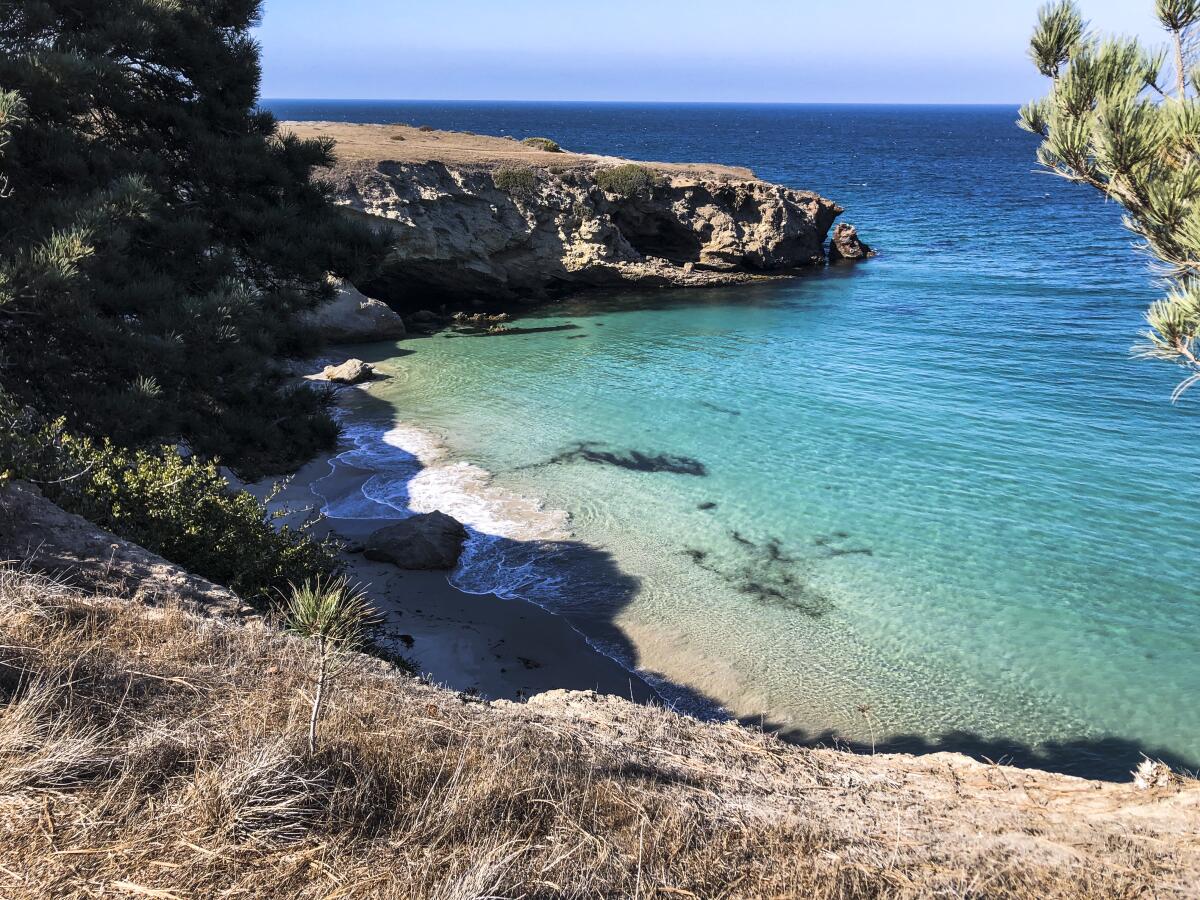
Recent headlines reported that flames have severely impacted Santa Rosa Island, near Santa Barbara. This island is known for its unique flora and fauna, including small foxes and rare pine trees. This news resonates on a personal level due to a memorable backpacking trip I took to the island five years ago.
On that trip, I camped near Ford Point and was startled awake by an elephant seal. Despite the sudden interruption, witnessing these creatures in the daylight was unforgettable. The fires have affected several areas, including a grove of endangered Torrey pines and the Water Canyon Campground, where I spent my last night.
Beyond the loss of scenery, I worry about the wildlife that call this island home. While experts are assessing the damage, there’s uncertainty about the fire’s long-term impact. Santa Rosa is part of Channel Islands National Park, often called the “Galapagos of North America” for its distinctive plant and animal life. Devastating fires are uncommon here, and the environment hasn’t evolved to withstand them.
The U.S. Coast Guard suggests a shipwrecked sailor might have started the fire by launching flares. Although the cause is under investigation, the flames burned through about a third of the island. Fire specialists will soon evaluate the area to better understand the damage and necessary recovery efforts.
As experts offer opinions, Heather Schneider from the Santa Barbara Botanic Garden mentions possible outcomes. The Hoffmann’s slender-flowered gilia, a flower unique to the island, might have lost seeds in the fire. Yet, past seeds could remain in the soil, ready to germinate when conditions improve.
Positive signs exist. Much of the Torrey pines and some campgrounds survived. The pinnipeds, which I encountered on my visit, likely remain unaffected. Places like the historic South Point Light Station are intact.
Greg Pauly of the Natural History Museum of Los Angeles County spoke on the interconnectedness of the island’s life. Surviving the initial fire is essential, but the aftermath presents challenges. He expects animals like the gopher snake were protected by soil with high clay content, allowing them to escape the fire. However, food sources for prey animals, such as mice, may decrease, impacting the surviving wildlife.
A few concerns arise. Non-native grasses might expand quickly post-fire, potentially shading out native plants. This change could reduce native habitats crucial for island wildlife. Yet, as Pauly says, the island has faced challenges over the centuries. Cattle and sheep once grazed its lands, but after their removal in 2011, native plants have rebounded.
Pauly’s observations offer a solace. Change, for better or worse, is a constant. My island memories reflect a specific moment during the pandemic when we navigated with safety measures like masks. In some ways, I prefer that aspect not to endure.
However, change does not equate to passivity. Actions are underway to aid the island’s recovery. The Santa Barbara Botanic Garden has seeds of rare plants as a recovery plan. In March, they established a grove of Torrey pines from island seeds. The Channel Islands National Park Foundation supports park recovery financially.
“Recovery requires collective effort,” said Schneider. Going back to Santa Rosa, I hope to embrace its transformed state, whatever it may be.