
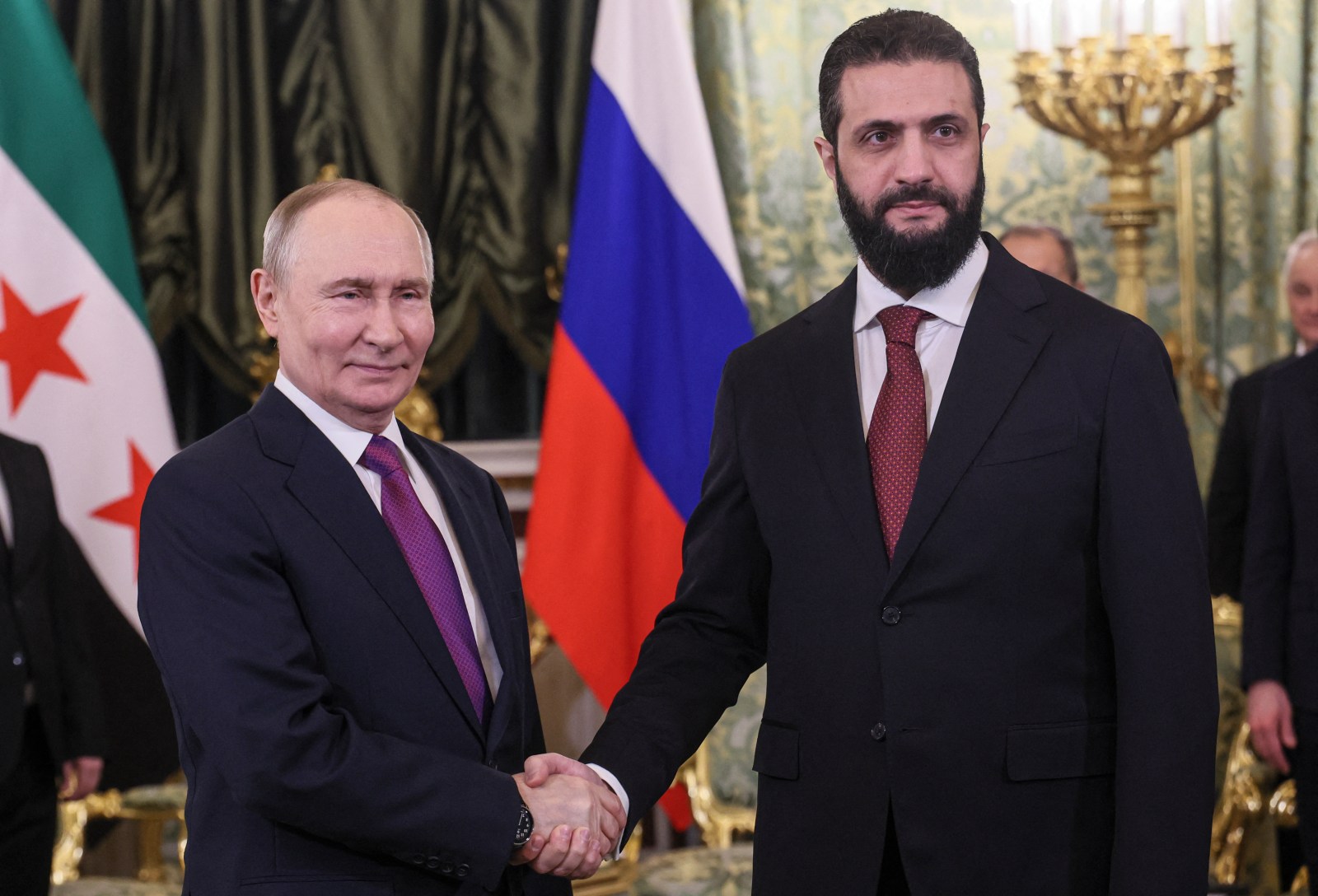
For nearly two years, widespread belief suggested Russia would significantly lose influence after Bashar al-Assad’s regime in Syria collapsed. Russia had invested deeply in military, political, and economic terms to support Assad’s hold on power. The rise of Hayat Tahrir al-Sham in December 2024 in Damascus seemed to threaten Moscow’s foothold in the region.
However, recent developments suggest that assumption might be incorrect. A study conducted by the Institute for National Security Studies in Israel noted Russia’s strengthened ties with Damascus. Systematic Russian diplomacy plays a crucial role in this new relationship.
The Institute’s study highlighted several steps taken by Moscow, such as providing wheat and fuel, diplomatic engagements, and high-level visits. These actions laid the groundwork for economic and humanitarian cooperation. Russia has also proposed rehabilitating Syrian energy infrastructure and turning Khmeimim and Tartus into humanitarian aid hubs.
Furthermore, Russia is offering Syria solutions to its military issues. This includes training and arms procurement, and possibly deploying limited forces to assist Syrian military operations. Moscow’s efforts align with its historical support for the Assad regime.
Russia’s ambitions extend beyond military support. Reports suggest that the Kremlin plans to establish a major commercial logistics hub at the port in Tartus, leased by Russia. This would transform the port into an economic asset, moving 250,000 tons of Russian goods monthly, starting with grain. The port would then connect to Novorossiysk in Russia. This plan showcases an evolving strategy to deepen economic ties with Syria.
Previously, Russian influence relied heavily on military assistance. Now, Russia seeks to become a major player in Syria’s economic recovery. This new approach aims to create ties that endure irrespective of Damascus’s leadership.
Russia’s strategy is already yielding benefits. Syria imports 85% of its wheat from Russia, and it has increased crude oil imports from Moscow. Russia has replaced Iran as Syria’s main oil supplier, delivering 60,000 barrels daily, nearly half of Syria’s consumption.
The logistics hub would further solidify Syria’s reliance on Russian goods for reconstruction and commerce.
The impact on the U.S. and its allies might be considerable. Over the past year, efforts were made to engage Syria’s new leader, Ahmed al-Sharaa, and remove certain sanctions to encourage a Western orientation. The goal was to make Syria a strategic partner for the U.S. However, Russia’s strategy could steer Syria in a different direction, opposing U.S. interests.