
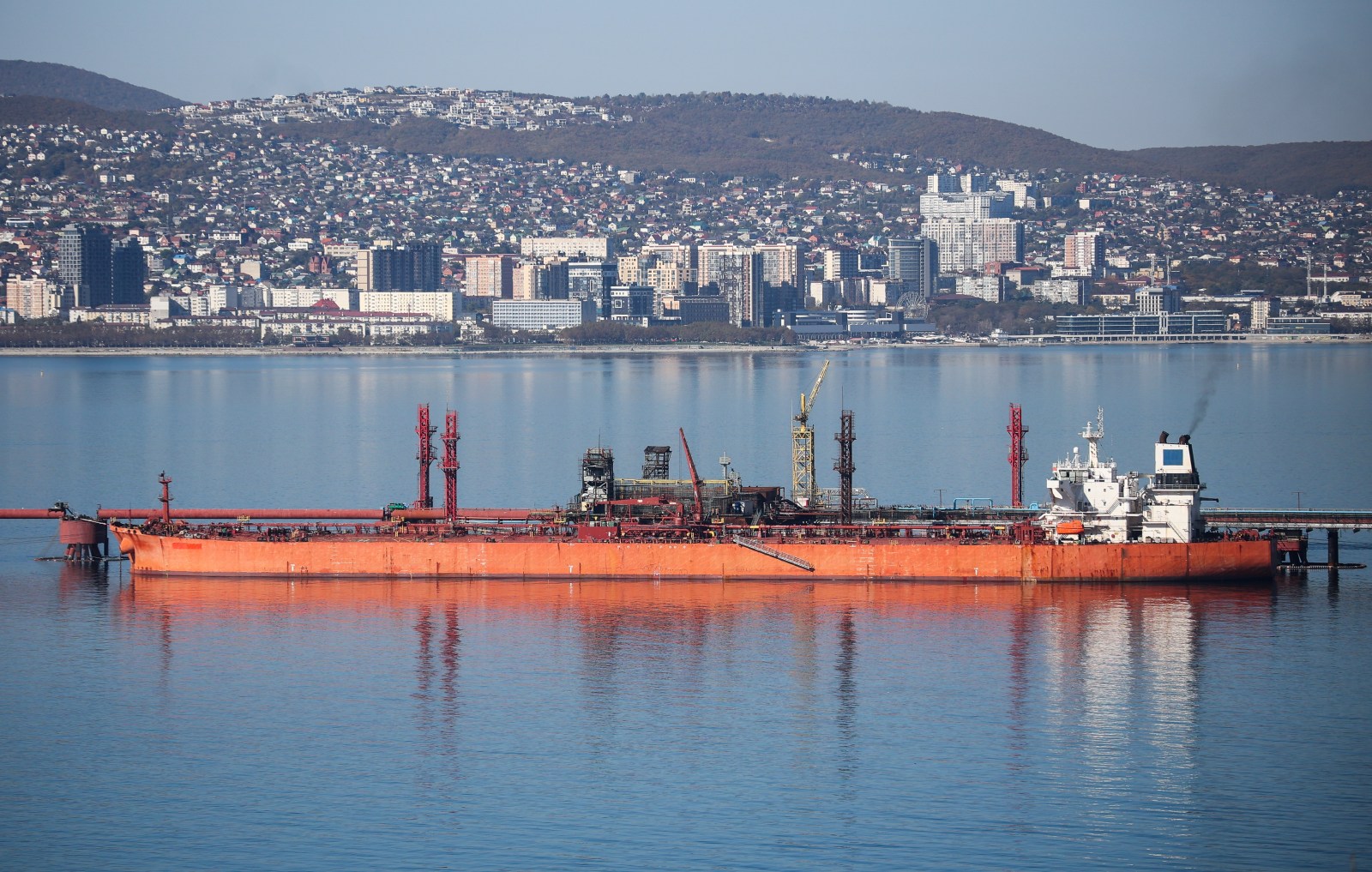
Three tankers carrying Russian diesel fuel, including ships reportedly under Western sanctions, are heading to the U.S. The tankers’ journey follows an agreement between President Donald Trump and Russian President Vladimir Putin to resume fuel shipments.
According to maritime intelligence firm Kpler, the tankers are Agioi Fanendes, Leruo, and Talisman. These vessels left from Russia’s Baltic port of Primorsk between October 16 and 22. They are expected to reach the U.S. East Coast between November 7 and 11, as reported by AFP based on vessel-tracking data. The tankers are transporting a total of 924,000 barrels of diesel, about one-third of the daily consumption for the U.S. transportation sector. Trump’s agreement with Putin aims to reduce fuel prices ahead of the November midterm elections.
Details of the Tankers
The Agioi Fanendes is heading toward New York, while the Leruo and Talisman are bound for the Atlantic Coast. MarineTraffic data shows these ships are currently in the vicinity of the United Kingdom and northern Europe. The Malta-flagged Agioi Fanendes loaded around 40,000 metric tons of ultra-low-sulfur diesel at Primorsk on October 22. Initially destined for New York, its destination now reads “for orders,” adding uncertainty.
The Leruo, a Sierra Leone-flagged tanker, loaded diesel on October 16. It faces sanctions from the UK, Canada, and the EU, accused of transporting Russian cargo and evading location detection. Reports suggest it is expected on the Atlantic Coast by November 11. Lastly, the Talisman is carrying Russian diesel to the U.S., affected by U.S. and EU sanctions, with an expected arrival around November 9.
The use of sanctioned vessels in these shipments raises legal questions concerning U.S. authorization for Russian fuel imports and the impact on restrictions from other Western countries.
The Trump-Putin Diesel Deal
On October 9, Trump announced an agreement with Putin to supply diesel to American and global markets. This move aims to lower fuel prices for American consumers, including farmers and truckers. Initially, over 300,000 metric tons of diesel are to be supplied, with plans for increased shipments in November and beyond. This agreement shifts U.S. policy after restricting Russian energy imports post-invasion of Ukraine in February 2022. The U.S. Treasury has issued a temporary authorization for these shipments until April 2027.
Russian Deputy Prime Minister Alexander Novak confirmed that the first three tankers are part of larger plans, with a fourth tanker departing soon, as stated by the Kremlin.
Criticism from Ukraine and the U.S.
Ukraine, led by President Volodymyr Zelensky, has condemned the agreement. Zelensky argues that easing sanctions allows Russia to prolong the war in Ukraine and undermines international pressure. Trump blames Ukrainian attacks on Russian refineries for price pressures, suggesting a new Ukrainian leader should negotiate with Russia, further straining relations between the two countries.
In Washington, Republican Senator Thom Tillis questioned the legality of Trump’s actions under U.S. law, generating bipartisan calls for a reversal. Critics warn that Russian fuel sales could enrich the Kremlin without significant benefits for U.S. consumers. The administration defends the move as addressing fuel prices and urging Ukraine toward negotiation.
Trump dismissed GOP concerns, emphasizing potential global impacts of fuel supply restrictions. Analysts question the agreement’s ability to boost global supply or shift Russian diesel away from other buyers.