
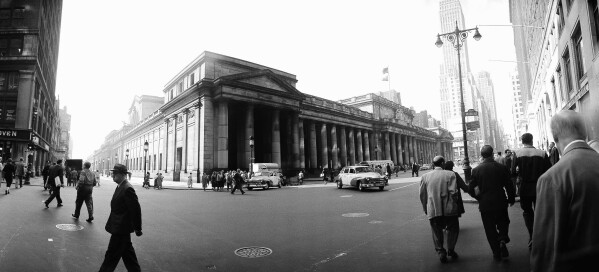
Architectural history took a significant turn when Manhattan’s original Pennsylvania Station was demolished in 1963. The Beaux-Arts structure, known for its Roman-style columns and vast central waiting area, was the largest indoor space in New York City at that time. This grand station was replaced by Madison Square Garden, housing both the NBA’s New York Knicks and the NHL’s New York Rangers. Commuters were relegated underground to a more dismal environment with low ceilings and confined corridors when the redesign was finalized in 1968.
Architectural historian Vincent Scully lamented the transformation, emphasizing the loss of grandeur, saying, “Through Pennsylvania Station one entered the city like a god. One scuttles in now like a rat.” However, there is a new vision to restore this transit hub to its former glory from 1910. Renderings unveiled on Monday showcase a rectangular stone facade with large columns marking a prominent entryway. Inside, expansive and bright concourses will feature ceilings over 50 feet high, bronze finishes, and other ornamental details like a bas-relief of the city’s skyline and a significant station clock.
The interior plans contain an entryway with a wall signifying President Donald Trump’s involvement. Amtrak assumed control of the project in the past year after prolonged disputes among transit authorities and opposition to relocating Madison Square Garden from its owner, James Dolan. Though Trump has contemplated renaming the station after himself, current plans retain the “Pennsylvania Station” name. Released by Amtrak and the Penn Transformation Partners, the proposed designs reflect a commitment to honoring the station’s original aesthetic features.
Vishaan Chakrabarti, the lead architect, explained that the plan incorporates ornate design elements from Grand Central Terminal and notable Art Deco structures like the Empire State Building and Rockefeller Center. The goal is to restore Penn Station to its status among New York City’s iconic landmarks. Chakrabarti remarked on the effort to revive intricate craftsmanship and decorative art lost over time.
With an estimated cost of $8 billion, construction is anticipated to commence by the end of 2027. The station will remain operational throughout the project, which is scheduled to unfold over six years. On a typical workday, over 600,000 commuters pass through Penn Station—exceeding the combined traffic at New York City’s three major international airports.
While various proposals have included transferring MSG, the plan maintains its current location, although a theater built above the tracks will be demolished. This agreement involves the developers and MSG’s proprietor, though final terms and payments are still pending completion. Andy Byford, Amtrak’s special advisor for redevelopment, stated that public input is essential, as highlighted by Lisa Daglian from the Metropolitan Transportation Authority advisory group.
Renderings by Heller Inc. illustrate the redesigned station, prompting transit advocate Danny Pearlstein to caution against losing billions in local revenue for non-essential developments. Byford alleviated concerns about potential fare hikes or property seizures for station expansion. Further project details, including cost distribution, will emerge after federal environmental reviews.
Commuters like John Schoen from Long Island appreciate the need for aesthetic updates, while some, like James Culhane, question the necessity of further expenses given recent improvements.
For more from Philip Marcelo, find his work at https://x.com/philmarcelo