
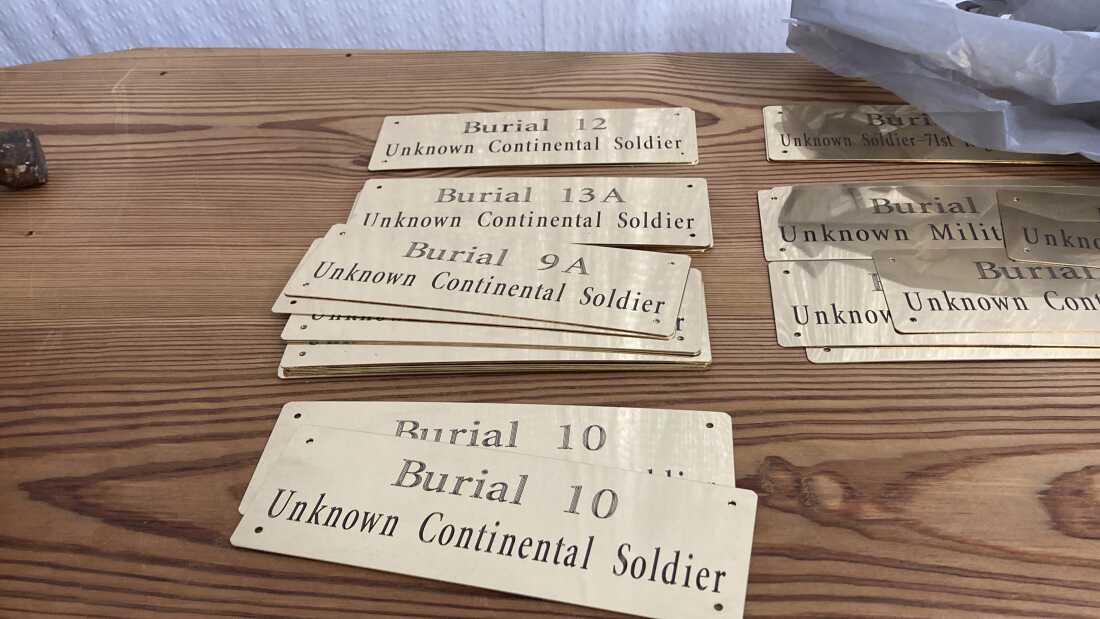
On March 30, 2023, in Columbia, South Carolina, plaques were seen to honor 14 unknown soldiers found at the Battle of Camden site. DNA analysis identified one of these soldiers: Pvt. John Pumphrey.
Pumphrey, who enlisted at 17 in the 7th Maryland regiment, played a part in significant battles including Brandywine and Germantown in Pennsylvania, and Monmouth in New Jersey. Encamped during two harsh winters at Valley Forge and Morristown, he later marched to the South, facing British forces at the Battle of Camden in August 1780, where he met his end.
Discovery and Identification
Archaeologists unearthed Pumphrey’s remains in 2022 at the University of South Carolina. A genome sequencing laboratory analyzed his DNA, which was then processed by FHD Forensics to match with historical records. This led to a connection with Nancy White, a 71-year-old descendant living on Maryland’s Eastern Shore. Shocked by the news, White expressed amazement over this miraculous discovery, learning that Pumphrey was her fourth great uncle.
Allison Peacock, president of FHD Forensics, noted that three types of DNA analyses verified Pumphrey’s identity. Her team was astonished by the 20,000 modern relative matches uncovered, enhancing confidence in the findings. White was among hundreds who contributed family history and documents to confirm the results.
Family History and Challenges
White and her sisters, tracing their genealogy for years, knew of the Pumphrey lineage, noting their Quaker roots. Surprised that a Pumphrey fought in the Revolutionary War, they had dismissed the connection due to the pacifist nature of Quakers. Yet, Pumphrey’s early orphanhood likely led him to the army, re-enlisting and viewing it as home, which was rare as soldiers often returned to farms.
Archaeological Findings
The excavation of 14 remains was led by James Legg from the University of South Carolina, who referenced reports from relic hunters. The pandemic allowed for deeper exploration, revealing graves just 14 inches deep. Forensic teams prepared coffins for the soldiers’ reburial in a ceremony.
“That’s how shallow they were,” Legg noted, highlighting that prisoners of war likely dug these graves manually.
Rick Wise of the South Carolina Battleground Preservation Trust explained the absence of tools for grave digging, attributing the shallow graves to prisoners using only hands and available sticks.
Concluding Discoveries
Peacock is currently identifying relatives for another soldier, uncovering her personal link to the battle. This new discovery emphasizes the shared connections in historical narratives.
Wise concluded that Pumphrey participated in major battles before the Battle of Camden, one of the Revolution’s most substantial American defeats. Despite an initial numerical advantage, poor militia performance left Pumphrey’s unit outnumbered and fated. Soldiers stood united, emphasizing the camaraderie in dire circumstances, with the officer among them likely being the eldest buried alongside.