
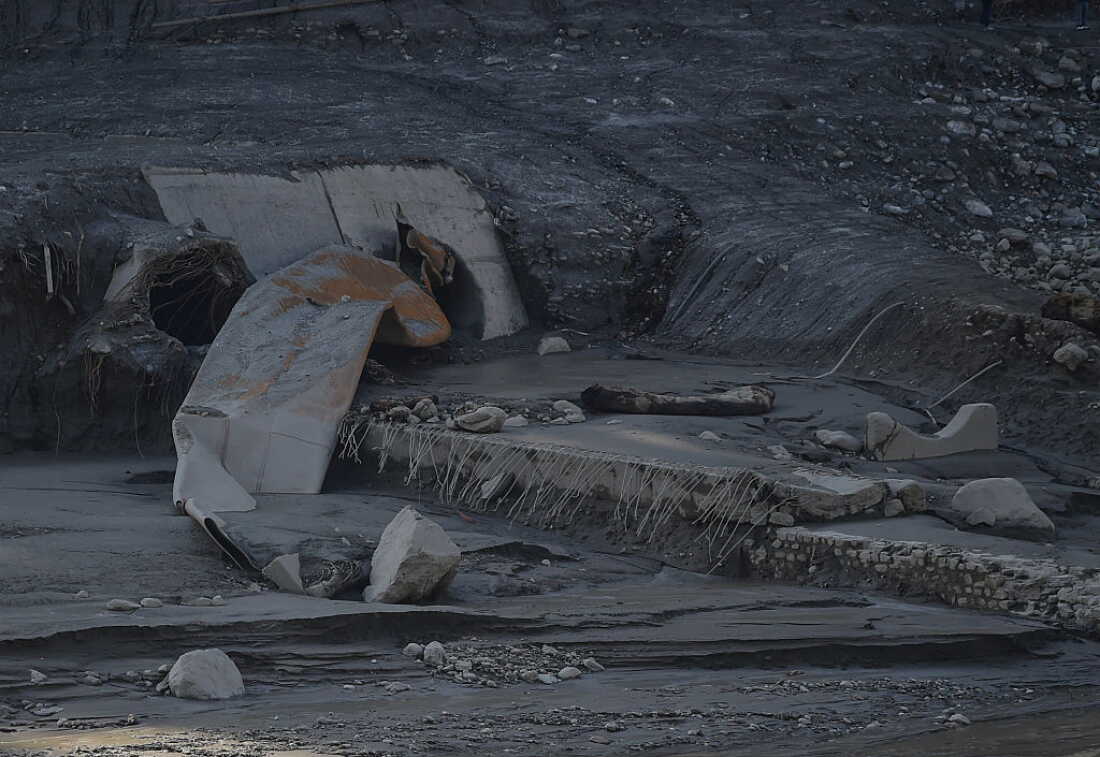
On August 30, 2026, the banks of the Trishuli River witnessed a calamity as landslides damaged the Trishuli Hydropower Plant. A week later, the search for survivors in Nepal and Tibet continues after flash floods left over 1,000 people dead. Rescuers are striving to find around a dozen hydro-power plants buried under mud.
Arnold Dix, a tunneling expert, describes the scene as akin to the aftermath of an explosion. Rescuers first need to locate the tunnels believed to be sheltering survivors. According to Lok Bahadur Poudel Chhetri from Nepal’s Foreign Affairs Ministry, 21,000 personnel are involved in the extensive rescue operation. Nepal’s army plays a crucial role, sharing efforts on social media, showing soldiers navigating narrow, muddy tunnels.
This disaster began when a large glacier segment broke off and fell into a river valley. The resulting deluge swept away buildings, riverbank communities, and the hydropower plants, particularly along the Trishuli River. Dix explains that the ground has elevated by 30 to 50 feet in areas, causing river courses to alter and destroying a dozen power stations.
Rescuers utilize advanced mapping to locate access tunnels leading to turbine houses, where survivors might be found. Dix coordinates the effort at the Trishuli 3A hydropower plant. Recent attempts to access tunnels have been met with obstructions like boulders. While explosives are usually risky, they were necessary to clear blockages. Rescuers also created a drainage system to manage water ingress.
Despite challenges, nearly 300 individuals have been rescued, including many from the under-construction Upper Trishuli-1 powerplant. Janak Thapaliya recounts a harrowing escape on a water tanker, acknowledging the tragic fate of colleagues who lacked his chance for survival.
Anger grows among Nepalis over perceived delays in foreign assistance. The government, however, affirms that aid arrived based on specific needs. Ashish Pradhan of the International Crisis Group highlights the importance of continued adaptability in such a complex disaster scenario. Recent reports indicate support from India, China, and South Korea for the tunnel rescue operations.