
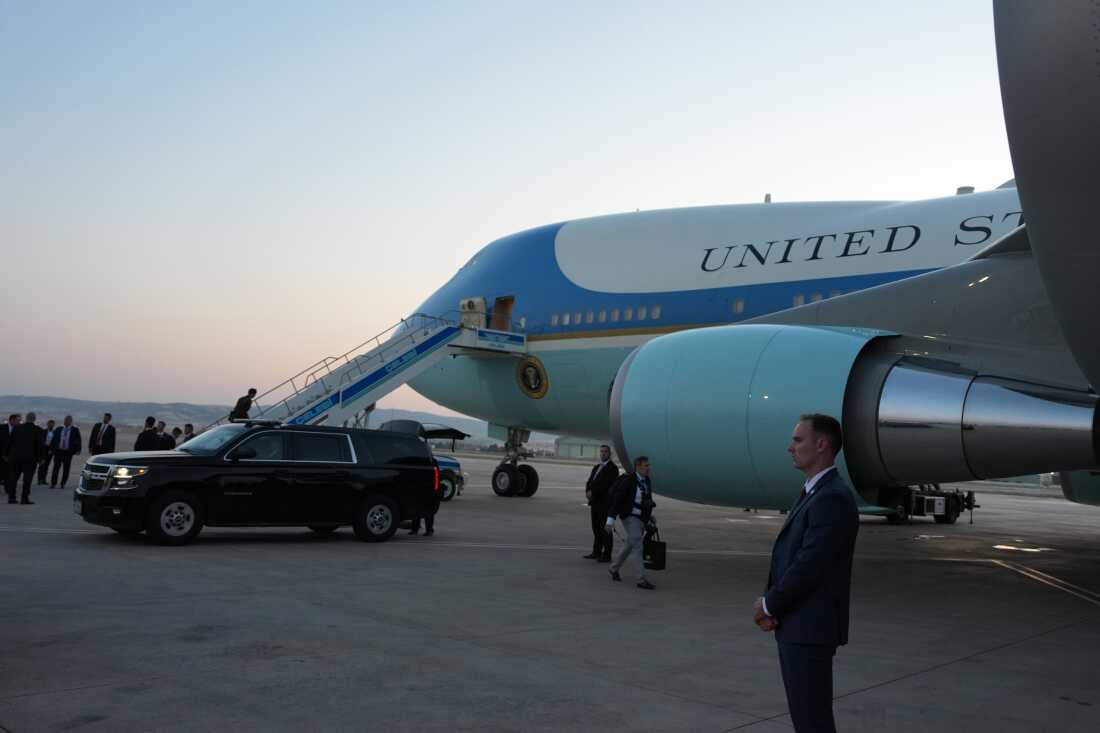
At Ankara International Airport, the iconic Air Force One was prepared for U.S. President Donald Trump’s departure following the NATO summit. However, in a surprising twist, Trump opted to fly partway back to the U.S. on an older model, painted in the familiar baby blue, rather than the new jet retrofitted with Qatari funding.
This unexpected switch occurred amidst renewed military tensions between the U.S. and Iran. Trump’s decision to use the older aircraft led to questions about the security features of the new plane, which cost $400 million to retrofit. Reports reveal that the new jet has yet to be fully equipped with the missile detection and countermeasure systems present in the older models.
“We’ll fly the legacy plane for a bit of nostalgia,” Trump remarked, adding that both planes would make an unscheduled stop at Royal Air Force Mildenhall in the UK. This base hosts U.S. troops.
During the return flight, Trump dismissed concerns about Iran, emphasizing he often faces threats. “I’m at the top of their hit list,” he commented to reporters. When queried about the directive to keep blinds closed during the flight from Turkey on the older aircraft, Trump attributed it to “sleazebags over here,” indirectly referencing Iran.
The Qatari jet was delivered under rapid conversion as a temporary solution before new, more permanent Air Force One models are completed by 2028. Critics note the absence of several high-level security modifications in the Qatari jet. Even advocates acknowledge that some engineering challenges were left unresolved in this “bridge” aircraft.
The original Air Force One planes, designed in the Cold War era, boasted extensive defensive features. They included countermeasures capable of deflecting missile threats and even an onboard operating room. These jets featured air-to-air refueling abilities, providing a contingency for prolonged missions, though this has never been used with a president aboard.
Stealth measures were in place when Trump’s aircraft left Turkey, as its transponder was disabled, a standard security step in high-threat scenarios. Oppositely, flights of other leaders remained trackable. The alternate route chosen for showcasing the new jet allowed servicemen at RAF Mildenhall an opportunity to explore the aircraft.
As President Trump wrapped up his NATO summit journey, he balanced nostalgia with showcasing modern advancements. This nuanced approach underscored dialogue about presidential safety intertwined with diplomatic engagements.