
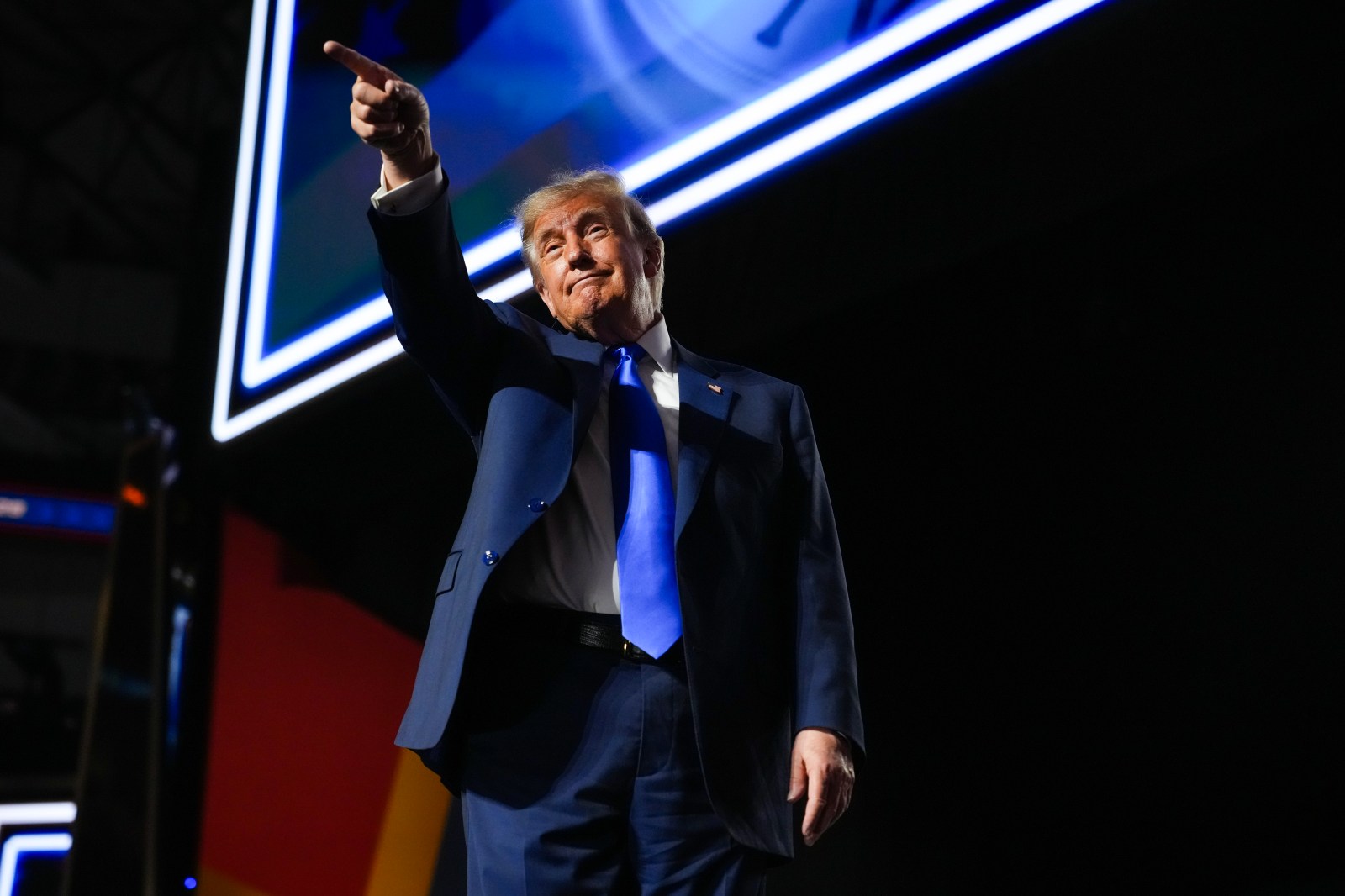
President Donald Trump has promised a $5,000 payout to Americans if Republicans win both the House of Representatives and the Senate in the 2026 midterms. Uncertainty surrounds the legality of this proposal, with experts questioning its validity against potential court challenges.
Trump announced the promise at the Republican National Convention in Dallas, indicating the ‘Trump dividend’ would be issued to each adult citizen if Republicans gain control of both chambers of Congress.
This offer comes as Republicans trail on the generic ballot and face tight Senate races in several states won by Trump in 2024, including Alaska, Iowa, Michigan, North Carolina, Ohio, Georgia, and Texas.
Trump stated, ‘Because of our tremendous strength and success economically, I will issue a dividend to every adult citizen in the United States of America for $5,000. Very much like a successful company will do a cash distribution to its shareholders.’
Legal Concerns Over Trump’s Promise
Barbara McQuade, a former federal prosecutor, expressed doubts about the promise’s legality. She pointed to 18 U.S.C. § 597, noting the law prohibits vote-buying, which could encompass Trump’s offer.
She stated that Trump’s promise may not be protected by presidential immunity, as determined by the Supreme Court, because the statement was made as a political party member, not as president.
Michael McAuliffe, another former federal prosecutor, called the proposal ‘suspect in many ways.’ He suggested that law enforcement might consider opening an investigation into the legality of offering a financial inducement for votes.
Contrarily, Neama Rahmani, also a former federal prosecutor, explained that while the promise could theoretically violate the statute, practical implications might prevent an investigation.
Rahmani argued that Trump’s promise might be regarded as immune official acts after his presidency and noted there is arguably no quid pro quo since everyone would receive the dividend if the GOP wins, irrespective of voting intentions.
‘Politicians routinely make similar promises, and they’re protected political speech under the First Amendment,’ Rahmani said.
The Statute Explained
According to the statute, any person who makes an expenditure to influence votes or accepts such expenditure can be fined or imprisoned for up to one year. Willful violations may lead to fines or imprisonment for up to two years.
Criticism and Skepticism
The promise faced skepticism, as Trump previously proposed payments that did not materialize. Representative Dan Goldman and economist Erica York expressed doubts, citing past unfulfilled promises.
Goldman noted that only Congress could authorize such funds, deeming the promise implausible. York referenced past promises like $5,000 DOGE dividends and $2,000 tariff dividends that never materialized.
Reuters estimated tariffs could exceed $1.2 trillion, casting further doubt on the financial feasibility of Trump’s dividend.
Republicans’ Chances in Midterms
Trump’s proposal relies on midterm outcomes, but current polls suggest vulnerability for Republicans. In the House of Representatives, recent polling indicates Democrats hold a lead on the generic ballot.
- YouGov showed Democrats leading by 7 points.
- Morning Consult indicated a 4-point Democratic edge.
- Reuters/Ipsos reflected a 5-point Democratic advantage.
Prediction markets favor Democrats regaining control of the House, with high chances listed on platforms like Kalshi and Polymarket.
Senate Elections Outlook
Winning the Senate may pose a tougher challenge for Democrats. Currently, Republicans hold a 53-47 majority, requiring Democrats to flip four seats to secure control.
Democrats must flip Republican-held seats while defending existing positions in competitive states such as Georgia and Michigan.
Polling suggests potential gains in states like Maine and North Carolina, but Democrats face a challenging path in states Trump won in 2024.
To win the Senate majority, Democrats must expand their battleground strategy, targeting states like Alaska, Iowa, Ohio, and Texas.