
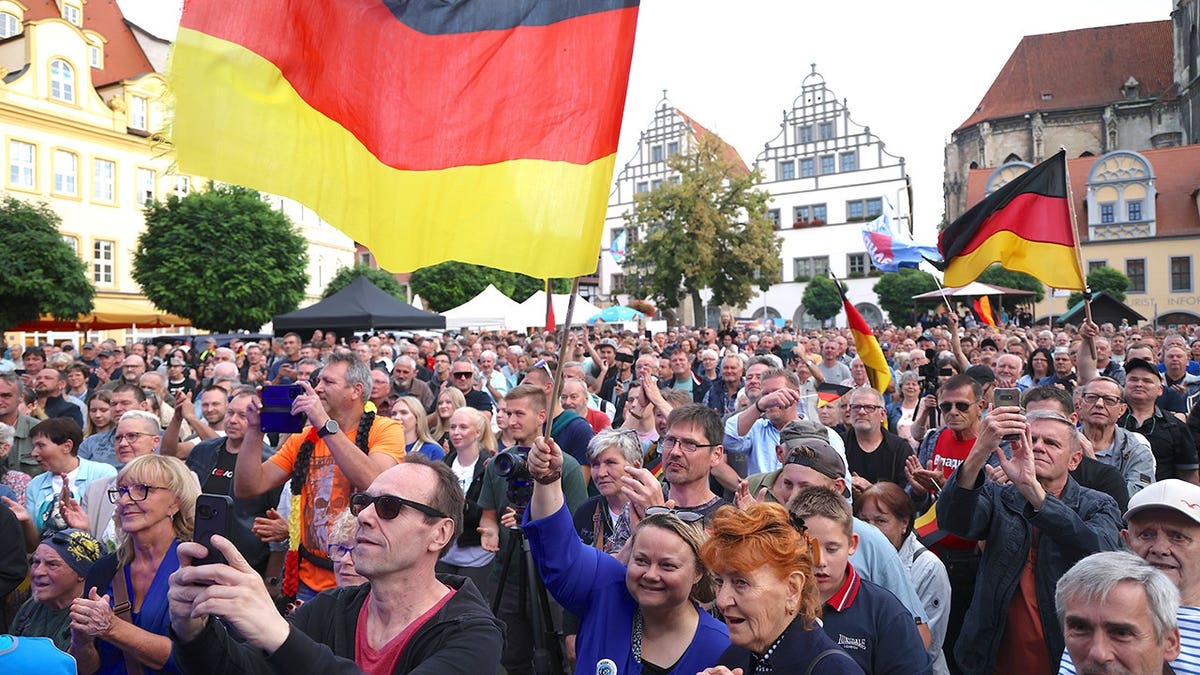
Political tensions rise in Germany’s east with state elections in Saxony-Anhalt. The far-right Alternative for Germany (AfD) party may achieve a significant victory. Historically, this would be unprecedented as they could secure a majority in a German state parliament. Such a win would be a first since World War II, marking a shift in political power dynamics.
The AfD, known for its pro-Russia sentiments and criticized by Germany’s domestic intelligence, has achieved 43% in state polls. The party’s lead candidate, Ulrich Siegmund, is playing a crucial role in garnering support. Saxony-Anhalt elections are scheduled for September 6, 2026.
Traditionally, no party outside the Social Democratic Party (SPD) or the Christian Democratic Union (CDU) has held a single-party majority since the formation of the Federal Republic in 1949. Political experts suggest a win for AfD offers more than local policy influence due to Germany’s federal system. It symbolizes a significant shift because established parties that have led Germany or the East since the latter’s reunification in 1990 will no longer control the state.
Daniel Schatz described AfD as a nationalist, anti-immigration party representing voter frustration against Germany’s political establishment. AfD campaigns for stricter immigration laws, emphasis on German identity, and rejection of certain environmental agendas. An outright victory would disrupt established political barriers, forcing other parties to reassess their strategies.
“Illegal migration, unchecked open borders, anyone can get in. Our internal security is suffering. People are honestly fed up with this situation,” remarked Alice Weidel, AfD’s co-chair, during an interview.
Germany’s Federal Office for the Protection of the Constitution had previously labeled the AfD as extremist. A court ruling suspended this classification, highlighting ongoing debates on the party’s position.
Chancellor Friedrich Merz expressed concerns about international investor relations, linking the economic impact to potential AfD governance. Despite warnings, Siegmund remains popular, boasting a significant following on social media.
AfD’s physical presence and media strategies showcase a populist narrative, presenting itself as an alternative to traditional parties. Analysts observe that voter analysis shows right-wing extremism among AfD supporters. However, some criticize the party for not clearly separating itself from extremist ideologies.
Economic factors drive younger voters towards AfD as living costs and unemployment rise. The shift in political preferences highlights polarization among Germany’s youth, split between supporting the AfD and other leftist parties.
Upcoming elections in Mecklenburg-Western Pomerania and Berlin indicate further political challenges, with AfD making strides in various regions. The party’s influence extends beyond Germany, even holding seats in the European Parliament.
Journalist Tyler Speicher provided this analysis from Slovenia, drawing from extensive experience in covering diverse stories over two decades on Fox News Channel.