
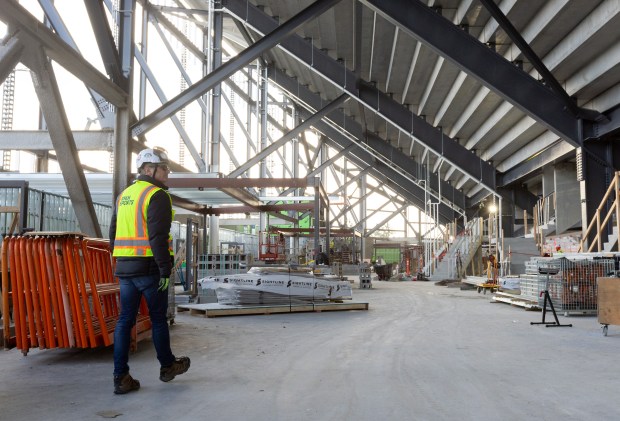
Northwestern University’s Ryan Field showcases the future of college football stadiums. Led by developer Pat Ryan Jr., this nearly completed stadium in Evanston redefines fan experience and accessibility. Ryan, son of benefactor Patrick Ryan Sr., emphasizes an “experiential” approach, accessible to all. The Ryan family’s significant contributions helped raise the $875 million needed, with Northwestern adding around $300 million.
The stadium’s design diverges from traditional Big Ten concrete giants, seating 35,000 fans with a focus on a premium experience. Unlike larger stadiums, its compact design enhances intimacy and modern viewing. Amenities include real seats, ample legroom, open concourses, and wide-ranging food and drink options, allowing fans to enjoy the game without missing key moments.
Ryan Field embraces a model common in NFL stadiums, catering to fans seeking more than just the game. With expansive areas for social interaction, the stadium prioritizes a comprehensive fan experience. This mindset echoes the shift toward providing comfort and amenities in sports venues, as fans have alternate viewing options like HDTV and smartphones.
Ticket prices reflect these upgrades, with premium seating for those willing to pay more. The design targets concert organizers who prioritize venues with high-revenue potential. Managed concerts and events, exceeding city expectations, will make the stadium a desired venue. Despite opposition, local residents might find value in the activities, enhancing community engagement.
With facilities resembling advanced European soccer stadiums, Ryan Field offers innovative seating, a high seat coverage rate, and vast screens with superior resolution. Unlike other venues, steep climbs are eliminated, promoting accessibility and comfort.
The stadium is slated for community events, like holiday markets, reinforcing its role beyond sports. The potential hosting of the Chicago Stars FC women’s soccer team also sparks interest. Yet, the priority lies in transforming the college football environment, impacting Northwestern’s future.
As Ryan Field opens on October 2, it promises to change the landscape of college football, offering a modern, engaging fan experience while possibly influencing stadium designs nationwide. It’s a shift in stadium dynamics that emphasizes community interaction, premium experiences, and expanded opportunities.